Kota Kinabalu: The Malaysian Meteorological Department (Met Malaysia) is keeping a round-the-clock watch on earthquake activity in Sabah via 28 seismic stations statewide.
MET Malaysia Director-General Dr Mohd Hisham Mohd Anip said the monitoring enables the department to detect and analyse earthquakes swiftly.
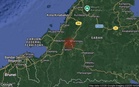
He said the seismic stations closest to the epicentre are Sapulut, 57.23km away; Keningau (66.51km); Sandakan/Telupid (74.36km); Matupang (76.67km); and Tenom (93.32km).
“Quake information will be disseminated within six minutes of detection, subject to data availability. To date, there is still no technology capable of predicting earthquakes,” he said, Sunday.
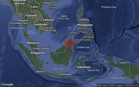
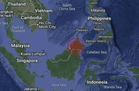
The statement follows a weak magnitude 3.3 earthquake that struck Kuamut, Kinabatangan, at 5.32am on Saturday.
Mohd Hisham said earthquakes cannot be predicted in terms of time, location or magnitude, and seismic stations only serve to detect and determine a quake’s magnitude after the event.
He said tsunami threats, meanwhile, can be assessed based on earthquake magnitude and related monitoring data.
“If there is a potential tsunami threat, Met Malaysia will issue the relevant information and warnings,” he said.
He said installing additional seismic stations or sensors at a given location can strengthen local monitoring coverage and capability, but this does not mean earthquakes can be predicted earlier.
“Met Malaysia will continue to monitor seismic activity in Sabah and channel fast, accurate and verified information to the public and relevant agencies,” he said.
In light of this, the public is advised to obtain information on earthquakes and tsunamis only through Met Malaysia’s official channels.
On Sept 3, a magnitude 3.4 tremor was felt in several parts of Keningau, prompting staff at the District Office to suspend a meeting and move to a designated safe area. No serious damage was reported.
The tremor was one of several weak earthquakes recorded around Keningau since 2023, raising questions about efforts to strengthen monitoring, development and disaster planning in the area.
The series of small earthquakes is drawing attention to a part of the State where scientists say the fault lines are poorly understood and the consequences of a larger quake could be devastating.
Experts say a stronger earthquake in the region could trigger landslides, cutting off roads and other vital infrastructure.