WITNESSING the substantial conclusion of European Union-Philippines Free Trade Agreement (EU-PH FTA) negotiations is a watershed moment for the European-Philippine business community and a defining chapter in our nation’s economic story.
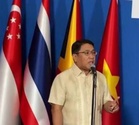
Two major milestones converged in Manila last Sept. 22: our hosting of the 12th Asean-EU Business Summit alongside partners at the EU-Asean Business Council and the announcement of a significant breakthrough in EU-PH FTA talks.
Reaching the historic turning point was no simple task. First launched in 2015 and paused in 2017, momentum was rekindled following a visit by European Commission President Ursula von der Leyen — the first-ever by an EC president to the Philippines.
When negotiations formally resumed in March 2024, few could have anticipated the remarkable speed of progress. Reaching substantial conclusion in September 2026, just two and a half years after talks restarted, is a breakthrough that underscores the extraordinary efficiency, focus, and alignment of both negotiating teams.
Beyond the speed of execution, this historic achievement serves as a resounding vote of confidence in the Philippines’ robust economic growth, market stability and the suite of business-friendly economic reforms enacted in recent years.
This monumental outcome stands as a testament to the strong political will, technical thoroughness and shared vision across both sides. It is a success made possible by the extraordinary dedication of the chief negotiators and technical teams from the Philippines and the EU, the leadership across key government agencies — including the Department of Trade and Industry, Department of Foreign Affairs, Department of Agriculture and the Department of Finance — and the tireless, strategic advocacy of private sector leaders.
Once fully realized, the agreement will make the Philippines only the third Asean country — following Singapore and Vietnam — to conclude a bilateral free trade agreement with the EU. This cements our country’s standing as a premier hub for European trade and investment in Southeast Asia.
What it means for Filipinos
While trade agreements are often framed through the lens of macroeconomics and corporate strategy, the true power of the EU-PH FTA lies in its real, human impact on everyday Filipinos.
By positioning the Philippines as a top destination for European foreign direct investment, the FTA will generate high-value jobs across key sectors — from technology, manufacturing, and green energy to services and healthcare.
For Philippine agricultural producers, artisans and MSMEs, unlocking preferential access to a high-income market of nearly 450 million consumers means higher revenues, expanded livelihoods and greater global recognition for Filipino craftsmanship and produce.
For Filipino consumers, duty-free or reduced-tariff access means easier access to high-quality European goods, medical products, advanced machinery and consumer tech at more affordable prices.
Because this agreement includes robust provisions on trade and sustainable development, it reinforces fair labor practices, environmental protections, and sustainable food systems, ensuring that economic growth benefits communities without compromising workers’ rights or the planet.
A modern blueprint
This comprehensive deal goes far beyond traditional tariff reductions. It establishes a world-class framework covering trade in goods and services, investment, government procurement, digital trade, intellectual property, trade facilitation and supply chain resilience. In an increasingly complex geopolitical landscape, this clarity provides the long-term stability needed to anchor our economic future.
Hosting the Asean-EU Business Summit during the Philippines’ Asean chairmanship year made this timing all the more meaningful. The summit highlighted our nation’s role as a vital bridge between European and Southeast Asian markets, driving key priorities: mobilizing transition capital for green projects, facilitating seamless cross-border digital trade and recognizing health and nutrition as essential drivers of economic development.
The road ahead
Even as we celebrate, we recognize that concluding negotiations is not the finish line. The true test of any agreement lies in its execution.
To support this transition toward practical implementation, the ECCP is proud to launch the 2026 ECCP Advocacy Papers. Anchored on sector-specific recommendations, this flagship publication serves as our blueprint for cultivating a fair, competitive, and attractive business climate in the Philippines. By addressing regulatory bottlenecks and enhancing the ease of doing business, these proposals directly complement the FTA and ensure our domestic market is fully prepared to absorb new investments.
With both negotiating teams working swiftly to finalize technical provisions, our shared target is clear: securing the formal signing of the agreement by 2027. Policymakers on both sides must now move decisively toward ratification so both economies — and our citizens — can realize its benefits as quickly as possible.
After years of engagement, dialogue, and advocacy, the ECCP is immensely proud not only to witness, but to have actively contributed to this transformative chapter. We remain committed to guiding our members and partnering with government institutions to ensure this landmark agreement fulfills its ultimate promise: serving as a bedrock for long-term, shared prosperity across the Philippines, Asean and the European Union.
Diana M. Edralin is the president of the European Chamber of Commerce of the Philippines (ECCP).