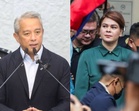
ON Sept. 4, 2026, the Quezon City Regional Trial Court (RTC) Branch 98 issued a warrant of arrest against Vice President Sara Duterte. The warrant covers three counts of grave threats arising from statements she made in an online press briefing on Nov. 23, 2024, where she stated that she spoke to someone and instructed that President Ferdinand Marcos Jr., first lady Liza Araneta-Marcos, and then-speaker Martin Romualdez be killed if she were killed.
Those same statements form the basis of one of the articles of impeachment now being tried before the Senate of the Philippines.
The decision to issue the warrant while the impeachment process continues creates serious problems under the constitutional design of the Philippines. Under the 1987 Constitution, the vice president is an impeachable officer. Removal from that office can occur only through the process of impeachment. This special status exists to allow constitutional officers to perform their duties without constant interruption from ordinary criminal processes based on facts that may also serve as grounds for impeachment.
In Ombudsman vs. CA (GR 146486, March 4, 2005), the Supreme Court restated a long-recognized rule. An impeachable officer cannot be criminally prosecuted for the same offenses which constitute grounds for impeachment while the officer continues in office. The Court drew this principle from earlier rulings, including Estrada vs. Desierto (GR 146710-15, April 3, 2001) and Lecaroz vs. Sandiganbayan (GR L-56384, March 22, 1984). The rule exists only for as long as the officer remains in the position. Once the officer leaves office through removal or resignation, the prohibition is lifted and criminal prosecution may proceed.
This principle of sequencing protects the constitutional process. The Senate is the body the constitution assigns the task of deciding whether the conduct is serious enough to remove the officer from office. Allowing a regular court to issue an arrest warrant and proceed toward trial on the same facts places the judicial branch in direct competition with the constitutional process already under way.
The result is parallel proceedings on the same set of facts. One forum is political and constitutional, where the only available sanctions are removal and disqualification. The other forum is criminal, where the available sanctions are imprisonment and fine. The two processes serve different purposes but they examine the same facts and circumstances. This situation invites conflicting judgments and institutional friction. It also places unnecessary pressure on a sitting impeachable official whose ability to discharge constitutional functions should not be disturbed.
An even clearer problem appears if the Senate eventually decides not to remove the vice president. Suppose the Senate, after full hearing and deliberation, concludes that the statements made by Vice President Duterte do not justify her removal from office. That conclusion would represent the judgment of the constitutionally designated body on the gravity of the conduct. At that point, the continued existence of a criminal case based on the same statements would create an absurd and incoherent situation. The highest political forum would have declined to treat the acts as justification for removal. However, a regular court would still treat those same acts as criminal and as justification for conviction. Such a result would undermine the primacy of the impeachment process. It would leave the public with two official determinations that point in opposite directions on the same facts.
The same difficulty extends beyond the present case. If a sitting vice president can be subjected to criminal arrest and trial for conduct that is simultaneously the subject of an impeachment, then the same approach could be applied to other impeachable officers. Supreme Court justices, the Ombudsman, and members of the constitutional commissions would face the same situation. The constitutional scheme that protects the independence of these offices would be weakened.
None of this denies that serious statements require accountability. However, the accountability must follow the proper sequence. The Constitution places the question of removal first in the hands of the Senate. The determination of criminal liability remains available after the officer leaves office or after the impeachment process ends. Issuing a warrant of arrest while the Senate trial is ongoing reverses that order. It treats the criminal process as the primary mechanism rather than the secondary one. The result is needless collision between two constitutional paths that should operate in sequence rather than in competition.
The better course is deference. While the Senate examines the same statements, the criminal action should pause. That approach respects the limited procedural protection that belongs to the impeachable officers while they remain in office. It avoids the risk of contradictory institutional findings. It likewise prevents the absurd outcome that would follow if the Senate declines to remove the officer but a criminal case continues on the identical facts. Constitutional order requires that the special status of impeachable officers be given practical effect. The issuance of the warrant while the impeachment process is underway contravenes that special status.
Rafael P. Tuvera is a lawyer who taught law and political science. He analyzes geopolitics and diplomatic strategy with an emphasis on productive approaches with legal and historical context.