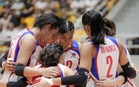
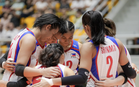
We have to call it what it is: a debacle. This is our worst ever finish in the Asian Games. Ninth place, eliminated in the Group rounds.
This is probably the worst performance by a defending champion at the Asian Games. It’s even worse than the 7th place finish from the Gilas team who were exhausted from competing in the World Cup just weeks before.
That team had serious issues, including the sudden replacement of Andray Blatche due to eligibility. Asian Games eligibility rules are volatile, and naturalized player Blatche was disqualified because he lacked residency–which is no longer a requirement now.
Aside from coach Tim Cone’s sweeping, Captain Obvious statement that “we did not send our best players,” we can narrow down some factors.
It should be mentioned that it was not really expected for this team to defend the gold medal. South Korea sent their Team A, and China also wanted to compete. Our FIBA windows team would have found it difficult to beat either one, perhaps even with a naturalized player. Speaking of that:
No Naturalized Player
We can’t overstate not using any naturalized player in a tournament where we could have used more than one. We don’t have Brownlee or Boatwright, but we had two tall players the SBP did not bother to tap. Then we complain that we’re undersized.
This could have made a difference. The key was the Bahrain game, which Gilas should have won. They had four naturalized players, all taller than our centers. Our guards were busy double-teaming Sampson and Thomas, they left Mustafa “Mosti” Rashed (no.73) open for three pointers. The imports and Rashed all had 20+ points. Even Malik Diouf would have helped prevent or lessen that. With a close game, that would’ve turned the tables.
No Priority
Just like most countries, the Philippines was more focused on the FIBA window. However, the pride of being the defending champions should not be scoffed at.
China was obviously sore at Gilas for defeating them in 2023. That was evident in their effort to eliminate us in the last group game. The team did not let up even until the final buzzer. It was natural for Gilas since they were fighting for their lives. China was already the top seed and had nothing to compete for–except sweet revenge.
If China placed value on the Asian Games, why shouldn’t we?
Is this an admission by the SBP that we really cannot compete without the Japan-Korea Asian imports? Or is it the reverse: were they rying to make a point that an all-PBA team could survive in the international scene?
From Tim Cone’s statement, it seems like it’s the former. Despite assistant coach Richard del Rosario’s denials, the team accepted their fate.
For one thing, they could’ve formed the team and practiced early, since they did not plan on using players from the Window. Except for Justine Baltazar and Justin Arana, who were late replacements for the FIBA games, this was a totally different team. If they weren’t using Cj Perez, Scottie Thompson, Juan Gomez de Liano, and others, they should’ve finalized the roster since the start of the PBA break.
Failed Experiments
Robert Bolick was heavily advocated, even in this space. It seems like the reservations on his international play hold water. In my proposed Team A, I would replace him with Calvin Oftana, the 12th man, late addition. It’s a tough job since the players’ performances fluctuate. Oftana was criticized in the last window, but he redeemed himself now.
Sedrick Barefield was another name heavily suggested. This is the only tourney where he is eligible, but his hero-ball mentality just simply didn’t work at this level.
The Big Question
How should we treat the Asian Games, and the SEA Games for that matter?
Should it be an audition for FIBA, so young prospects should take the cudgels? Or should we develop a totally separate pool where FIBA ineligible players can finally show their wares?
The PBA will reload more of both sides of the talent pool in the 2027 Draft. They owe their fans at least a podium finish in the 2030 Asiad.