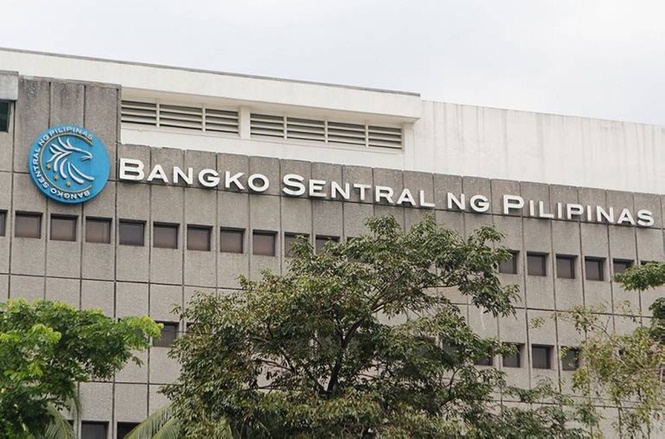
THE Bangko Sentral ng Pilipinas (BSP) on Tuesday said it was proposing stricter capitalization requirements for remittance companies and money changers amid growing transaction volumes and evolving operational risks.
Under a proposed circular amending its regulations on the establishment, organization and capitalization of money service businesses (MSBs), the BSP said it sought to require remittance and transfer companies (RTCs) with average monthly network transactions of at least P75 million to maintain a minimum capital of P50 million.
Money changers and foreign exchange dealers (MC/FXDs), meanwhile, will be required to maintain a minimum capital of P10 million if their average monthly network transaction value reaches at least P50 million.
“The amendments ... form part of the Bangko Sentral’s broader initiative to strengthen the MSB industry’s ability to manage their attendant risks arising from increasing scale, evolving risk exposures, and greater operational complexity,” the central bank said.
The proposed rules will also require money service businesses to maintain capital commensurate with the nature, scale and complexity of their operations, as well as their risk profiles.
The BSP added it may require companies to hold capital above the prescribed minimum depending on their transaction volumes, network reach, funds under custody or control, customer and settlement exposures, reliance on third parties, and dependence on technology.
The proposed regulations will also introduce enhanced capital assessments for remittance companies exceeding P75 million in average monthly network transaction value and money changers exceeding P50 million.
Companies covered by the enhanced assessment will be required to maintain an additional operational buffer equivalent to at least six months of projected operating expenses, or a higher amount if warranted by their risk profiles.
The buffer will be maintained on top of the minimum capital requirement to help businesses absorb unexpected losses and remain operational during adverse events or business disruptions.
“This aims to ensure the continuity and resilience of its operations in the event of material risks, adverse events, or unforeseen business disruptions,” the central bank said.
It added that this would also provide a “financial safeguard that would absorb unexpected shocks without compromising the MSB’s financial soundness and ability to continue operations.”
Companies will also be required to periodically assess whether their capital is sufficient to support operations, absorb material losses, meet obligations under normal and stressed conditions, and facilitate an orderly recovery or cessation of business.
The proposed rules will require money service businesses whose capital falls, or is likely to fall, below the prescribed requirement to prepare and implement a capital restoration plan within a period set by the central bank.
While a company works to restore its capital position, the BSP may restrict dividend distributions, business expansion, additional branches or agents, new products, customer onboarding, and other activities that could increase its risk exposures.
“Failure to restore capital may result in restriction, suspension, or revocation,” the BSP said.
The proposed amendments will also allow deposits for stock subscriptions to be recognized as part of equity for prudential reporting purposes, provided certain conditions are met.
These include the deposit being non-interest-bearing and non-withdrawable, the company’s existing authorized capital being fully subscribed, and its stockholders and board of directors having approved a proposed increase in authorized capital.
The company must also have filed a request for a letter of no objection from the BSP for the amendment of its articles of incorporation to increase its authorized capital, supported by the required documents.
Approval from the Securities and Exchange Commission must subsequently be obtained within the prescribed period.
“If the SEC application is denied, withdrawn, returned for incomplete documents, or not approved within the prescribed period, the deposit shall cease to qualify as equity and shall be reclassified under applicable accounting standards,” the BSP said.
“The MSB shall notify the Bangko Sentral and file a restoration plan if the reclassification causes a capital deficiency,” it added.