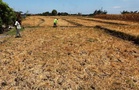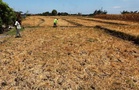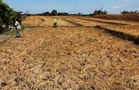
HALF a billion pesos. That’s how much farmers in Central Visayas — that is, Cebu and Bohol — may lose to drought before the 2026-2027 Super El Niño is over. With reduced agricultural output, farmers and the consuming public alike will suffer.
The dire predictions were made by the Department of Agriculture Central Visayas. During the Nov. 10 edition of MyTV Cebu’s Open Line News Media Forum, DA-7’s Field Operations Division chief Gerry Avila explained that, in order to minimize the losses, farmers are advised to plant crops that require less water and which have shorter maturity.
They are also encouraged to mulch.
Mulch helps retain soil moisture.
El Niño is nothing new. But the weather pattern is getting more frequent and more severe due to climate change.
It was as recent as 2024 that Cebu last experienced a devastating El Niñoinduced drought. The sun was biting the skin and hurting the eyes by February.
Plants turned brown and crisp. Water sources dried up. It is so recent that not even our politicians haven’t forgotten.
Indeed. El Niño and water shortages “no longer count as isolated events,” Cebu City councilor Dave Tumulak pointed out during an executive session of the city council last May (CDN Digital, May 24, 2026). While the session tackled water shortage issues and damage to crops in the upland farms at the time — summer — the city councilors went further. According to news reports, the councilors criticized the city government’s penchant for procurement of water drums, hoses and the like instead of putting resources into long-term solutions for the benefit of the city’s about 13,000 registered farmers.
With the advanced warning systems and tools available to meteorological services and governments today, we know months in advance if an El Niño will form and when impact is likely to be felt. We know that the weather pattern brings below-normal rainfall and drought to the Philippines. In other words, we have time to make preparations to cushion the effects. We know that some preparations need to be permanent rather than short-term. It may, once upon a time, have been sufficient to distribute water containers and hoses, but it certainly no longer is.
If we are to believe the Commission on Audit, Cebu City’s 2023-24 El Niño response to the calamity faced by farmers in the city’s hilly lands is a study in how things should not be done. Twenty-eight upland barangay (villages) were placed under a state of calamity in late March 2024. Heat and drought conditions had already been wreaking havoc on farms for weeks. The calamity declaration authorized the city government to do away with public bidding and instead conduct “emergency purchase.” Two purchase orders worth P54.75 million and P24.178 million, respectively, were issued on April 30.
They covered, among others, 3,000 200-liter water drums, 3,200 rolls of hoses, 2,000 rolls of pondliner (at P17,880/roll), and 50 gasoline water pumps (at P24,820/pump).
To make a long story short, COA — by early 2025 — found that many of the supplies had not been distributed to the intended beneficiaries. For example, of the 100 1,000-liter capacity intermediate bulk containers (IBC), five were distributed in June 2024 (when the weather had normalized), and 25 between December 2024 and February 2025.
What had happened to the remaining 70? Of the 2,000 rolls of P17,880/roll pondliners, 284 were distributed from May to July 2024. As of February 2025, 697 remained undistributed.
The city agriculture department explained that it lacked vehicles to haul the items to the upland barangay. The farthest of these barangay is about 40 kilometers from Cebu City Hall. Is the city’s response to the expected Super El Niño-induced calamity in the hilly lands going to be similar, that is, poorly planned, late and inadequate? Incidentally, some of the farms are served by irrigation systems. But the issue of irrigation systems appears to be a thorny one judging from the exchange during the above-mentioned executive session. City agriculturist Joelito Baclayon reported that of 44 NIA irrigation facilities, only 31 were operational, that is, as of May 2026. Most of the operational facilities were affected by the summer drought, according to the official.
The discussion suggested that there is little coordination between the city government and NIA in managing and monitoring the irrigation systems. This is unfortunate considering the Super El Niño. Will the NIA irrigation systems, which serve hundreds of members of local irrigation associations, be able to keep at least some farms productive? We need all hands on deck to minimize the devastating effects of the 2026-2027 Super El Niño. Government agencies, local as well as national, must work together. Even if the ongoing COP31, however unlikely, produces a positive outcome, frequent and stronger El Niños are to be expected with short, regular intervals for a very long time.