Canadian Prime Minister Mark Carney has said Ottawa could look to Chinese automakers if negotiations with US President Donald Trump fail to safeguard an integrated North American car industry.
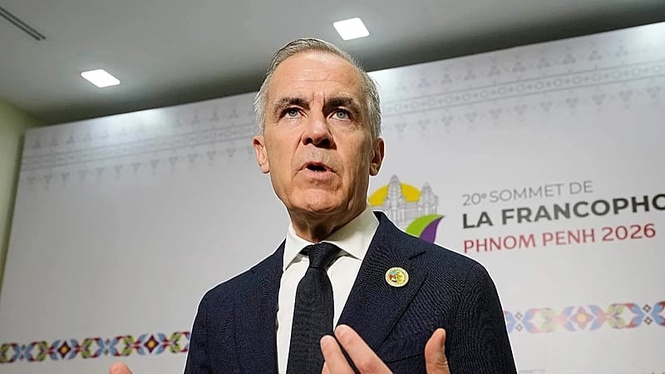
Speaking to reporters at the Francophonie Summit in Phnom Penh, Cambodia, on Monday, Carney said Canada’s auto workers, which he called “the best in the world”, should be “fully deployed” in a continental market. That market, he said, “has become less integrated because of US trade actions”.
He insisted that talks with the United States remain his priority but said their outcome could determine whether Ottawa turns to European, Chinese or Japanese manufacturers instead.
Asked whether the prospect of Chinese investment was a bargaining chip in the US talks, he answered, "It's not leverage. But action, reaction.”
“If they’re not fully utilised in a North American context, that provides other opportunities,” he said of Canada’s auto workers and factories. “Canada is going to move forward either way.”
His remarks come days before a planned meeting with Chinese President Xi Jinping in Shenzhen, where auto manufacturing is expected to be on the agenda.
Earlier, Carney in Manila on Saturday said that any trade deal with Washington must leave Canada with a viable auto industry. He stressed that he had spoken at length with Trump and senior US officials and that the two sides were making progress towards a possible agreement, though differences remained.
Carney states conditions for Chinese investment
Carney was clear that any Chinese involvement would have to go well beyond assembly. Investment would need to include substantial manufacturing in Canada, proper labour standards, and domestic supply chains that grow over time, including the use of Canadian critical minerals in electric vehicles.
“It’s not just about kit cars,” he said. “There has to be a manufacturing aspect involved.”
Carney and Xi reached an agreement in January that cut Canada’s 100% tariff on Chinese electric vehicles to 6.1%. The deal initially allows up to 49,000 vehicles a year, with the cap set to rise over time. In return, Beijing agreed to lower tariffs on Canadian agricultural goods, including canola.
Carney said at the time that he expected the arrangement to draw Chinese investment into Canada’s car industry and create jobs.
The agreement was criticised by Ontario Premier Doug Ford, whose province is the heart of Canadian auto manufacturing. Ford warned it could threaten Canadian jobs and put access to the US market at risk.
RelatedCanada’s auto sector depends heavily on cross-border production. The “Detroit Three” of Ford, General Motors and Stellantis run plants across Canada, the United States and Mexico, with parts sometimes crossing borders several times before a vehicle is finished. Trump has repeatedly pressed carmakers to shift production from Canada to the US.
His tariffs have disrupted the industry. Canada recently threatened legal action against Stellantis after the company moved planned Jeep Compass production from Brampton, Ontario, to Illinois and agreed to sell its idled Canadian assembly plant.