Every year, on the 9th day of Chinese New Year, the Hokkien community comes together in a unique and meaningful celebration. They offer prayers and perform rituals to honor the Jade Emperor, the supreme ruler of Heaven, but what sets this day apart from other traditional observances is the use of sugar cane. Yes, sugar cane, a humble, everyday crop. Yet, in the Hokkien culture, it is not just any plant; it holds deep significance and is at the heart of their celebration.
But why sugar cane? What does this unassuming stalk of sweetness have to do with the Jade Emperor and the survival of a community? To those unfamiliar with this custom, it might seem like a curious and even puzzling choice. After all, why would a specific crop be chosen as the central offering to the ruler of Heaven and why is it tied so closely to the 9th day of the lunar new year?
The answer lies in a centuries-old story that has been passed down through generations. This tale, set against the backdrop of ancient China’s turbulent history, reveals how sugar cane became a symbol of protection, survival and divine intervention.
The Hokkiens: A Brief Overview
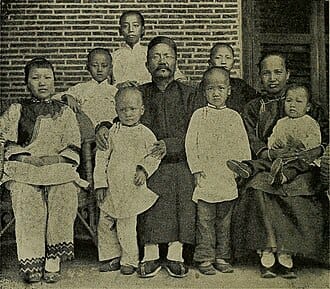
The Hokkiens are a subgroup of the Han Chinese, hailing from Fujian province in southeastern China. This coastal region has historically been a hub of trade with Southeast Asia. As a result, during the 14th to 17th centuries, many Hokkien immigrants settled in various Southeast Asian countries. These early settlers played a significant role in introducing Chinese customs and practices to the region, which has left a lasting imprint on local languages. Numerous words of Hokkien origin are now part of Malay, Indonesian, and Filipino vocabularies, especially in food-related terms like "mi" (noodles), "kicap" (soy sauce), and "kue" (cake).
As these immigrants married local Southeast Asians, they created the Peranakan Chinese community, blending their Chinese heritage with local traditions.
The Origin of Sugar Cane Worship
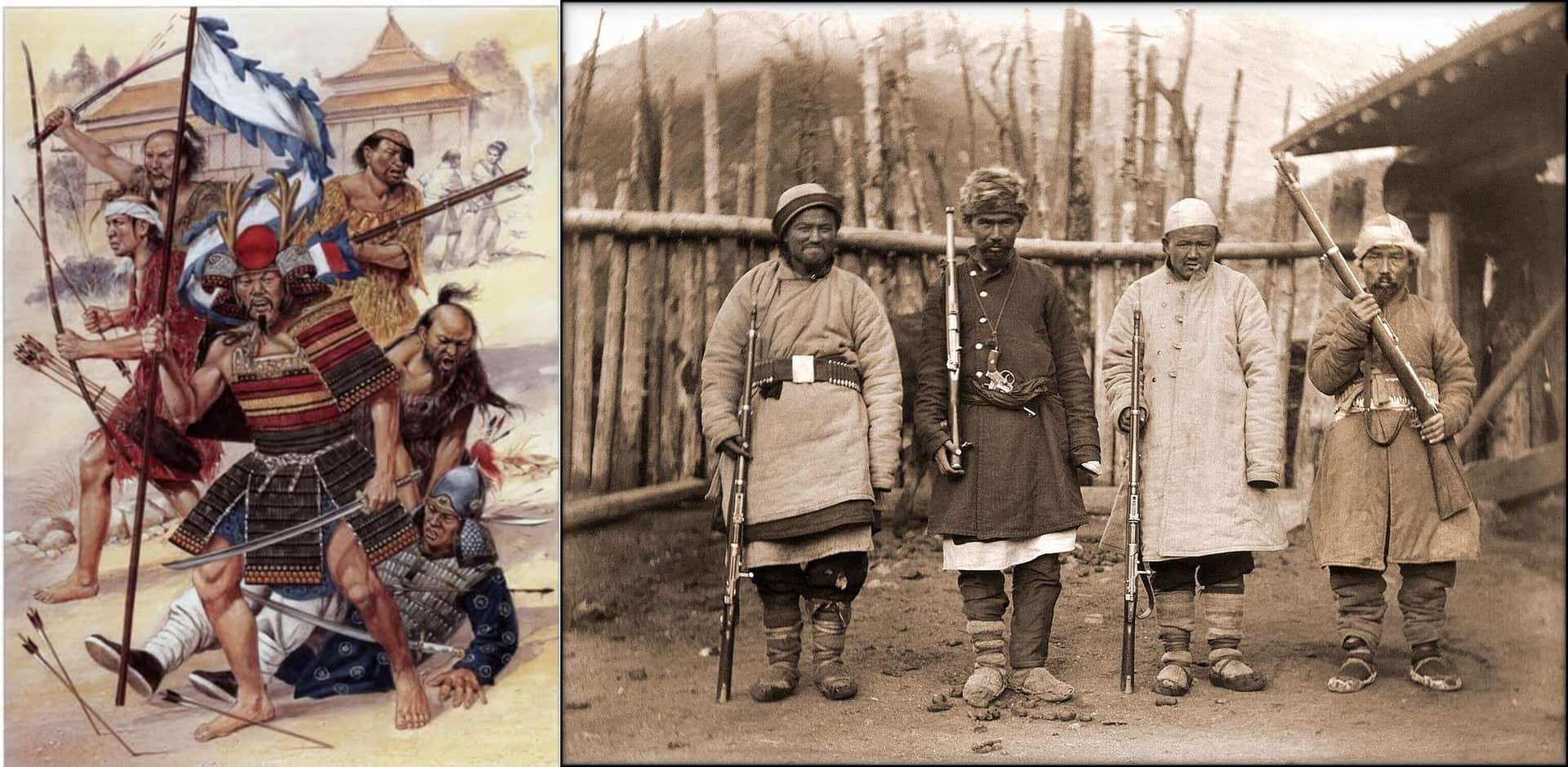
One popular tale traces the use of sugar cane in Hokkien worship to the Ming dynasty (1368–1644). According to the story, a group of villagers from Fujian sought refuge in a sugar cane field when their settlement was attacked by wokou, or Japanese pirates, during the Lord of Heaven's feast day. By hiding among the tall, dense sugar cane stalks, the villagers avoided being slaughtered by the marauding pirates, notorious for their violent raids along China's coastal areas.
In a different version of the tale, the story takes place during Chinese New Year. Villagers fled to the sugar cane fields to escape a group of bandits who were pillaging and killing people. Desperate, the villagers prayed to the Jade Emperor for protection. After several days, the bandits gave up their search and left. The villagers emerged, only to discover that it was the 9th day of Chinese New Year - the Jade Emperor’s birthday. Grateful for their survival, the villagers offered prayers and sugar cane to show their thanks.
Though the specifics of the attack differ in the two versions, the core of the story remains the same: the Hokkiens took refuge in the sugar cane fields, prayed to the Jade Emperor for safety, and survived. They saw their deliverance as a divine sign, and ever since, they have marked the 9th day of Chinese New Year, the Jade Emperor’s birthday, with offerings of sugar cane in gratitude.
The Hokkien Celebration
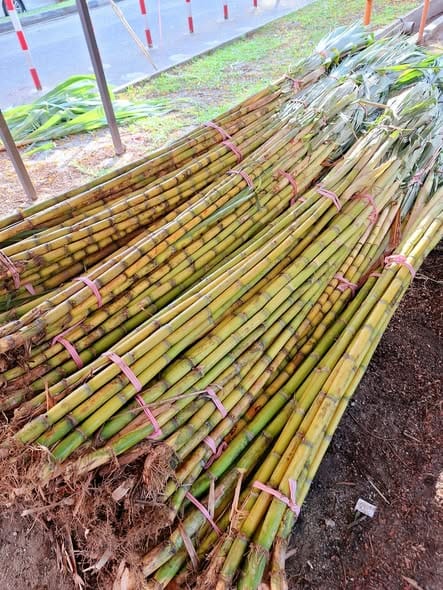
Sugar cane has become a central symbol in Hokkien New Year celebrations, owing to its association with survival and divine intervention. Two whole sugar cane stalks are placed prominently during the celebration, often tied to the offering table or hung above the doorway. These stalks represent harmony and cooperation, with the nodes symbolizing continuous growth. Joss paper or "kim chua" is tied to the tops of the sugar cane stalks, as an offering to the ancestors and the Jade Emperor.
The celebration begins on the evening of the 8th day of Chinese New Year, around 11 PM, which marks the start of the 9th day according to traditional Chinese timekeeping. During the ceremony, prayers are offered, and the community chants “T’i Kong po pi, po pi,” meaning "Jade Emperor, protect us."
An altar, often draped in red, is set up outside facing the sky, filled with offerings such as roast meats, dried cuttlefish, fruits, and various sweets like ang ku kueh (red tortoise cake), t’i kueh (sweet rice cakes) and pink mee ku (steamed buns). One of the most significant offerings is huat kueh, a rice sponge cake that symbolizes prosperity. The more it rises, the better the fortune for the upcoming year.
Once the prayers conclude, the joss paper is burned in a symbolic act of sending offerings to the heavens. The two sugar cane stalks are also thrown into the fire, accompanied by fireworks, signaling both the start of the 9th day and the continued survival and prosperity of the Hokkien people.
Through these rituals, the Hokkiens not only pay homage to the Jade Emperor for their protection but also reinforce values like unity, gratitude, and hope for the future.
The use of sugar cane in the Hokkien celebration of the Jade Emperor’s birthday is more than just a tradition – it is a profound expression of gratitude, survival, and divine protection. This simple yet powerful symbol has carried generations through centuries, linking the past to the present in a meaningful way.
As the Hokkien community gathers each year on the 9th day of Chinese New Year, the ritual serves not only as a remembrance of their ancestors’ resilience but also as a reaffirmation of faith in divine providence. The offering of sugar cane, along with prayers and symbolic acts, continues to strengthen the bonds within the community.
In the end, the story behind this tradition reminds us that even in the most challenging times, there is always room for hope and faith. The humble sugar cane, once a refuge in a time of danger, has now become a cherished part of the Hokkien cultural fabric, symbolizing protection, prosperity, and unity for generations to come.
.png)
Got a fun CNY story? Share it, and you might take home Ang Pow and prizes worth up to RM2,980! Find out how to join here. T&Cs apply.
Aaron Colt (aaronafter@hotmail.com) is a content creator under the Newswav Creator programme, where you get to express yourself, be a citizen journalist, and at the same time monetize your content & reach millions of users on Newswav. Log in to creator.newswav.com and become a Newswav Creator now!
The User Content (as defined on Newswav Terms of Use) above including the views expressed and media (pictures, videos, citations etc) were submitted & posted by the author. Newswav is solely an aggregation platform that hosts the User Content. If you have any questions about the content, copyright or other issues of the work, please contact creator@newswav.com.