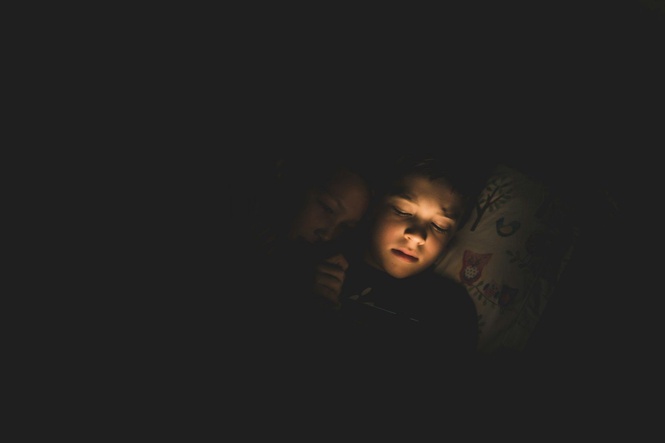
Sleeping with even modest light in the room may be linked to early changes in the heart that could increase cardiovascular risk over time, according to new research published recently in European Heart Journal, involving more than 11,000 adults in the UK Biobank study.
The findings add to a growing body of evidence suggesting that darkness at night is not simply a comfort preference. It may be an important part of protecting sleep, regulating the body clock and supporting long-term heart health.
“Humans run on an internal timing system known as the circadian rhythm. This roughly 24-hour clock helps regulate sleep and wakefulness, hormone release, body temperature, metabolism, blood pressure and cardiovascular activity. Light is among its most powerful environmental signals”
Researchers found that people exposed to more light during the night showed small but measurable differences in heart structure and performance on cardiac MRI scans about three years later. These included slightly thicker heart muscle walls, greater mass in the left ventricle and reduced measures of heart contraction.
The changes did not mean that participants had diagnosed heart disease. Yet they are patterns associated with cardiac remodelling, a process in which the heart changes its shape, thickness or pumping characteristics in response to chronic strain. Cardiac remodelling can occur in conditions such as high blood pressure, heart failure and atrial fibrillation.
The study focused on light exposure above 3 lux during the night. That is a low level of illumination. For perspective, it is far dimmer than ordinary indoor lighting, although it may be comparable to the glow produced by some nightlights, light leaking through curtains, electronic displays or bright outdoor street lighting.
Participants wore wrist-based devices to measure their personal light exposure. Researchers then used cardiovascular magnetic resonance imaging, often called cardiac MRI, to assess detailed features of the heart’s structure and function.
Compared with people without recorded night-time light exposure above 3 lux, those with higher exposure had a 2.4% greater left ventricular mass. Their average heart-wall thickness was 1.5% greater. They also had a 1.9% lower myocardial contraction fraction, a measurement that reflects how efficiently the heart muscle contracts.
Other subtle differences involved myocardial deformation, the right ventricle and the left atrium. On their own, these small variations are not proof of imminent disease. They may, however, point to biological pathways through which repeated exposure to light at night could contribute to cardiovascular problems later in life.
The research is observational. It cannot establish that night-time light directly causes heart changes. People exposed to more light during sleep may differ from those sleeping in darkness in other meaningful ways. They may have irregular sleep schedules, live in urban areas, work shifts, have poorer sleep, experience more stress or already have health factors that affect the heart.
That limitation matters. Association is not causation.
Still, the findings fit with earlier work on light, sleep and cardiovascular outcomes. A 2025 study published in JAMA Network Open followed nearly 89,000 UK Biobank participants for around 9.5 years after measuring personal light exposure for one week. People in the group exposed to the brightest conditions at night had higher risks of several cardiovascular conditions than those in the darkest group.
The reported risks were 32% higher for coronary artery disease, 47% higher for heart attack, 56% higher for heart failure, 32% higher for atrial fibrillation and 28% higher for stroke. The study also identified a dose-response pattern, meaning risk generally rose as night-time light exposure increased.
These figures describe relative risk, not certainty that an individual will develop disease. They also do not show that light alone was the cause. Yet the consistency of the pattern has prompted greater interest in night-time light as a possible, potentially modifiable aspect of cardiovascular health.
A 2024 review covering more than one million participants across 14 studies also linked greater light exposure at night with a higher risk of cardiometabolic disease. Cardiometabolic disease includes conditions affecting the heart, blood vessels and metabolism, such as cardiovascular disease, type 2 diabetes and obesity-related disorders.
The biological explanation is plausible, though not yet complete.
Humans run on an internal timing system known as the circadian rhythm. This roughly 24-hour clock helps regulate sleep and wakefulness, hormone release, body temperature, metabolism, blood pressure and cardiovascular activity. Light is among its most powerful environmental signals.
Bright daylight, particularly in the morning, helps anchor the body clock. Darkness at night helps signal that it is time to rest. Artificial light after bedtime can blur that distinction.
Night-time light may delay or disrupt circadian timing. It may suppress melatonin, a hormone that rises in darkness and helps coordinate sleep-related processes. It may also fragment sleep, shorten total sleep time or make it harder to enter and maintain deeper stages of sleep.
In the new analysis, shorter sleep appeared to explain between 24% and 49% of the association between night-time light exposure and several heart measures. This suggests sleep duration could be one important link. It is unlikely to be the only one.
Poor or insufficient sleep has already been associated with raised blood pressure, impaired glucose control, inflammation, weight gain and changes in autonomic nervous system activity. The autonomic nervous system regulates functions that occur largely without conscious control, including heart rate and blood-vessel tone.
Repeated sleep disruption can place strain on these systems. Over months or years, that strain may contribute to the gradual structural changes seen in the heart.
There are also practical reasons why the issue deserves attention. Night-time light is widespread. It comes from phones, tablets, televisions, alarm clocks, charging devices and indicator lights. It may enter bedrooms from streetlamps, traffic, security lighting, advertising displays or neighbouring buildings.
For some people, especially those in densely populated areas, achieving complete darkness may be difficult. A bedroom does not need to resemble a sealed studio for sleep to be healthier. The aim is to reduce unnecessary light and create an environment that supports normal circadian rhythms.
Blackout curtains or properly fitted blinds can help block external light. This may be particularly useful in homes near busy roads, city centres or floodlit buildings. Eye masks can be an inexpensive alternative where curtains alone are not enough, provided they are comfortable and do not interfere with sleep.
Electronic devices deserve special attention. Phones are often kept beside the bed, where notifications, screen checks and charging lights can introduce repeated bursts of light throughout the night. Keeping a phone outside the bedroom, or at least out of reach and face down, may reduce both light exposure and the temptation to check messages after bedtime.
Televisions can also affect sleep. Falling asleep with the television on exposes the room to fluctuating light and sound, neither of which is ideal for uninterrupted rest. Setting a sleep timer may be helpful for people who use television as part of their bedtime routine.
Where a nightlight is necessary, experts advise choosing the dimmest option that safely provides visibility. Warm-coloured lighting is generally preferable to bright, cool-toned or blue-enriched light. The light should be positioned low and directed towards the floor rather than the bed or face.
Parents, older adults and people who need to use the bathroom overnight may have valid reasons for using a nightlight. Safety should not be compromised in pursuit of darkness. The practical goal is enough light to prevent falls and navigate safely, not more light than necessary.
A consistent sleep schedule may offer benefits too. Going to bed and waking at broadly similar times helps reinforce circadian rhythms. Exposure to natural daylight early in the day can provide another strong timing cue. A morning walk, opening curtains promptly or spending time outdoors can all help signal that the day has begun.
The emerging evidence does not mean that one evening with a lamp on will damage the heart. Nor should it cause anxiety among people who cannot fully control their surroundings. Cardiovascular health is shaped by many factors, including blood pressure, diet, physical activity, smoking, alcohol intake, diabetes, cholesterol, stress, sleep disorders and family history.
Light at night should be viewed as one piece of the wider picture.
The next research step is more demanding. Scientists need studies that test whether reducing night-time light improves sleep, blood pressure, circadian markers or measures of heart function. They also need to determine whether the cardiac differences seen on MRI can be reversed, whether particular groups are more vulnerable and whether outdoor light has effects separate from indoor devices.
Shift workers may require particular attention. Their schedules often involve unavoidable exposure to light at biologically unusual times, alongside disrupted sleep and meal patterns. Such work is essential in healthcare, transport, emergency services and many other sectors. Better evidence may eventually help employers and clinicians develop practical strategies to reduce risks without making work impossible.
For now, the message is measured but useful. Make the bedroom as dark as is reasonably safe and practical. Treat sleep conditions as part of general health care, not an afterthought.
A darker room will not replace medical advice, prescribed treatment or established heart-health measures. It may, however, be a simple, low risk and low-cost adjustment with potential benefits for sleep and possibly for the cardiovascular system.
The latest findings strengthen a familiar piece of sleep advice with a newer clinical concern. In an increasingly illuminated world, protecting the night may be one way to protect the heart.
The post Even Dim Bedroom Light Linked to Higher Risk of Heart Disease first appeared on PP Health Malaysia (PPHM) | 10POINTS Evidence-Based Health News.