Andy Burnham has left the door open to stopping a planned fuel duty rise in the new year, saying “every possible measure” is being considered to ease the cost of driving.
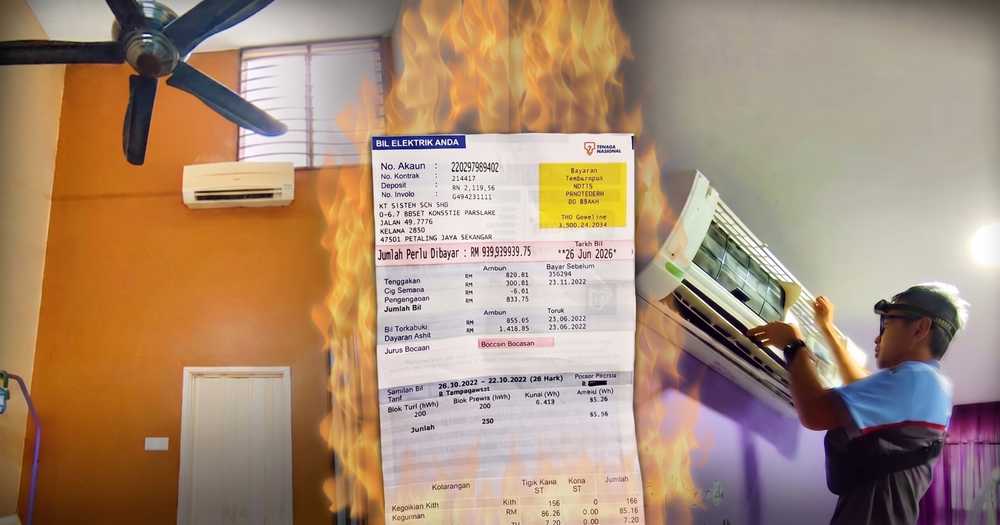
The Prime Minister said it is not an overstatement to describe the situation as an energy crisis, with both prices at the pumps and household electricity and gas bills increasing.
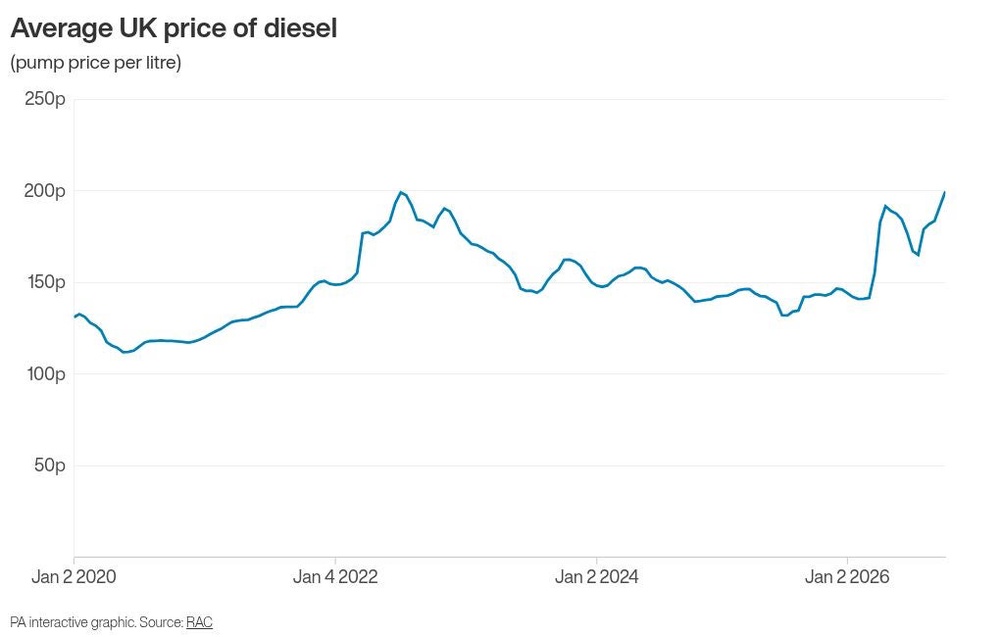
The average pump price of diesel stood at a record 199.72p per litre on Wednesday, according to figures compiled by the RAC.
Prices have risen steadily in recent weeks and on Monday surpassed the previous all-time peak of 199.09p that was set in June 2022.
A litre of diesel now costs on average 57.3p more than it did at the start of the US-Iran war on February 28.
Fuel duty applied to diesel is due to rise on January 1, from almost 53p per litre to almost 56p.
Asked whether he would halt the change, the Prime Minister told BBC Breakfast: “I’m considering everything that might help people in very difficult times and I will be honest and say every possible measure is being looked at.
“The question I’ve got is: ‘How many can I afford?’
“‘What can we do given the state of the public finances?’”
On the BBC’s Today programme, asked whether the country was in an energy crisis that could last for months, he said: “I don’t think that is an overstatement, to be honest.
“When I look at the prices at the pump at this moment in time, if we include diesel and petrol within that, this is very challenging, isn’t it, for people who are filling up today?
“When we look at energy prices in the home, difficult too.”
He said he was “doing what I can” but “it is very difficult indeed, and it’s why the Middle East situation needs to command a lot of our attention”.
Mr Burnham added: “I met the president of the United States last week. We spoke about this situation. Reopening the Strait of Hormuz is an urgent international priority. We’ve got to work at all of these things.
“The reason, the main driver of that crisis, is beyond our control. But we can contribute to solving that situation, and that is what I’ve been doing as Prime Minister. ”
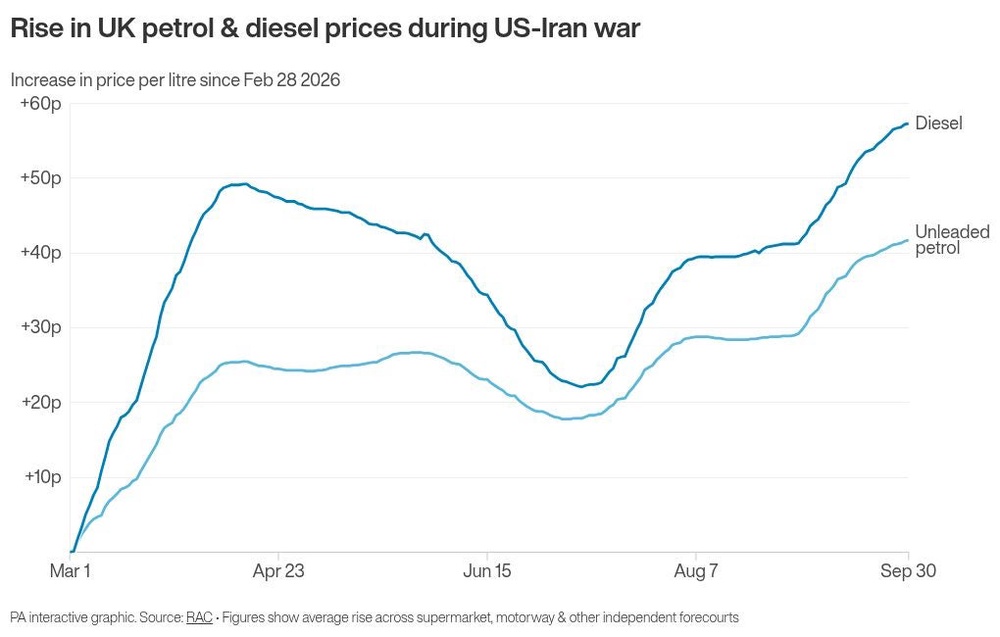
RAC head of policy Simon Williams earlier this week said “the cost of filling up an average family car is now almost £110”.
He added this was £31 more than it was at the start of the US-Iran war, at the end of February.
“The UK might have limited leverage when it comes to ending the US-Iran war and ultimately bringing oil prices down, but the Government could take steps to ease the burden on drivers by lowering fuel duty further or reducing VAT,” Mr Williams said.
Mr Burnham earlier warned Chancellor John Healey does not have “huge room for manoeuvre” as he draws up his first Budget, which he is due to unveil on October 28.
He continued: “We’re thinking all of the time: ‘How do we take a bit of pressure off people, give them some breathing space?’
“It’s why one of the first decisions I took as Prime Minister was to remove VAT off electricity bills, and that will happen on Thursday.”
VAT will be temporarily reduced to zero on household electricity bills in England, Scotland and Wales from October 1.
He also pointed to his previous announcement that single bus fares in England, outside of London, will be capped at £2 for the whole of 2027.
“In the Budget we will consider further measures,” the Prime Minister said.
“It’s important for me to say that we don’t have huge room for manoeuvre.
“I think people can see that when they look at the financial picture, but within that we will do our best, and we’ll also try to support people who are struggling with the cost of doing business ’cause it’s hard to run a business right now as well.”
Bringing down the cost of living, Mr Burnham said, was “hard”.
He added: “The long-term answer is to put water under stronger public control – energy, housing reform, those are the long-term answers.”
Mr Burnham on Tuesday announced plans for a new law to pave the way for public ownership of failing water firms, as he spoke at the Labour Party’s conference in Liverpool.
He said Environment Secretary Dame Angela Eagle would present a “strengthened Water Bill to Parliament”, repealing what he described as “Margaret Thatcher’s ideological ban on public ownership of water companies”.
The legislation will “start a 10-year journey to a very different water system – it will strengthen public control, mayors will have new powers to hold water companies to account, with tougher consequences for those which repeatedly fail,” the Prime Minister said.
A publicly owned company, GB Grid, will also be set up in a bid to “increase competition to drive down costs and speed up delivery so businesses can connect faster and grow quicker”, he added.
Read MoreHow Osborne interview persuaded Burnham to reconsider customs union
Victory for The Independent! The PM has broken the spell on Europe
Burnham says he could go ‘all the way’ and rejoin European Union in Brexit warning
An Israel-bound plane diverts to Saudi Arabia for emergency landing and other Mideast developments
Latest round of talks to break Drumcree impasse gets under way