Malaysia’s concerns about Israeli laws and America’s fears over TikTok raise the same uncomfortable question: can we trust the technology we carry in our pockets?
By Mihar Dias October 2026
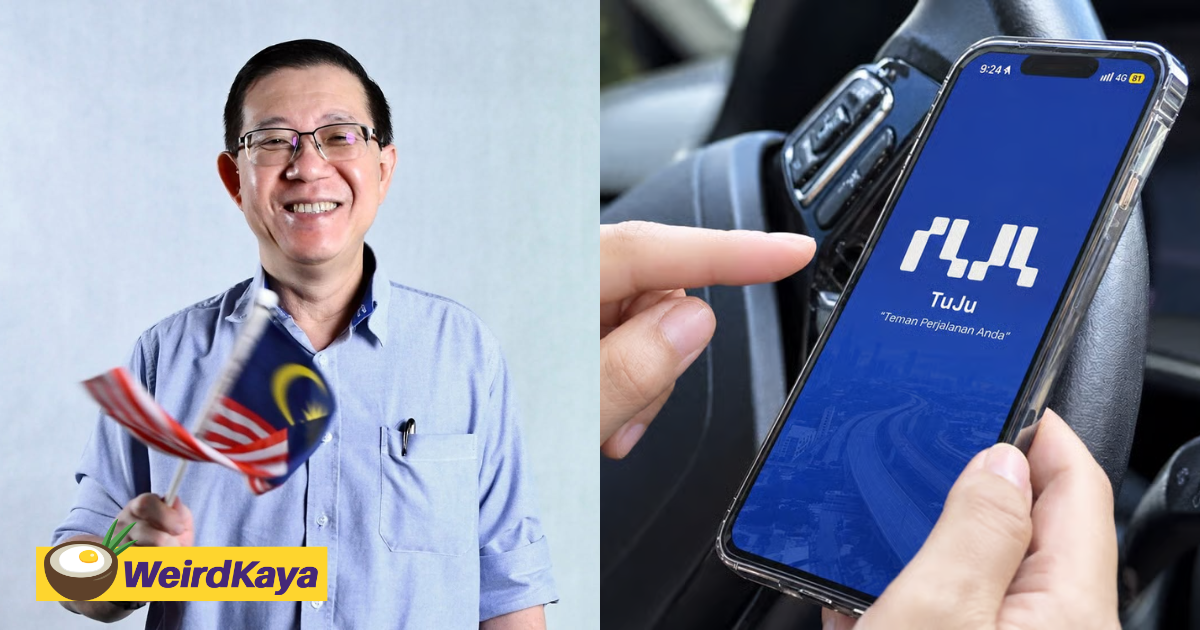
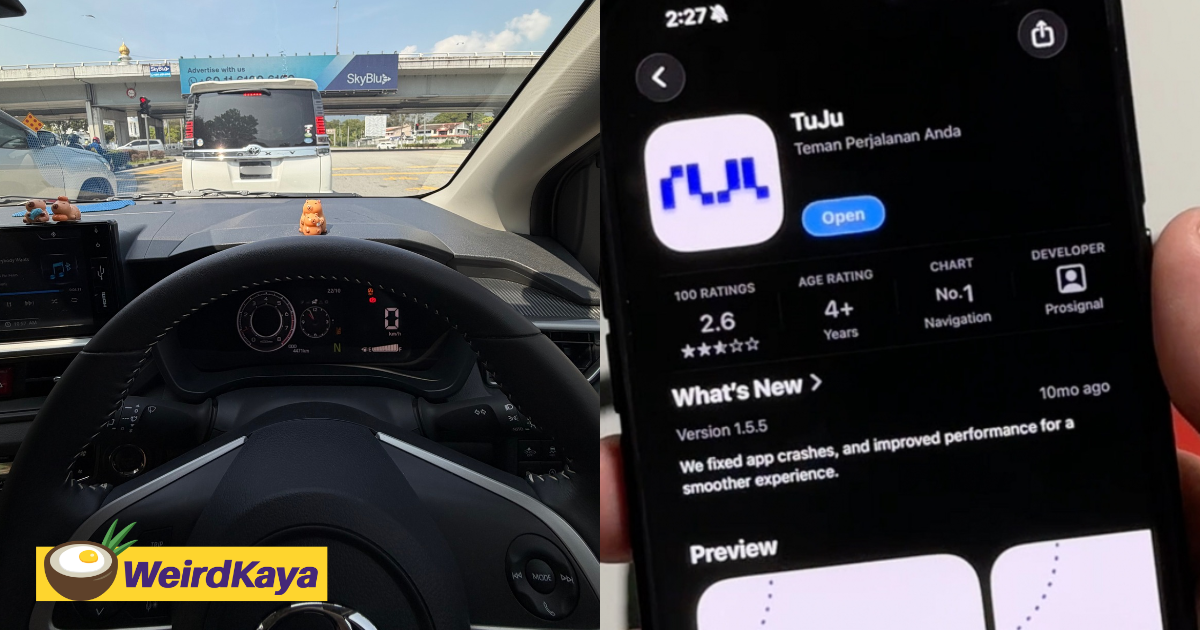
Malaysians have been told to consider changing their navigation habits. Instead of Waze, the government is encouraging us to use TuJu, a locally developed navigation application created by the Malaysian Highway Authority.https://www.channelnewsasia.com/asia/malaysia-anwar-ibrahim-waze-data-security-6477761
The reason? Prime Minister Datuk Seri Anwar Ibrahim has raised concerns about the security of information on Malaysians’ movements because Waze is subject to Israeli laws. The matter was discussed at the National Cyber Security Committee meeting on October 20, 2026. https://www.thestar.com.my/news/nation/2026/10/20/govt-encourages-use-of-tuju-navigation-app-in-place-of-waze
This raises an interesting question. When we ask a navigation application to take us to a shopping mall, a restaurant or a friend's house, are we merely asking for directions, or are we also leaving behind a digital trail of our lives?
Our movements can reveal more about us than we realise. Where we live, where we work, which hospitals we visit, whom we meet and how frequently we travel to particular places can build a surprisingly detailed picture of our habits.
In the wrong hands, such information could be valuable.
But let us distinguish between a possibility and a proven fact. The concern that Waze could expose sensitive movement data deserves examination. However, the fact that an application is subject to Israeli laws does not, by itself, establish that Zionists are monitoring Malaysian motorists through it. That allegation requires evidence, not merely suspicion.
If someone is watching us, we should want to know who, how and under what authority. National security is too important to be reduced to a frightening headline.
America has its TikTok problem
The Americans have been wrestling with a similar dilemma, although their concerns have centred on TikTok, the immensely popular short-video platform associated with Chinese parent company ByteDance.
The United States enacted legislation addressing national security concerns over foreign control of TikTok. The underlying fears included the potential exposure of sensitive personal information and the possibility of foreign influence over content delivered to American users. The dispute has also involved questions about ownership, safeguards and the control of data. The US Justice Department outlined its position in December 2024.
The irony is that Americans who worry about Chinese access to their data have long used digital services operated by companies headquartered elsewhere. Meanwhile, Malaysians have become comfortable relying on foreign applications for navigation, communication, shopping and entertainment.
We have become a nation of enthusiastic digital consumers. We download first and ask questions later.
We are happy to surrender our location, contacts, photographs and browsing habits in exchange for convenience. Then, when a government warns us that a foreign application may expose our information, we suddenly discover that privacy matters.
Perhaps we should have thought about that earlier.
The American and Malaysian cases are not identical. Their legal arrangements, security assessments and technical circumstances differ. But both raise a legitimate question: how much control should a foreign company, or a foreign government acting within its laws, have over information generated by our daily lives?
I favour Malaysian-made applications
For the record, I favour using applications developed locally whenever they can do the job effectively and securely.
Why should Malaysians automatically assume that foreign technology is superior? We have engineers, software developers and cybersecurity professionals capable of building products for our own market. They deserve opportunities to compete, improve and demonstrate what Malaysian ingenuity can achieve.
A home-grown navigation application could also give our authorities greater control over development priorities, local road information and the way public-sector requirements are addressed.
But patriotism should not require us to abandon common sense.
Putting a Malaysian flag on an application does not automatically make it secure. A locally developed product can still have weaknesses, collect excessive information or depend on overseas infrastructure and third-party services. Conversely, a foreign application is not automatically spying on its users simply because of its country of origin.
The proper question is not whether an application is Malaysian, Israeli, American or Chinese. It is whether the application protects our information, whether its operators are accountable and whether independent experts can verify its security.
If TuJu is to replace Waze in the hearts and mobile phones of Malaysians, it must earn that confidence.
Is its collection of location data clearly explained? What information is retained, for how long and for what purpose? Who can access it? Is it shared with third parties? What happens when the application is no longer needed? Has its security been independently assessed?
These are not hostile questions. They are the questions responsible consumers should ask of any digital service, including one developed by our own government.
Sovereignty begins with transparency
There is another point worth considering. A navigation application is only one part of our digital exposure. Our smartphones contain messaging services, social media platforms, cloud storage, banking applications and countless other tools that generate personal information.
If we are serious about digital sovereignty, we cannot concentrate on one application while ignoring the rest of the digital ecosystem.
Nor should cybersecurity become a matter of trusting applications from friendly countries and distrusting those from unfriendly ones. Governments have national interests, companies have commercial interests, and users have privacy interests. These interests do not always coincide.
What we need is a consistent standard of protection, regardless of the flag flying over a company's headquarters.
The government should explain the specific risks it has identified with Waze, disclose whatever technical findings can safely be made public, and establish clear security standards for TuJu. Independent audits and transparent privacy policies would do more to build public confidence than warnings alone.
If TuJu proves to be reliable, convenient and secure, motorists will have good reasons to adopt it. If it falls short, the developers should be given the opportunity to improve it.
A Malaysian application should not receive a free pass simply because it is Malaysian. It should receive a fair chance to prove itself.
Don't just change the app. Change the habit.
At my age, I have learnt that people often react to warnings more quickly than they respond to explanations. Tell them that somebody might be watching them, and they become alarmed. Tell them that they should read a privacy policy, and suddenly they have somewhere else to go.
We cannot build a serious cybersecurity culture on fear alone.
I support the development and use of Malaysian-made applications. I would rather see our own developers build competitive products than watch us depend indefinitely on foreign technology. But the objective should be technological competence, not technological suspicion.
By all means, let us examine Waze. Let us scrutinise TikTok and every other application that collects personal information. Let us give TuJu a serious opportunity to demonstrate its value.
But before declaring that Zionists are monitoring us through our navigation screens, let us demand evidence. And before assuming that a local application is safe, let us demand proof of that, too.
The road to digital sovereignty begins with a simple principle: trust should be earned through evidence, not demanded through patriotism or fear.
After all, the greatest danger may not be that someone knows which road we take home.
It may be that we have become so accustomed to being tracked that we no longer think to ask who is collecting the information, why they want it, or what they intend to do with it.
And that is a destination no navigation application should lead us to.
Mihar Dias (mihardias@gmail.com) is a content creator under the Newswav Creator programme, where you get to express yourself, be a citizen journalist, and at the same time monetize your content & reach millions of users on Newswav. Log in to creator.newswav.com and become a Newswav Creator now!
The User Content (as defined on Newswav Terms of Use) above including the views expressed and media (pictures, videos, citations etc) were submitted & posted by the author. Newswav is solely an aggregation platform that hosts the User Content. If you have any questions about the content, copyright or other issues of the work, please contact creator@newswav.com.