HEAVY vehicles are not merely means of transportation; they constitute a significant public safety risk and, therefore, require the highest level of safety control.
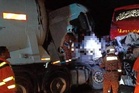
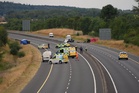
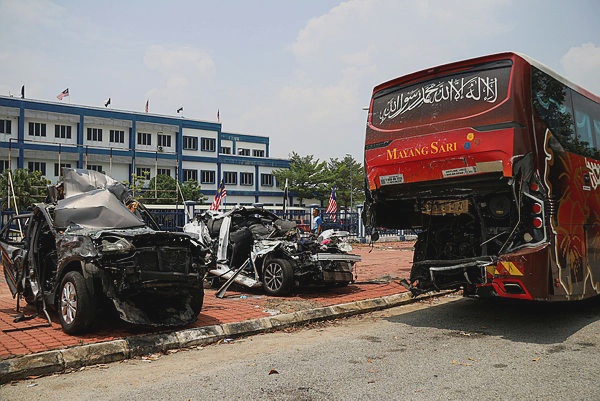
The tragic accident involving 11 vehicles on the East Coast Expressway Phase 1 near Lanchang, Temerloh, which claimed four lives, including that of a child, must not be treated merely as another road accident.
Preliminary police investigations reportedly found that a cement tanker truck lost control before colliding with several other vehicles travelling at slower speeds. The driver of the lorry was also seriously injured, and the case is being investigated under Section 41(1) of the Road Transport Act 1987.
However, the larger question is: Are Malaysia’s existing heavy vehicle safety management systems truly capable of preventing heavy vehicles from becoming “moving missiles” when there is a loss of control, excessive speed, brake failure or other mechanical problems?
0 Mandatory forensic audit
The government and enforcement agencies must conduct a comprehensive forensic examination of the lorry involved, including: the braking system, tyres and suspension system, steering system, electronic control systems, maintenance records, periodic inspection records, the actual load carried by the lorry, the operation and settings of the speed limitation device (SLD), any modification or tampering with the SLD, GPS/telematics data, where available, the vehicle’s speed immediately before the collision and the driver’s actions in the seconds preceding the crash.
The examination must be conducted independently and transparently so that the public can determine whether the tragedy resulted from human error, mechanical failure, failure of the speed-control system, inadequate maintenance or a combination of factors.
The Road Transport Department (RTD) has already mandated the use of SLD for commercial vehicles, with a maximum speed limit of 90km/h and requirements for compliance with UN Regulation No. 89.
The question, therefore, is: If such systems are already mandatory, how effective are enforcement and verification of the actual functionality of SLDs on the road?
0 An SLD must not exist only on paper
The government must ensure that an SLD is not merely a device installed to satisfy inspection requirements.
We need a system capable of detecting and recording: speed → changes in speed → brake application → SLD interference or tampering → location → time → vehicle identity.
Such data must be auditable after an accident. If there is evidence that an SLD has been disabled, modified or tampered with, accountability must not stop with the driver.
The vehicle owner, operating company and parties responsible for maintenance and safety compliance must also be investigated.
0 Restricting heavy vehicle operations at night
The government must also urgently review the operation of heavy vehicles on expressways at night.
We propose that certain heavy vehicles, particularly heavily loaded lorries and vehicles carrying high-risk materials, be prohibited from operating on designated routes after 7pm, subject to a proper safety assessment based on vehicle type, route, cargo and economic necessity.
This does not mean that all lorries should be indiscriminately prohibited from operating at night.
Instead, the government should establish a risk-based time-and-route restriction system, similar to approaches adopted in some countries that impose restrictions on heavy vehicles according to operating hours, routes, vehicle categories or types of cargo.
The government must seriously examine whether high-speed expressways shared by private vehicles, motorcycles, buses and heavy lorries should continue to allow all categories of heavy vehicles to operate freely at night.
0 RM1 million compensation for each fatality
In cases of fatal accidents where serious negligence, violation of safety requirements or failure by the owner/operator to ensure that the heavy vehicle was roadworthy is established, the government should consider a mechanism providing minimum compensation of RM1 million to the family of each deceased victim.
This amount should serve as a form of social protection and corporate accountability, without prejudicing the right of the victims’ families to seek higher compensation through legal proceedings.
In a tragedy involving four fatalities, the principle is clear: The cost of negligence must not be transferred to the victims’ families.
The government should consider establishing a mandatory heavy vehicle accident compensation scheme, funded through compulsory insurance, an operator safety bond/guarantee or an industry levy, so that compensation to victims’ families does not depend solely on the financial capacity of a company after a tragedy occurs.
0 Audit the safety of the company
Enforcement against heavy vehicles must move away from a “catch the driver” approach towards an approach that audits the entire chain of responsibility.
Audits should cover: vehicle ownership, company operations, safety management, driver working schedules and time pressures, maintenance records, brake and tyre records, SLD compliance, speed records, accident history, vehicle loading and weight distribution and compliance with operator licensing requirements.
Companies that repeatedly fail to comply with safety standards should not merely receive fines. Their operating licences must be subject to suspension or revocation.
0 Mandatory “black boxes” for heavy vehicles
All heavy lorries and high-risk commercial vehicles should be equipped with electronic data-recording systems capable of recording at least: speed, braking, acceleration and deceleration, GPS location, operating hours, driving duration, SLD status, critical fault warnings and data immediately before and after an accident.
Such data should be retained for a prescribed period and made accessible to the RTD, the police, the Malaysian Institute of Road Safety Research and relevant investigating authorities when an accident occurs.
0 Safety must take precedence over logistics
Malaysia cannot continue to measure freight transport efficiency merely by how quickly a lorry reaches its destination. The true measure must be: how many lives we are able to save.
Heavy vehicles carrying tens of tonnes have a far greater destructive potential than private vehicles. Therefore, their safety standards must be higher – not lower.
0 Demands to the government
We call on the government to immediately:
0 conduct an independent forensic audit of the lorry involved, particularly its braking system, SLD, speed, load and maintenance records;
0 publish the findings of the safety audit to the public once the investigation has been completed;
0 conduct a comprehensive audit of SLD compliance among all heavy commercial vehicles;
0 consider restricting the operation of heavy vehicles after 7pm on high-risk routes;
0 establish a mandatory compensation mechanism targeting a minimum of RM1 million for each fatality in cases where serious negligence or failure to comply with safety requirements by the vehicle owner/operator is established;
0 mandate electronic data-recording systems or “black boxes” for heavy vehicles;
0 conduct annual safety audits of heavy vehicle operators and publish their compliance records; and
0 introduce the principle of ”operator accountability”, whereby safety responsibility cannot be placed solely on the driver but must also extend to the vehicle owner, operator and company management.
Do not wait for the next tragedy
Four lives have been lost. Eleven vehicles were involved. Families have lost their loved ones. We cannot wait for another tragedy before Malaysia’s heavy vehicle safety system is fundamentally reformed.
Roads are public spaces. The pursuit of transport efficiency and profit must never take precedence over the public’s right to return home safely.
Muhammad Sha’ani Abdullah
Chairman
Sustainable Development Network
Malaysia