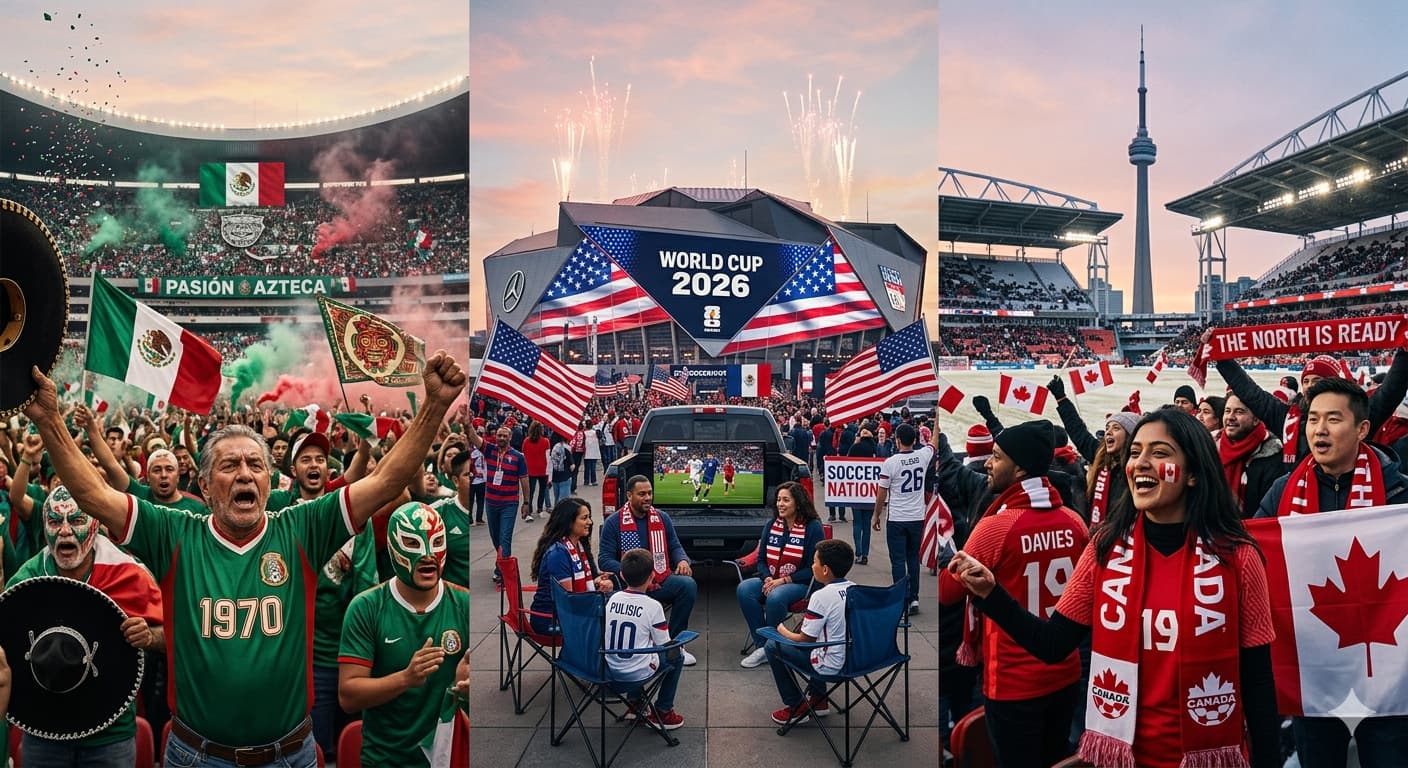
The 2026 FIFA World Cup represents a monumental shift in the geography of international sports. For the first time in history, the tournament is being staged across an entire continent, co-hosted by three distinct nations: Mexico, the United States, and Canada. While these three neighbors are bound by trade, geography, and shared geopolitical interests, their relationship with the world’s most popular sport could not be more different.
To understand the 2026 World Cup is to look beyond the state-of-the-art stadiums and corporate sponsorships. It requires an exploration of three wildly divergent football cultures: a national religion, an entertainment juggernaut, and a rising multicultural mosaic.
Mexico: The Spiritual Heart and National Religion
For Mexico, football (fútbol) is not a pastime; it is an foundational pillar of national identity. As the first country to host the World Cup three separate times (1970, 1986, and 2026), Mexico views itself as the spiritual anchor of this tournament.
The Fabric of Daily Life
In Mexican society, football crosses all socioeconomic boundaries. From the sprawling metropolis of Mexico City to remote rural villages, the sport is a constant backdrop. On any given weekend, local streets are blocked off for cascaritas—passionate pickup games played on concrete or dirt. The domestic league, Liga MX, commands fierce, multi-generational family loyalty, dictating the mood of households from week to week.
The Stadium as a Carnival
Mexican fan culture is world-renowned for its theatrical passion. The matchday experience is a sensory explosion of mariachi music, swirling smoke bombs, and traditional chants. When the national team, El Tri, takes the pitch, the stadium becomes an extension of Mexican folklore. Icons like the Estadio Azteca are treated like hallowed ground, where historic ghosts of Pelé and Maradona still linger, granting Mexican football a sense of historical royalty that its northern neighbors simply do not possess.
The United States: The Entertainment Paradigm and Multicultural Growth
The United States approaches the 2026 World Cup from a completely different cultural vantage point. In a crowded sporting landscape dominated by American football (NFL), basketball (NBA), and baseball (MLB), soccer has historically fought for mainstream media real estate. However, the American football culture is defined by rapid commercial evolution, tech-driven fan engagement, and unparalleled demographic diversity.
The Spectacle of Sport
American sports culture treats games as high-production entertainment spectacles. Matchdays are built around massive pre-game "tailgating" parties, heavily choreographed stadium light shows, and premium hospitality zones. The U.S. model focuses intensely on the "fan experience," transforming a 90-minute game into an all-day festival.
A Unique Democratic Fanbase
Unlike the traditional working-class roots of European or South American football, soccer in the U.S. grew rapidly through suburban youth leagues. Furthermore, the historic dominance of the U.S. Women’s National Team (USWNT) means that, culturally, women's soccer holds equal—if not greater—prestige and respect as the men's game. Driven by a tech-savvy younger generation and a massive, passionate Hispanic population, American soccer culture is inherently multicultural, progressive, and highly commercialized.
Canada: The Multicultural Mosaic and the New Wave
Canada enters the 2026 World Cup as the ultimate "new wave" soccer nation. While ice hockey remains the undisputed cultural king of the Canadian winter, soccer has silently grown to become the country's highest-participated youth sport. Canada's football identity is entirely shaped by its modern immigration patterns and an inclusive, community-first ethos.
The Global Game in a Local Mosaic
Major Canadian hubs like Toronto, Vancouver, and Montreal are among the most multicultural cities on Earth. For decades, Canadian soccer culture was fragmented; millions of citizens passionately cheered for the ancestral home nations of their parents or grandparents, whether Italy, Portugal, England, or Jamaica. However, the recent rise of the Canadian men's and women's national teams on the global stage has successfully unified these diverse factions under a single, proud maple leaf.
Resilience and Inclusivity
Canadian football culture is defined by its grassroots community and environmental resilience. Due to harsh winters, much of the country's soccer subculture thrives in indoor domes and multi-sport complexes. The fan culture is welcoming, polite, yet fiercely loud, characterized by highly organized supporters' groups that pride themselves on inclusivity, social progressive values, and a collective desire to prove that Canada belongs on the global sporting stage.
Conclusion: A Continental Symphony
The 2026 World Cup is more than a logistical triumph; it is a fascinating cultural experiment. Over the course of the tournament, fans will navigate three entirely different sporting atmospheres:
- Mexico provides the deep soul, historical reverence, and raw, religious passion for the game.
- The United States injects the modern entertainment, commercial scale, and high-tech stadium infrastructure.
- Canada offers a fresh, inclusive, and deeply multicultural celebration of the global game.
When these three distinct cultures merge, they will not just host a tournament—they will redefine how the world views North American football for generations to come.

Share your passion for football through #GilaBola and stand a chance to win cash prizes worth up to RM1,200!
Find out how to join here. Don't miss out! T&Cs apply.
William Lee (kokwei67@gmail.com) is a content creator under the Newswav Creator programme, where you get to express yourself, be a citizen journalist, and at the same time monetize your content & reach millions of users on Newswav. Log in to creator.newswav.com and become a Newswav Creator now!
The User Content (as defined on Newswav Terms of Use) above including the views expressed and media (pictures, videos, citations etc) were submitted & posted by the author. Newswav is solely an aggregation platform that hosts the User Content. If you have any questions about the content, copyright or other issues of the work, please contact creator@newswav.com.