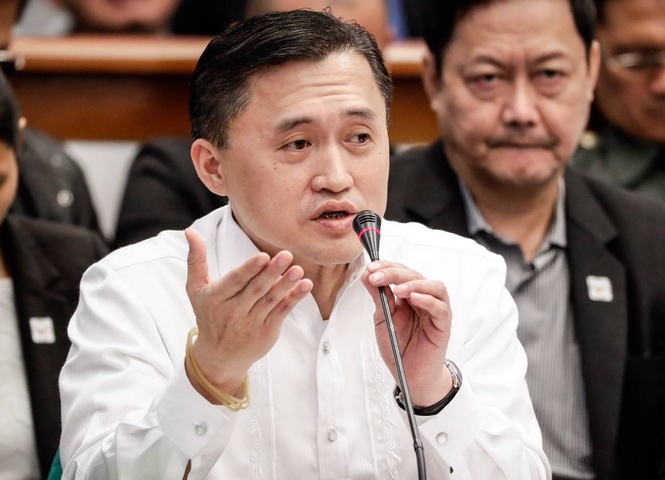
SEN. Bong Go questioned the relatively small share of the national budget for housing and pressed the Department of Human Settlements and Urban Development (DHSUD) and its attached agencies to improve the utilization of approved funds before seeking fresh appropriations for 2027.
During Senate deliberations on the DHSUD’s proposed 2027 budget, Go said the government needed to do more to address the country’s housing shortage, particularly for poor and informal settler families who lack decent and secure homes.
He questioned the small budget allotted for the sector despite the scale of the country’s housing needs.
Go urged DHSUD Secretary Jose Ramon Aliling to push for a larger allocation during the executive budget process to provide more resources for housing programs for low-income families.
At the same time, he raised concerns over the department’s utilization of previously approved funds.
Citing figures presented during the deliberations, he said the DHSUD’s obligation rate stood at 46.9 percent in 2025 and 29 percent in 2026.
DHSUD officials said they expected the obligation rate for the department’s continuing 2025 budget to reach 84 percent to 85 percent by the end of 2026.
They also said utilization of the expanded 4PH Program had reached 53 percent of its 2026 allocation.
Go questioned the status of the National Housing Authority’s (NHA) Emergency Housing Assistance Program (EHAP), which provides assistance to families whose homes have been damaged or destroyed by disasters.
NHA General Manager Joeben Tai said the agency had fully disbursed its 2024 and 2025 EHAP allocations.
However, the NHA had temporarily used cash from older accounts because it had not received corresponding cash releases from the Department of Budget and Management.
Go stressed the urgency of the program, particularly for families affected by fires and floods, saying even small amounts of assistance could make a significant difference to those who had lost their homes.
He also urged the DHSUD to strengthen coordination with local government units and intensify its information campaign to ensure eligible families are aware of and can access available housing programs.