

In the recent Sungai Bakap by-election, Perikatan Nasional (PN) candidate Abidin Ismail triumphed with a significantly larger majority of 4,267 votes, a substantial increase from his predecessor's 1,563 votes. Abidin, who serves as the Nibong Tebal PAS vice-chief, garnered 14,489 votes, decisively defeating his rival Joohari Ariffin, who secured 10,222 votes. This result underscores notable gains for PN in the by-election. A quick analysis reveals that the opposition's vote percentage rose from 52.7 percent last year to 58.6 percent. In contrast, Pakatan Harapan's vote share declined from 47.3 percent to 41.4 percent. Additionally, PN expanded their majority by 2,704 votes, achieving a total majority of 4,267.
Bridget Welsh, a renowned Southeast Asian political analyst, recently shared her insights in a podcast, predicting that PAS could eventually come to power in Malaysia. She rated this likelihood as a 7 out of 10, with 10 being the most likely and 0 the least. Welsh even suggested that PAS could govern the country within the next three years. She based her assessment on survey data and electoral trends, noting PAS's strong performance at the state level as a significant indicator of their potential rise to national governance. Since PAS is a dominant force in Malaysian politics and is likely to do so in many years to come, I would like to delve into 2 things in this article: How PAS became so powerful and what the future holds for this political party.
Broadening Support
PAS's support extended far beyond its traditional bases on the east coast and northern regions of the Malaysian peninsula. Middle-class Malays and civil servants showed strong support in outer urban areas and the federal administrative capital—regions PAS had never previously penetrated.
The party even made inroads into Penang, one of the country's most liberal areas. In the 15th General Election, PAS won two seats there: Kepala Batas, traditionally a United Malay National Organization (UMNO) stronghold and Pematang Pauh, a seat long held by PMX’s family, which was defended by his daughter, Nurul Izzah Anwar.
State Government Takeovers
PAS also took control of the northern states of Perlis and Kedah, adding to its existing strongholds in Kelantan and Terengganu. The GE15 Election marked PAS’s best-ever performance, achieved without sacrificing its ideology to satisfy any multi-racial coalition. The party ran on a narrative of protecting the dignity of Islam.
Origins and Evolution
Founded in 1951 as Persatuan Islam Se-Malaya (Malayan Islamic Association) by a group of UMNO ulamas (jurists, clerics), PAS was initially a combination of anti-colonial and nationalist sentiments. In 1956, many ulamas left UMNO en masse to form the Pan Malayan Islamic Party (PMIP) in protest over their minor roles in Tunku Abdul Rahman’s government. The Tunku, Malaysia’s founding father, prioritized technocrats for economic development.
PMIP aimed to create an Islamic state based on Sharia law, contrasting with the Alliance government's secular, Westminster-style approach. In 1971, PMIP was renamed Parti Islam Se-Malaysia (PAS).

Building a Community
Though PMIP and later PAS had sporadic electoral success, the ulama focused on building an extensive network of traditional pondoks (religious schools) and madrasas (Quranic schools). These institutions were owned and operated by families of ustaz and ustazah (Islamic teachers) for generations. PAS expanded this network by establishing community mosques and kindergartens across the country.
This created a sense of community where members prayed together, sent their children to PAS-run Islamic schools, and lived according to Islamic principles. Voting for a party that nurtured their Islamic life became a core objective of these rural communities.
Increasing Conservatism
Today, PAS teaches an exclusionary version of Islam, labeling those with differing beliefs as infidels. This separation is evident during elections, where different villages display different political flags: green for PAS, dark blue for Barisan Nasional, and light blue (red last election) for Pakatan Harapan.
Urban Influence and Expansion
Young urban professionals were attracted to PAS and co-opted into leadership. They established businesses, creating manufacturing, trading, and retail networks. These professionals also set up urban Islamic schools, extending PAS’s influence into cities and the southern states of Negeri Sembilan, Melaka, and Johor. Rather than pursuing immediate political ambitions, PAS focuses on building close-knit communities and promoting Islamic education among the youth.
Leadership and Ideology
PAS is led by conservative ulamas trained in Islamic studies in Egypt and Jordan. Influenced by Muslim Brotherhood ideologues, they believe society should be governed by the Quran and Sunnah, as interpreted by the ulama. The Central Ulama Council (DUPP), led by Ahmad Yahya, developed PAS's ideology. The supreme ideological body, the PAS Ulama Council, is headed by Nik Muhammad Zawawi Salleh, an MP trained in Egypt and Jordan.
Evolution of PAS Ideology
Under leaders like Nik Aziz Nik Mat and Fadzil Muhammad Noor in the 1970s and 80s, PAS adopted an inclusive interpretation of Islam. Fadzil Noor attracted young urban professionals, diversifying leadership and appealing to moderates with the slogan "PAS for all." This moderate stance helped PAS win 27 federal parliamentary seats in 1999. However, electoral success fluctuated, and PAS was nearly decimated in 2004. The party's fortunes improved in the 2008 electoral "tsunami" against UMNO.
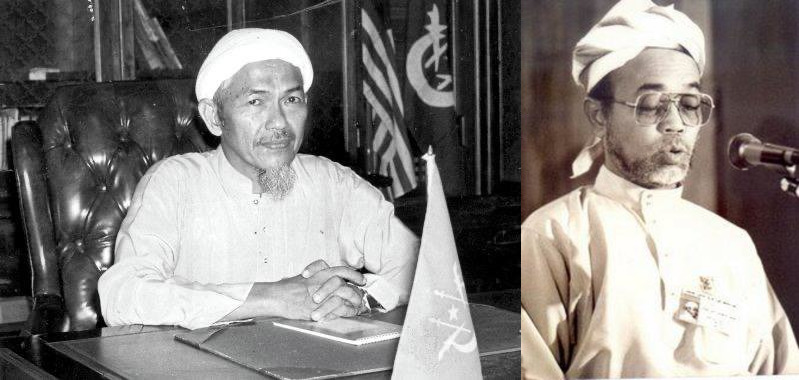
The 2015 Split and Hardened Ideology
In 2015, PAS split, with moderates forming Parti Amanah Negara. This left PAS without moderate leadership, solidifying conservative ulama control under Abdul Hadi Awang. Hadi's ideology opposed secularism, viewing it as an effort to remove Islam from society. PAS focused on influencing society through state governments, exemplified by strict Islamic policies in Kelantan.
PAS's Rise and Influence
PAS has sent numerous students overseas for Islamic studies and expanded its education network across Malaysia, including Sabah and Sarawak. The dakwah movement across universities nurtures supporters among lonely Malays studying overseas. The Islamization of Malaysia's education system has cultivated more conservative values in the youth, who influence their parents to adopt similar views.
A Merdeka Center survey showed that among Malay youths aged 15-25, 82 percent agreed that the Quran should replace the constitution, up from 72 percent in 2010. PAS now controls traditional FELDA and FELCRA areas within the Malay heartlands and has won seats outside its traditional bases. Politics, for PAS, is an extension of Islam. With Muslims comprising 61.3 percent of Malaysia’s population, PAS's influence is rising. The party has over one million members today.
Changing Narratives
PAS has shifted the dominant narrative in rural heartlands from Ketuanan Melayu (Malay supremacy), which UMNO used to maintain an electoral stranglehold, to one of voting for an Islamic society. Consequently, economic and cost-of-living issues have become secondary.
The Future
Under Abdul Hadi and his heir apparent, Idris Ahmad, PAS is unlikely to moderate its ideology. The Sheraton Move in February 2020 showed Hadi that PAS could lead the federal government, and the party is now the largest within the Perikatan Nasional coalition in parliament. Hadi's position as a special Middle East envoy enhances his status as a Muslim Brotherhood statesman internationally.
PAS's education network and social media channels reach young people nationwide. The battle for Malaysia’s future Islamization will be fought in pondoks, madrasas, and Islamic schools across the country. Changing attitudes will take a generation if the Anwar Ibrahim government has the will and ability to do so.
Aaron Colt is a content creator under the Newswav Creator programme, where you get to express yourself, be a citizen journalist, and at the same time monetize your content & reach millions of users on Newswav. Log in to creator.newswav.com and become a Newswav Creator now!
The User Content (as defined on Newswav Terms of Use) above including the views expressed and media (pictures, videos, citations etc) were submitted & posted by the author. Newswav is solely an aggregation platform that hosts the User Content. If you have any questions about the content, copyright or other issues of the work, please contact Newswav.

