

On the night of July 6, 2024, it was announced that Perikatan Nasional (PN) candidate Abidin Ismail won the Sungai Bakap state by-election with a significantly larger majority of 4,267 votes compared to his predecessor’s 1,563 votes. Abidin, who is also the Nibong Tebal PAS vice-chief, secured 14,489 votes, defeating his challenger Joohari Ariffin, who received 10,222 votes. This result highlights notable gains for Perikatan Nasional in the by-election. A quick analysis showed that the percentage of votes for the opposition increased from 52.7 percent last year to 58.6 percent. Conversely, Pakatan Harapan’s vote share dropped from 47.3 percent to 41.4 percent. Additionally, PN increased their majority by 2,704 votes, bringing it to 4,267.
Previously, I predicted that PAS will win the Sungai Bakap by-election (Published on 5th of July) and that Malaysian youths will play an important role in deciding the winner (Published on 5th of July). There is without a doubt in my mind that Malaysian youths help PAS gain power in Sungai Bakap. In many democracies, young voters are often dismissed as unreliable, but Malaysia tells a different story. In the 15th General Election (GE15), the turnout among Malaysians aged 18 to 30—Gen Z and Millennials—was an impressive 75.6 percent, according to political expert Bridget Welsh. This participation rate nearly matched that of the 41- to 50-year-old demographic. The power of young Malaysian voters in closely contested seats like Sungai Bakap should not be underestimated. In fact, on the morning of the Sungai Bakap by-election, the voter turnout among young people is encouraging, according to Election Commission (EC) chairman Datuk Seri Ramlan Harun. After observing the voting process at three polling centres, he noted that the youth streams were the most crowded.
So why did the youths of Sungai Bakap vote for PAS and subsequently, help them gain power in the constituency? As a Malaysian youth (Gen Z ) who has an interest in politics, I can answer those questions from the perspective of a Gen Z Malaysian. There are 2 primary factors in my humble opinion and they are as follows (do read the 2nd factor which in my opinion, is the main reason why Malaysian youths voted for PAS:
1. Malaysian youths are becoming more conservative over time
A 2011 Merdeka Centre study found that 72 percent of Malaysian Muslim youth held conservative political views, with many favoring the replacement of the Constitution with the Quran. This trend contrasts with their actual religious practices and stems from a lack of understanding of governance and the Constitution. Signs of rising conservatism are visible in public schools, where compulsory religious education has been criticized for being patriarchal and conservative. Additionally, PAS preschools (PASTI) and growing numbers of Pusat Tahfiz focus on memorizing and reciting the Quran, indicating a societal shift towards Islamic revivalism.
Additionally, the increasing conservatism among Malaysian youths has caught the attention of CNA, prompting them to produce a video titled 'Are Muslim Youths in Malaysia and Indonesia Becoming More Conservative?'. The video highlighted a growing trend of youths in Malaysia turning to religious influencers for guidance. In northeast Peninsular Malaysia, one prominent example is Ustaz Azhar Idrus, who has over 1.7 million followers on TikTok and Instagram. His popularity is largely due to his casual style and use of humor, which resonate with young people. Ustaz Azhar Idrus' teachings cover moral values, finance, and personal hygiene, but he has also spoken out against secular events like concerts. His teachings also influence Malaysian youths' views on politics. Experts are worried that these young voters lack political maturity and are easily swayed by religious rhetoric. “In the previous elections, PAS played up the elements of religion and race. This is what we call 2R. So this strategy really worked. Then, the political literacy and maturity for youths was poor, so when they are exposed to information linked to racial sentiment, religious sentiment, playing up fears that Malays will lose their special rights, the fear that Islam is being threatened, this is a deadly weapon to pull support”, noted by Mohd Yusri, head researcher of Ilham Centre in the video. These factors likely influenced the youth voters in Sungai Bakap to support PAS in the by-election.

2. Diesel and the soaring cost of living
Imagine you're a Gen Z living in Penang, with parents who have been fishmongers for as long as you can remember. Life is already tough as the cost of living keeps rising, with the inflation rate increasing from 2.5% in 2021 to 3.3% in 2022. Then, on June 10, the government suddenly removed diesel subsidies, which your parents heavily rely on because they use a Toyota Hilux for both personal and business purposes. Diesel prices skyrocketed from RM2.15 to RM3.35 per liter, a 55% increase. This increases the financial strain on your already strained financial situation of your family.
Sure, your family has a monthly cash handout of RM200 for diesel from the government but it is not enough. This is unfortunately the reality for many including one fishmonger in Sungai Bakap, Sharifah Sofiah Syed Jamil, 43, who finds the RM200 insufficient. Formerly spending RM160 weekly on fuel for her Toyota Hilux, she now spends around RM240 weekly due to the price hike. You are eligible to vote in the Sungai Bakap by-election - so who are you going to vote for? Option A: Pakatan Harapan (PH) whose government was the one responsible for the removal of diesel subsidies or Option B: Perikatan Nasional (PN) who have been criticizing the current government (which Pakatan Harapan is part of) for the increasing living costs exacerbated by recent cuts in diesel subsidies and higher utility rates. You will most likely vote for Perikatan Nasional (PN) not because you are a racist but rather, because you are more concerned by the removal of diesel subsidies and the rising cost of living. All you know is that as things stand - you and your family are suffering.
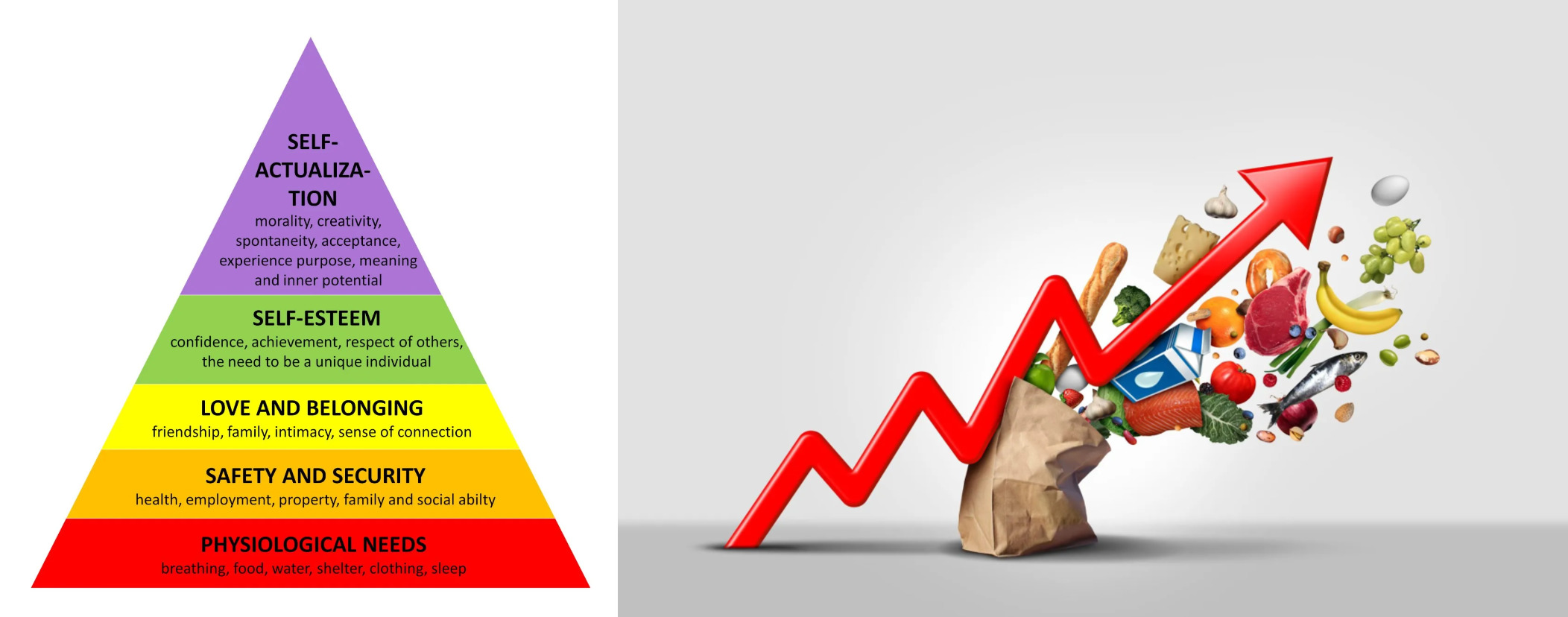
Consider the Maslow's Hierarchy of Needs. Maslow's Hierarchy of Needs is a psychological theory that suggests people have five levels of needs, arranged in a pyramid. From bottom to top, they are:
- Physiological Needs: Basic needs for survival, such as food, water, shelter, and sleep.
- Safety Needs: Protection and security, including personal safety, health, and financial security.
- Love and Belonging Needs: Social needs like relationships, friendships, and family.
- Self-Esteem Needs: Respect, self-esteem, and recognition from others.
- Self-Actualization: Achieving one's full potential and personal growth.
According to this theory, people must satisfy lower-level needs before they can focus on higher-level needs. As things stand in Malaysia, your concern lies in the physiological needs of you and your family - this means food and diesel, crucial for transportation. You are not yet at the stage of self-actualization where you can care about “morality” so PAS can play up racial and religious sentiment for all you care - as long as they promise to help you and your family in fulfilling physiological needs (reducing cost of living and so on).
As a Gen Z Malaysian, I can understand why many youths voted for PAS in Sungai Bakap, even if it's not a decision I personally agree with. The recent by-election results underscore the significant role played by young voters in shaping political outcomes. From concerns over rising conservatism to economic hardships like the removal of diesel subsidies, these factors have influenced voter sentiments. This election highlights the complex interplay of economic pressures and identity politics in Malaysian democracy, shaping the landscape for future political engagements among the youth.

Submit any #GenZ related content and stand a chance to win prizes up to RM6,500, including a 3D2N luxurious stay at Kloe Hotel! Find out how you can participate here.
Aaron Colt is a content creator under the Newswav Creator programme, where you get to express yourself, be a citizen journalist, and at the same time monetize your content & reach millions of users on Newswav. Log in to creator.newswav.com and become a Newswav Creator now!
The User Content (as defined on Newswav Terms of Use) above including the views expressed and media (pictures, videos, citations etc) were submitted & posted by the author. Newswav is solely an aggregation platform that hosts the User Content. If you have any questions about the content, copyright or other issues of the work, please contact Newswav.
