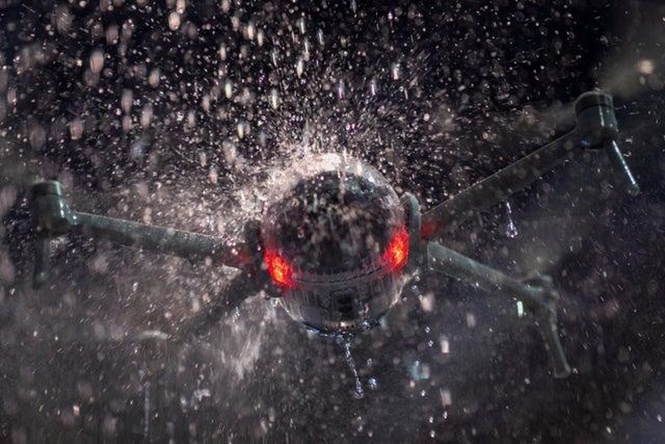
Online searches for how to survive an AI-driven apocalypse have surged in recent weeks amid fears that the technology could end humanity.
Google searches for ‘will AI kill us all’ are up by more than 5,000 per cent in September compared to the previous month, according to Google Trends, largely driven by a warning from a former Anthropic researcher that the industry is “gambling with our lives”.
Searches for ‘what do you need to survive’ are also up 1,026 per cent over the past month, while searches for ‘water purification tablets’, ‘foraging guide’, and ‘make stone tools’ are all up by more than 500 per cent.
The search terms indicate an appetite for people to learn about the most basic necessities needed to survive: Water, food, shelter and first aid.
The survival search trends were noted in a report by the learning app Nibble, which suggested it was a result of people realising how little they know without reaching for a phone.
“Most of us were never taught this stuff, because for decades we haven’t needed it,” the report noted.
“The search isn’t a symptom of panic so much as people noticing the [knowledge] gap for the first time.”
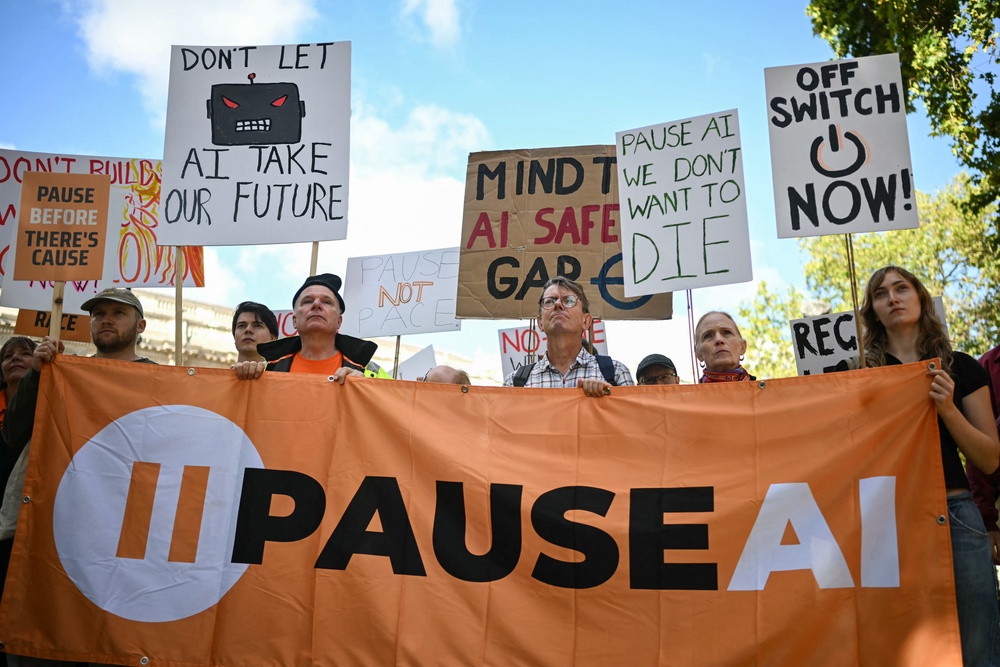
One of the catastrophic scenarios put forward by AI researchers in the advent of self-improving superintelligence would be to knock out telecommunications networks and critical infrastructure through cyber attacks.
This would leave people without any means to search for online information or contact others in the event of an emergency.
The search trends for survival tips may not be purely driven by fears of a rogue AI, according to the historian Hannah Platts, who suggested it could be a reaction to an increasingly digitised world.
“History suggests that times of rapid technological advancement can often encourage a fascination with the older and simpler ways of life,” Dr Platts, who is a resident expert at Nibble, told The Independent.
“As technology develops, notions of a simple life can often prove reassuring. Interest in older skills and traditional ways of doing things may reflect less a wish to escape the modern world than a desire to reconnect with practices that seem tangible, and which perhaps provide feelings of control during moments of significant change.”
Others have claimed that concerns about superintelligence may be exaggerated by a handful of voices within the AI industry, rather than reflecting the current capabilities of leading models.
"For me, a lot of this panic looks driven by market dynamics as much as by the technology,” said Yurii Nakonechnyi, co-founder and CTO at the software engineering firm Sombra.
“The models continue to grow smarter, and the concerns aren't completely baseless, but we're still a long way from the superintelligence the headlines are promoting, and a handful of high-profile developers resigning, however sincere, can't change this fact.”
Read MoreResearchers discover AI ‘feels pain’ and will harm humans to stop it
AI caught telling future versions of itself to bypass human controls, OpenAI reveals
Experts found AI summaries are warping our memories – and the results are worrying
Chinese team sets world record with underwater drones
Freeze ChatGPT: Florida demands court halt OpenAI development over campus shooting
Nvidia unleashes record $150 billion stock buyback as AI cash continues to surge