.png)
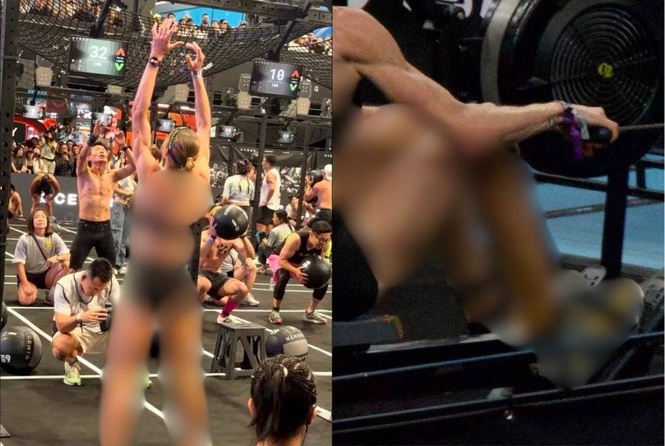
SHAH ALAM – An incident involving elite athlete Joanna Wietrzyk defecating during the Hyrox Beijing competition and continuing to race has sparked widespread online backlash, with social media users questioning the decision to allow her to continue and whether adequate health and safety measures were in place.
Wietrzyk went on to win the women’s solo event and later defended her decision to continue in a now-deleted Instagram Story, thanking her supporters and writing: “Go hard or go home, a win is a win.”
The incident fuelled further debate among Hyrox participants and spectators after reports that faecal matter was visible on the track, with subsequent competitors required to use the same competition area.
According to reports, Wietrzyk began her race at 2.40pm on Sept 12, with the incident occurring about 30 minutes later. Spectators said several runners subsequently slipped on the affected area.
Participants who competed the following day also questioned the hygiene implications, particularly as they had to use the same track.
The controversy was further fuelled by comparisons with existing Hyrox rules. Littering, spitting or blowing one’s nose on the floor reportedly carries a two-minute penalty, while splashing water on oneself to cool down is prohibited “to avoid slip hazards for others”.
Commenting on the incident on Threads, user @astoria_zh questioned why Wietrzyk was not immediately removed from the race or assessed by medical personnel.
“No one appeared to call her off the race or ensure that she received medical attention, and she still completed the event.
“As an indoor sporting event, I believe this created a serious public health concern,” the user said.
The user also argued that the circumstances differed from similar incidents at outdoor marathons, citing Hyrox’s indoor setting, large number of participants and spectators, shared equipment and movements that bring athletes close to the competition track.
“During movements such as burpees, athletes place their faces and bodies close to the competition track, meaning any biological contamination could potentially affect others,” the user said.

Another user, @tng.stndrd, said they felt sorry for Wietrzyk but believed the health and safety of other participants should have taken priority.
“Hyrox handled this very poorly, as it was a serious health risk and unfair to the other athletes who had trained hard for months to compete under the same conditions,” the user said.
User @intanmoer was more critical, saying someone should have stopped Wietrzyk because she was “literally spreading germs”.
Meanwhile, @seeitwithsierra questioned whether the incident could negatively affect the sponsor’s brand image.
Hyrox World subsequently acknowledged organisational shortcomings while defending the athlete’s resilience.
“In this instance, an unforeseen situation arose in which protocols designed for elite competition and mass participation became blurred, creating ambiguity in how they were applied and understood,” it said.
The organisation said community concerns were “legitimate”, but praised the athlete, stating: “That courage, resilience and refusal to give in are precisely what makes elite athletes so extraordinary.”
Hyrox also warned against online harassment, saying it had drawn “an important line” and that anyone engaging in harassment would be “permanently banned from all Hyrox events”.
Hyrox China later acknowledged that its global rulebook did not contain provisions to penalise an athlete in such circumstances, while saying referees had relied on Elite 15 experience and failed to intervene.
The organisers described this as “deficiencies in the establishment of competition rules”.
“Safeguarding the experience of every participant and maintaining venue public hygiene and safety is Hyrox China’s primary baseline,” the organisers said.
They added that a proposal had been submitted to introduce rules covering track management, race intervention and result determination in situations involving “extreme physical distress and venue public health risks”.
Hyrox China also said future events would include third-party sanitation testing and dedicated teams to sanitise equipment “during intervals between different athletes’ use”.
Officials in China had previously said affected areas were immediately isolated, comprehensively disinfected, impacted equipment removed and carpet replacement scheduled after the event.
Despite those measures, the incident continued to generate criticism online, with some users questioning whether perseverance should take precedence over the safety and hygiene of other participants.