.png)

KUALA LUMPUR – After years of developing a new sustainable fuel for Formula One (F1), Datuk Seri Sazali Hamzah had one particularly simple fear when Mercedes-AMG Petronas finally put it to the test.
What if the car did not move? The Petronas Downstream Executive Vice President and Chief Executive Officer admitted that he was nervous when the team’s new Advanced Sustainable Fuel (ASF) made its competitive debut under the 2026 F1 regulations.
“It may sound like a wild imagination, but I was worried the car wouldn’t move,” Sazali said with a laugh during a Mercedes-AMG Petronas media session in Kuala Lumpur.
That anxiety came after years of development as Petronas worked with Mercedes on the fuel ahead of the FIA’s new regulations for the 2026 season.
ASF was developed from renewable feedstock, waste material and non-food biomass. Sazali said it was designed as a “drop-in fuel” that does not require engine modifications.
“It’s a drop-in fuel so it works with any engine. We don’t need modification, it’s just like normal fuel. You can replace normal fossil fuel with it,” he said.
But knowing the theory and seeing the fuel perform under the unforgiving conditions of F1 are two very different things.
“Australia was the moment of truth,” he said.
Sazali recalled the nerves he felt as the Mercedes car rolled onto the track powered by the new fuel for the opening race of the 2026 season.
The answer came quickly.
“But we saw us winning first and second place in the two first races,” he said, referring to the opening Grands Prix in Australia and China.
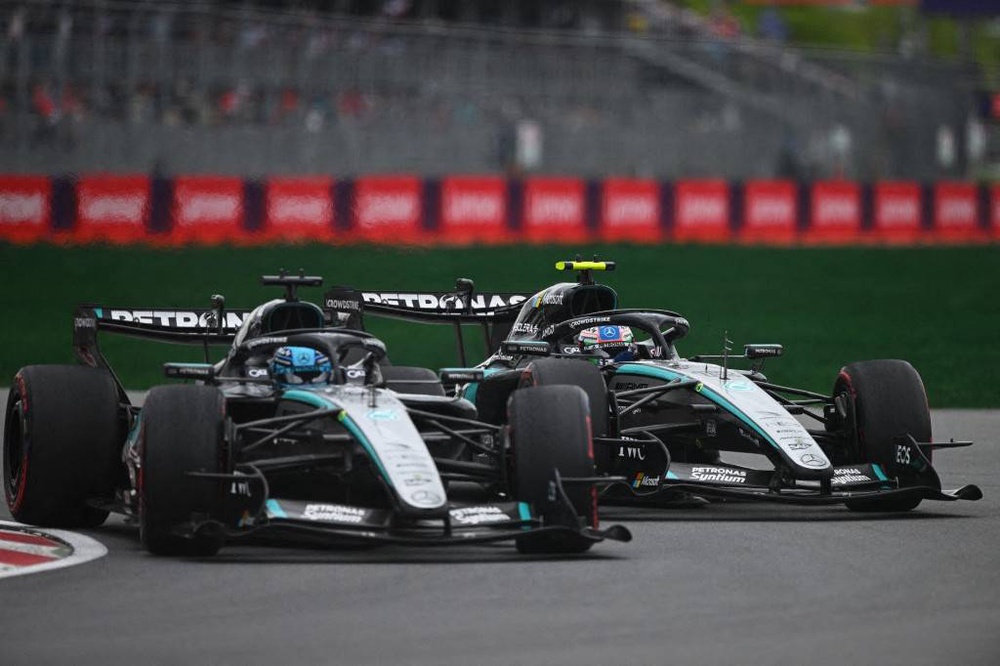
Sazali said the results demonstrated what could be achieved when fuel, power unit and vehicle technologies were developed as a single integrated package.
“It is a testament to what can be achieved when fuel, power unit and vehicle technologies come together as one integrated package,” he said.
The success also validated the long-running technical partnership between Petronas and Mercedes, which began in 2010.
Sazali said development of the latest ASF began in 2022 as preparations started for the FIA’s new regulations.
The fuel was eventually introduced to the Mercedes F1 car for the 2026 season after years of collaboration between the two organisations.
The achievement carried another source of pride for Sazali. The fuel was not simply part of a global F1 programme developed elsewhere.
“This fuel has been developed by local Malaysian fuel specialists.
“There are three main players in this development and I’m really proud that they are from the home ground,” he said, adding that the early results showed the effort had paid off.
Petronas’ involvement in F1, he said, provides an opportunity to push the boundaries of innovation while supporting the development of more sustainable fuel technologies.