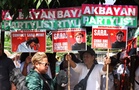
THE latest Pulse Asia survey, conducted from Sept. 17 to 24, places Sara Duterte at 50 percent in presidential preference for 2028. For those troubled by the allegations against her, this is a sobering reminder that electoral popularity and fitness for public office can travel in opposite directions.
A survey measures preference. It cannot certify honesty, reconcile financial records or absolve constitutional violations. Yet Duterte’s defenders treat her continuing popularity as though millions of supporters could collectively erase questions that demand documentary answers. When loyalty becomes a substitute for accountability, democracy risks becoming an elaborate mechanism for rewarding impunity.
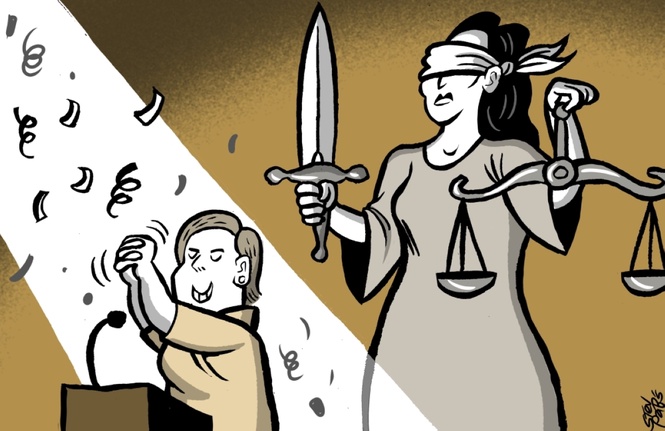
This is why impeachment matters. It provides a constitutional means of protecting the republic when electoral judgment fails. The Senate can prevent irrational political allegiance from returning a demonstrably unfit official to power, provided it establishes impeachable wrongdoing through a fair examination of evidence. Popularity must never become immunity.
Political theory gives us reasons to question the comforting assumption that voters reliably make informed, rational choices. Anthony Downs’ concept of rational ignorance explains why people may invest little effort in learning about politics. Acquiring information takes time, while one individual’s vote has an exceedingly small chance of deciding an election.
What makes sense for an individual can produce disastrous collective consequences. A citizen may find it easier to repeat a slogan than understand a financial disclosure. Multiply that shortcut across millions and an election can reward the candidate with the strongest emotional appeal rather than the strongest record of honesty.
Bryan Caplan goes further in “The Myth of the Rational Voter.” His concept of rational irrationality explains how voters can indulge comforting political beliefs because the personal cost of doing so appears negligible. People gain emotional satisfaction from believing what they want, while the consequences of misguided choices are shared by society.
Caplan’s principal evidence concerns economic policy. Applying his framework to unconditional loyalty toward a political personality is therefore an interpretation, rather than a finding about Duterte’s supporters. Nevertheless, the mechanism is recognizable. Admitting that one’s political idol has failed can be emotionally expensive. Dismissing inconvenient evidence can feel reassuringly cheap.
The resulting harm extends beyond the loyalist. Citizens who never supported that politician must also live under the administration that electoral devotion helps produce. Irrational voting carries a public cost. The satisfaction of defending an idol is privately enjoyed; the damage from installing an unfit leader is collectively endured.
Geoffrey Brennan and Loren Lomasky’s theory of expressive voting adds another explanation. Voting can function as an expression of identity, belonging, resentment or solidarity. A ballot may resemble cheering for a team. Supporting the candidate communicates who the voter is and which community the voter considers home.
This helps explain why damaging information can fail to weaken political allegiance. A supporter who experiences criticism of Duterte as an attack on personal identity may defend her more fiercely. The question shifts from whether she has answered the evidence to whether one’s political camp will be humiliated by conceding anything.
Christopher Achen and Larry Bartels, in “Democracy for Realists,” likewise challenge the picture of citizens calmly comparing policies before choosing leaders. They emphasize social identities and partisan attachments. Political loyalties can shape how people perceive facts, enabling the same conduct to appear unforgivable in an opponent and excusable in an ally.
These theories cannot establish that every Duterte supporter is irrational. Nor does one survey reveal what each respondent knows or believes. They do explain why counting preferences cannot settle questions of competence and integrity. Persistent refusal to confront substantiated wrongdoing deserves criticism, regardless of how numerous or enthusiastic its defenders become.
The argument for impeachment becomes stronger when supporters openly declare that no revelation could change their minds. Such loyalty abandons democratic scrutiny. It turns public office into a personal entitlement and makes constitutional accountability indispensable to the republic.
Constitutional democracy anticipates that popular judgment may falter. It distributes authority among institutions and imposes obligations that public enthusiasm cannot cancel. Article XI declares public office a public trust and identifies grounds for impeachment, including culpable constitutional violations, graft and corruption, and betrayal of public trust.
Impeachment is political because it addresses the abuse of public power through constitutionally designated political institutions. Its political character binds it to the protection of the republic. Alexander Hamilton’s discussion in “Federalist No. 65” links impeachment to violations of public trust and injuries to society, while warning against decisions governed by factional strength.
That warning applies directly to senators who might confuse Duterte’s survey numbers with a reason to excuse proven misconduct. Their obligation is to examine the charges, hear the defense and decide whether the evidence establishes constitutional grounds for conviction. Electoral calculations cannot discharge that obligation.
Questions about asset declarations, unexplained wealth or the misuse of public funds require answers on their merits. If the evidence establishes impeachable wrongdoing, senators must act despite the respondent’s popularity. If it fails, they must decline to convict. The integrity of this check depends on principled judgment.
The Constitution permits impeachment judgments extending to removal and disqualification from public office. That power has a protective purpose: An official found culpable need not remain available for another electoral rehabilitation. Voters retain the right to choose among qualified candidates. Public support cannot compel institutions to disregard constitutionally established disqualification.
Senators are also vulnerable to irrationality, ambition and partisan attachment. Their election does not confer monopoly on wisdom. Robinhood Padilla is exhibit No. 1. This makes their conduct under oath especially consequential. They must demonstrate that constitutional responsibility can prevail over personal loyalty, anticipated electoral rewards and fear of offending a powerful political following.
The Senate can save irrational voters from making a mockery of democracy by enforcing accountability against proven abuses of public trust. Refusing that duty because an accused official remains popular would surrender constitutional government to political fandom.
Democracy deserves citizens willing to reconsider their loyalties and institutions willing to uphold their obligations. When voters will not confront proven unfitness, impeachment becomes a necessary check. Senators must have the courage to use it.
The author is a professor at the University of the Philippines Los Baños and vice chairman of the board of the People’s Television Network Inc.