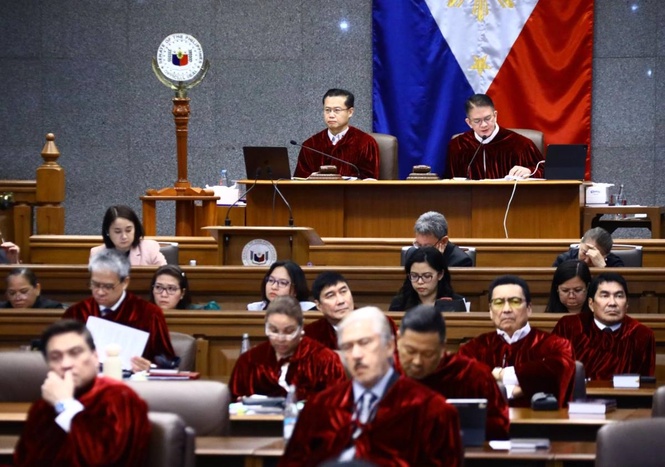
METRO Manila residents are increasingly inclined to convict and remove Vice President Sara Duterte from office, while a majority of respondents in Mindanao favor her acquittal, reflecting a widening regional divide over her impeachment, an OCTA Research survey showed. The survey, conducted from Sept. 28 to Oct. 4, found that support for conviction in the National Capital Region rose to 34 percent from 19 percent in July, while support for acquittal fell to 17 percent from 21 percent..
In Mindanao, support for acquittal climbed to 52 percent from 41 percent, while those favoring conviction increased only slightly to 9 percent from 6 percent.
Nationwide, however, Filipinos remain divided over the outcome of the impeachment trial, with neither conviction nor acquittal emerging as the clear preference.
OCTA’s third-quarter 2026 Tugon ng Masa survey found that 25 percent of adult Filipinos wanted the Senate impeachment court to acquit Duterte, while 21 percent favored her conviction and removal from office.
The difference between the two positions was too small to establish a clear national lead, OCTA said.
The proportion of respondents who wanted to see the evidence before deciding fell to 47 percent from 55 percent at the start of the trial in July. Despite the decline, those reserving judgment remained the largest single group.
Those favoring either conviction or acquittal collectively accounted for 46 percent of respondents, up from 38 percent in July.
According to OCTA, the results indicate that more Filipinos have formed a preferred verdict as the trial progresses, but public opinion has not converged on a single outcome.
Regional divide
The regional contrast was particularly pronounced in Mindanao, where acquittal was the only preferred verdict to command majority support in any of the country’s four major areas.
Within Mindanao, support for acquittal rose in several regions, including the Bangsamoro Autonomous Region in Muslim Mindanao, where it increased to 76 percent from 49 percent, and the Zamboanga Peninsula, where it climbed to 48 percent from 28 percent.
In the Davao Region, where support for acquittal was already high, the figure rose to 64 percent from 61 percent.
In contrast, 72 percent of respondents in the Caraga region said they wanted to see the evidence before deciding.
The Visayas showed little movement, with 53 percent of respondents continuing to reserve judgment. Support for acquittal increased to 26 percent from 22 percent, while support for conviction edged up to 18 percent from 17 percent.
In areas outside Metro Manila classified by OCTA as Balance Luzon, support for conviction rose to 25 percent from 22 percent, while acquittal increased to 15 percent from 12 percent.
Young adults increasingly divided
The survey also found that Filipinos aged 18 to 24 recorded the biggest decline in the proportion waiting for evidence before deciding.
Among respondents in this age group, the evidence-first response dropped to 29 percent from 50 percent in July. Support for conviction rose to 36 percent from 26 percent, while acquittal increased to 27 percent from 16 percent.
The findings suggest that younger adults have become more willing to take a position, although their preferences remain divided between the two possible verdicts.
Among those aged 35 to 44, support for acquittal rose to 33 percent from 19 percent. Meanwhile, support for conviction among respondents aged 65 to 74 increased to 27 percent from 18 percent.
The survey also showed a divergence between urban and rural respondents.
Support for conviction among urban residents rose to 25 percent from 16 percent, while support for acquittal among rural residents increased to 30 percent from 21 percent. Among rural respondents, support for conviction slipped to 16 percent from 19 percent.
OCTA said the shifts reflected changes in the overall distribution of responses between two separate survey rounds and did not establish that the same individuals had changed their views or explain why they did so.
Survey timing
The nationwide survey covered 1,200 adults aged 18 and above interviewed face-to-face. It has a margin of error of plus or minus 3 percentage points at a 95-percent confidence level. Estimates for the National Capital Region, Balance Luzon, the Visayas and Mindanao have margins of error of plus or minus 6 percentage points.
The fieldwork coincided with Senate impeachment proceedings on allegations that Duterte acquired unexplained wealth. The court was hearing Article II of the articles of impeachment, which concerned her alleged unexplained wealth, corporate ties and undeclared assets.
The survey was completed before the prosecution announced on Oct. 13 that it would drop three of the four impeachment articles and proceed on Article II alone. It therefore does not reflect public reaction to that development or subsequent proceedings.
OCTA said the findings showed that neither side could claim a clear public mandate for conviction or acquittal, with the two camps each representing about 1 in 4 adult Filipinos.
The survey results reflect respondents’ stated preferences during the fieldwork period and are not an assessment of Duterte’s guilt or innocence, nor a prediction of the Senate’s eventual verdict.