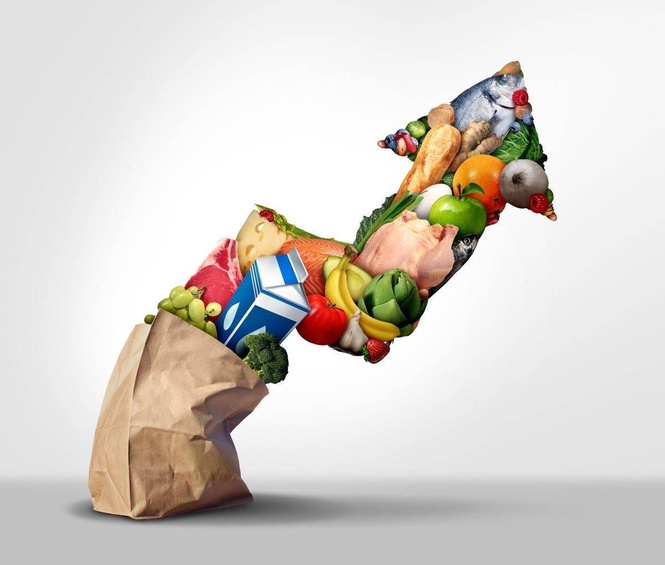
HIGHER prices of key food items, along with rising transport and energy costs, drove inflation back to a year high of 7.2 percent in September, the Philippine Statistics Authority (PSA) reported on Tuesday.
The acceleration from 6.1 percent in August ended four consecutive months of easing. Last month’s 7.2 percent marked a return to the level seen in April, the highest so far for 2026, and was also significantly higher than the 1.7 percent posted a year earlier.
It exceeded the 6.7-percent median in a Manila Times poll and nearly hit the upper end of the Bangko Sentral ng Pilipinas’ (BSP) 6.4- to 7.4-percent estimate for the month.
The result could lead to another interest rate hike later this month. The BSP, in a statement, said it remained “vigilant and guided by incoming data.”
The September figure brought average inflation for the first nine months of 2026 to 5.4 percent, remaining above the BSP’s 2.0- to 4.0-percent target.
Core inflation, which excludes selected food and energy items, likewise rose to 4.7 percent from 4.1 percent in August and 2.6 percent a year earlier.
Food, energy costs tagged
Socioeconomic Planning Secretary Arsenio Balisacan said the September increase “was driven mainly by disruptions in food supply caused by adverse weather and higher global oil prices.”
“These are significant supply-side pressures, but they are being met with targeted interventions to mitigate the impact on households,” he added.
Data showed faster price increases in food and nonalcoholic beverages, which rose by 6.7 percent from 4.6 percent in August.
Food inflation, in particular, accelerated to 6.8 percent from 4.6 percent. It was also higher than the 0.8 percent recorded in September last year.
Food inflation was mainly driven by a 10.7-percent increase in prices of vegetables, tubers, plantains, cooking bananas and pulses, reversing from the 3.4-percent decline recorded in August.
Rice inflation, meanwhile, rose to 20.3 percent from 19.4 percent.
Also contributing to the overall inflation rise were “faster annual increases ... in housing, water, electricity, gas and other fuels,” the PSA said, with the index rising by 8.4 percent.
The transport index hit 14.6 percent, up from 7.9 percent and 13.5 percent, respectively, in August.
Inflation preparations
The government, Balisacan said, is preparing for a possible intensification of El Niño to prevent price growth from surging even higher.
“The best response to supply-driven inflation is to strengthen supply itself. That is why we are expanding food production and storage, improving logistics and building resilience against climate shocks,” he said.
“These investments address the root causes of price pressures and will deliver a more stable and affordable food supply in the years ahead,” he added.
Agriculture Secretary Francisco Tiu Laurel Jr. echoed this, saying the Department of Agriculture was “setting aside P45 billion for our El Niño response, with P6.2 billion already released, because we need to make sure that food supply remains stable and prices do not spiral whenever climate challenges hit our farmers and fisherfolk.”
The Philippine Atmospheric, Geophysical and Astronomical Services Administration has projected a super El Niño by the end of 2026 through the first half of 2027, with the worst of prolonged dry spells expected to hit agriculture, fisheries and livestock production from November to April.
Rate hike expected
Chinabank Research said inflation was likely to keep rising, peaking in November, as “elevated oil and food prices, and their second-round effects continue to build.”
“Key upside risks in the coming months include substantial transport fare increases and the onset of drier weather conditions,” it added.
“With price pressure likely to remain elevated and the worst of this inflation episode still ahead, we expect the BSP to deliver another 25-bp (basis point) rate hike in October.”
The BSP’s policymaking Monetary Board has raised key interest rates three times this year to temper rising consumer prices, with the benchmark rate currently at 5.0 percent.
Its next meeting will be on Oct. 22.