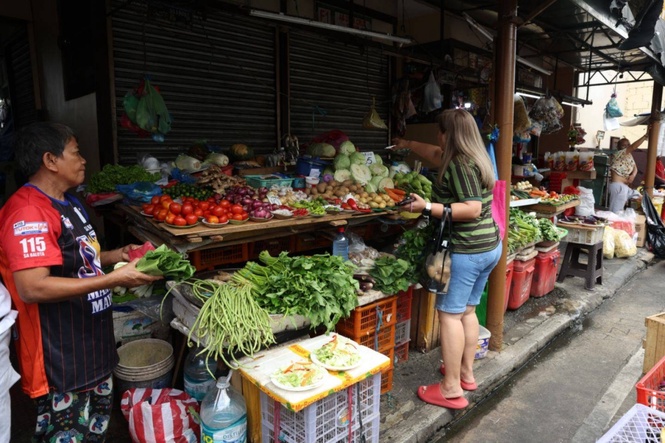
MANILA, Philippines — Inflation has emerged as the most urgent concern of Filipinos, with 71 percent calling on the Marcos administration to address rising prices immediately, while 81 percent disapprove of its performance in managing inflation, a Pulse Asia survey showed.
The September 17 to 24 survey found that concern over inflation jumped 14 percentage points from 57 percent in July, making it the most widely cited national issue requiring immediate government action.
Disapproval of the administration’s handling of inflation also increased, reaching 81 percent from 77 percent in July and 64 percent in September 2025.
Inflation was the only issue cited by a majority of respondents across all geographic areas and socioeconomic classes as requiring immediate government action, the survey showed.
After inflation, the most frequently cited urgent concerns were fighting corruption at 39 percent; increasing workers’ pay, 36 percent; fighting criminality, 24 percent; and reducing poverty, 21 percent.
Creating more jobs and fighting illegal drugs were each cited by 18 percent of respondents, while 14 percent called for lower gasoline prices.
The survey also showed widespread dissatisfaction with the administration’s handling of other national concerns.
Seventy percent disapproved of its efforts to fight corruption, while 71 percent disapproved of its campaign against illegal drugs. Disapproval of its efforts to reduce poverty reached 67 percent, up from 61 percent in July and 57 percent in September 2025.
On gasoline prices, 65 percent disapproved of the administration’s performance, up from 59 percent in July.
Protecting the welfare of overseas Filipino workers was the only issue assessed for which a majority of respondents, 52 percent, approved of the administration’s performance. Only 1 percent identified it as an urgent national concern.
On responding to calamities, 40 percent approved of the administration’s performance, while 35 percent disapproved.
Pulse Asia conducted face-to-face interviews with 2,400 adults nationwide from September 17 to 24, 2026. The survey has a margin of error of plus or minus 2 percentage points at the 95-percent confidence level.