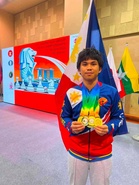
STUDENT-LED projects moved from the classroom to national scrutiny at the Philippine Society of Customs Administration Students (Pscas) National Awards 2026, held alongside the Pscas National Seminar 2026 at the Lyceum of the Philippines University Manila.
The national gathering brought together student leaders and local chapters from schools offering customs administration programs across the country, providing a platform for recognizing student achievement while strengthening the connection between academic preparation and professional customs practice.
Jill L. Tolentino Customs Brokerage (JLTCB) took an active role in the program through licensed customs brokers Apple Nathalie Marfa and Arra Milan Manalo, who represented the company on the national board of judges. Abigail Janina Bustos represented JLTCB in an editorial capacity, leading the preparation of the company’s news publication and shaping the event’s key discussions into a broader industry narrative. Serving as primary evaluators, Marfa and Manalo reviewed and graded project outputs and project accomplishment reports submitted by participating chapters nationwide, ensuring each entry demonstrated a clear purpose, sound planning, credible implementation, and verifiable results beyond mere presentation and documentation.
The submissions covered 10 core areas of student and organizational development, including academic and intellectual growth, technology and innovation, community extension, environmental sustainability, and career readiness. A formal set of criteria guided the judging process, with impact and outcomes carrying the largest share at 25 percent, followed by relevance and alignment at 20 percent. Planning and organization, innovation and creativity, and documentation and verification each accounted for 15 percent, while partnership and resource mobilization made up the remaining 10 percent.
The framework placed particular weight on whether a project responded to an actual need, supported the objectives of customs administration education, produced measurable benefits, and showed potential for continuity or replication, requiring participating chapters to substantiate their accomplishments through complete and credible supporting records.
The assessments submitted by Marfa and Manalo contributed directly to the selection of the national award recipients, bringing an essential industry perspective to the evaluation and determining whether the projects demonstrated the discipline, accountability, and practical value expected beyond the academic environment. Marfa also delivered a keynote address to the national assembly of customs administration students, drawing from professional experience and the daily realities of customs operations to encourage student leaders to continue developing their initiatives beyond the competition and consider how their work could contribute to Philippine trade and economic activity. She identified integrity, technical precision, and continuous learning as essential foundations of the profession, emphasizing that these qualities are critical in customs practice where decisions involving tariff treatment, documentation, regulatory requirements, and shipment processing directly affect businesses and global supply chains.
The Pscas National Awards 2026 demonstrated how student initiatives can be evaluated using standards that value relevance, innovation, accountability, and public impact, while highlighting the importance of bringing educators, student organizations, and industry practitioners into the same professional conversation.
As Philippine trade and customs processes grow more complex, preparing the next generation will require a combination of technical education, ethical judgment, and exposure to actual industry expectations.
Programs such as the Pscas National Awards help future customs professionals understand not only what they are expected to know, but also the high professional standards they will be expected to uphold.