THE Maritime Industry Authority (Marina) is developing a safety framework to regulate the country’s offshore wind sector.
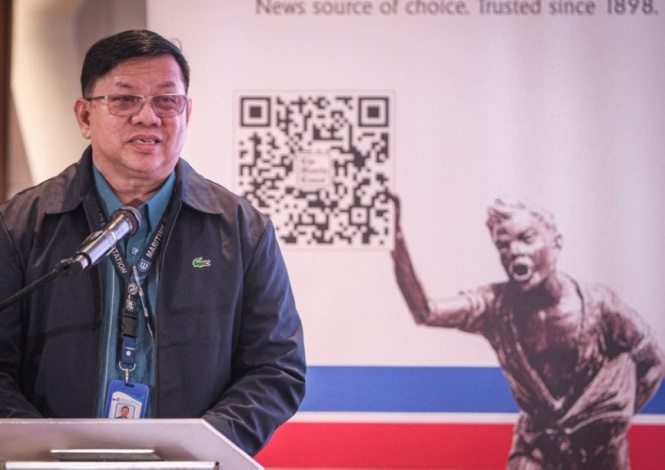
Speaking at The Manila Times Maritime and Offshore Wind Forum, Engr. Ronnie Gernato, Maritime Education and Training Standards Supervisor, explained that existing maritime rules are being updated for offshore energy risks.
“We should be adapting our regulation standards, people, vessels, ports, and maritime services to meet those risks,” Gernato said. He noted that Marina is updating national and international maritime codes — including Solas, STCW, Marpol, the ISM Code, and the IP Code — into a three-tiered structure covering general ship standards, offshore wind rules, and project-specific risk management.
The regulations target specialized vessels required for offshore construction, such as heavy-lift ships, jack-up barges, cable layers, crew transfer vessels, and service operation vessels. Marina will register these ships based on their actual operational functions rather than broad classifications.
To address initial vessel shortages, Marina will allow foreign-flagged specialized ships to operate under temporary permits, such as through Marina Memorandum Circular DS-2025-05, while local fleets build capacity.
The framework also distinguishes marine seafarers from industrial workers, establishing safety certifications tailored to each group. Marina is collaborating with local academies to build specialized training courses, aiming to make the Philippines a regional training hub for offshore energy personnel.
Shore infrastructure is also covered, with new safety rules for port facilities handling oversized turbine parts, dynamic positioning equipment, and offshore crew transfers. To keep shipping lanes and fishing grounds clear, developers must complete early marine spatial planning with the Philippine Coast Guard, the Department of Environment and Natural Resources, and local government units.
Gernato outlined Marina’s goal to build a self-sustaining domestic industry: “Our goals should be being a safe, internationally compliant, and ultimately Philippine-capable offshore wind maritime ecosystem.”
For developers, Marina’s approach provides clear guidelines for ship registration and project approvals, cutting operational risks and preventing delays during construction.
For the local maritime industry, the framework creates commercial opportunities in shipbuilding, repairs, and port operations as projects shift into long-term maintenance. It also enables local academies to train and certify offshore crews, helping the Philippines expand from a supplier of seafarers into an offshore energy hub in Asia.