The Microsoft outage has the potential to be “one of the most economically damaging in history”, according to some estimates.
After nearly a day of disruption, Microsoft services are coming back online, but the damage may continue to be felt for a long time.
Microsoft users experienced issues with Outlook, Teams, Copilot and other services, which affected government agencies, schools, hospitals and major businesses across 74 countries
The scale means the disruption could be hugely economic damaging for those affected, while knock-on costs impacting organisations that do not even use Microsoft services.
Early forecasts suggest the incident had an impact on billions of pounds worth of economic activity due to the interruption to communications, transactions and productivity.
Samuel Mather-Holgate, managing director at the UK-based financial advisory firm Mather and Murray Financial, described it as a “terrifying demonstration” of how fragile our modern economy has become.
"This could become one of the most economically damaging technology outages in history,” he said.
"When Microsoft goes down, the world doesn't just lose its emails – huge parts of the global economy effectively grind to a halt. The financial losses could be astronomical, and most businesses will recover little more than service credits from Microsoft.
“The really frightening part is how dangerously dependent we've become on a handful of technology giants. We've effectively handed them the keys to the global economy, with precious little backup.."
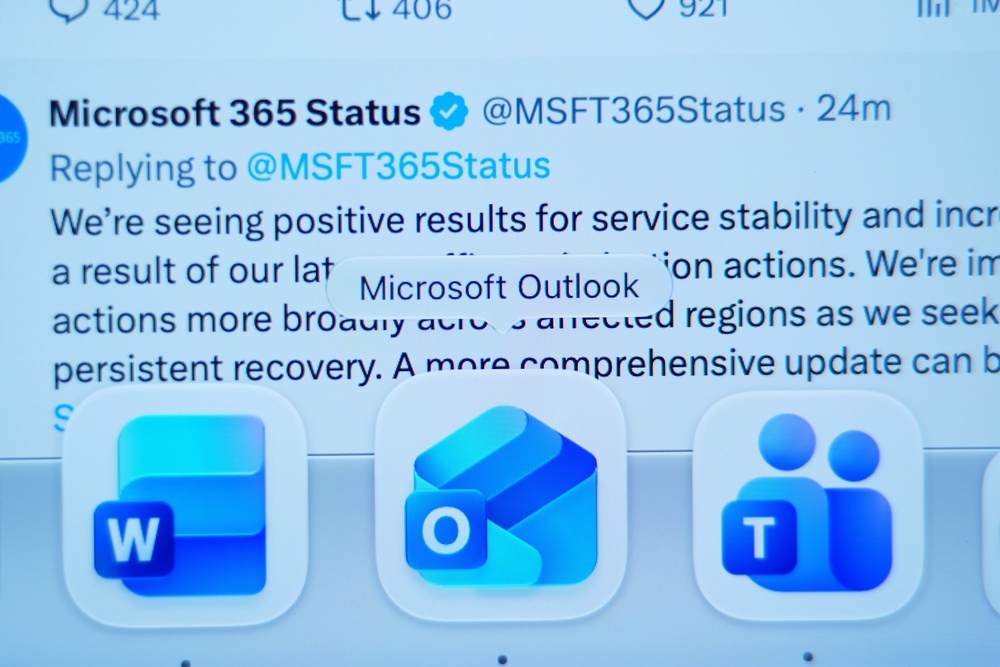
It comes just 10 months after a similar outage at the company, which affected multiple Microsoft 365 services.
Microsoft described it as a service functionality issue affecting a subset of customers intermittently, though no official figures were given regarding the number of people or organisations affected.
Reports to the online status tracker Downdetector suggest it was relatively minor compared to the latest disruption.
There is no way to accurately measure the total economic cost of these outages for all of those impacted, but for many it results in a massive loss in productivity.
For some companies who use Microsoft services for both email and video calls, it can even result in a complete paralysis of workplace communications.
Experts have called for contingency plans in the event of future outages, such as backing up staff and customer phone numbers to a service that is not linked the same email provider.
This would allow them to continue communicating via phone or through services not connected to their core provider, such as WhatsApp or Telegram.
“In the wake of this outage, organisations must have a plan in place for how to work without such tools, for when incidents like this occur,” Matt Saunders, field chief technology officer at the tech consultancy firm Adaptavist, told The Independent.
“People can use the old-fashioned phone for meetings, but that's challenging when everyone’s numbers are in a system that is also offline.
“An outage like this almost throws us back to the dark ages, so it’s hard to plan for these systems not being there. But each time you’re interacting with an online system, think a little bit about how you’d get that task done without it, so the world doesn't stop turning when something goes down.”
Microsoft gradually restores services after major global outage
What to do if Microsoft has another outage – and how to prepare for it
Microsoft outage sparks chaos across NHS, police and schools
Estate agents and home movers navigate Microsoft outage on ‘unlucky’ Friday 13
Outlook and Teams are down in a huge outage that Microsoft can’t fix - follow live