After more than two decades of MyKad being a familiar sight in Malaysians’ wallets, a new generation is officially arriving.
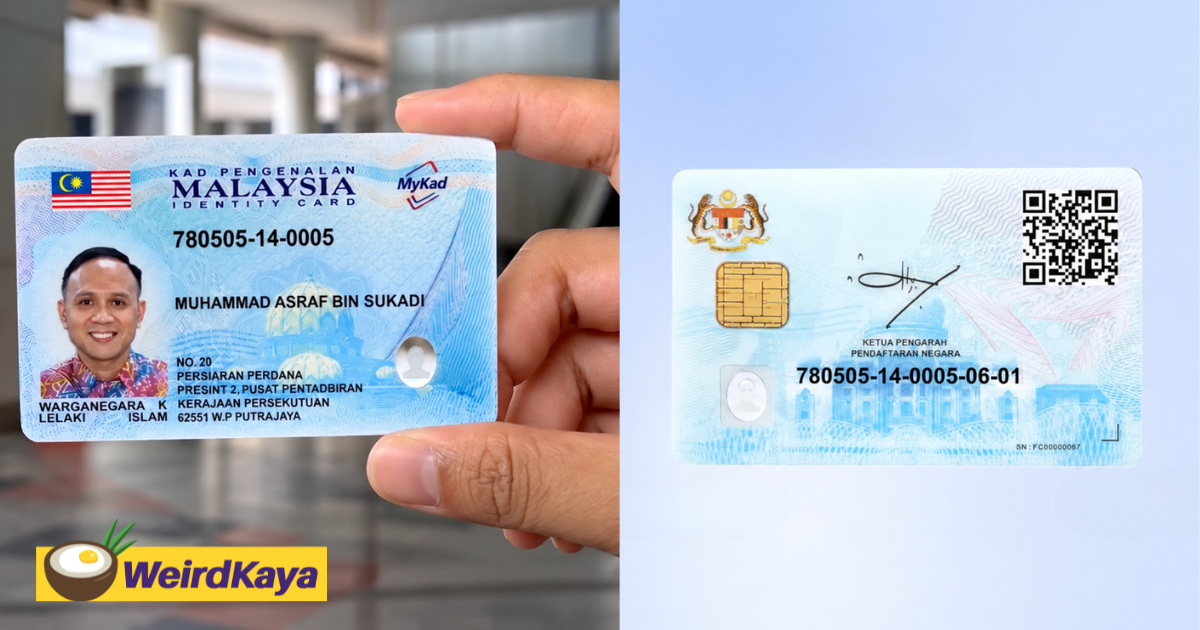
The National Registration Department (JPN) unveiled the official design of the MyKad Generasi Baharu on Sept 16, describing it as an upgrade to the national identity card in terms of design, structure and security.
The rollout begins tomorrow, Sept 17, 2026, with eligible MyKad applications gradually receiving the new version.
So what exactly has changed, and more importantly, do you need to head to JPN and replace your current IC?
Here’s what you need to know.
The new MyKad looks noticeably different
At first glance, the MyKad Generasi Baharu still keeps the familiar blue colour scheme, but its layout has been redesigned.


Based on the design unveiled by JPN, the Malaysian flag now appears on the upper left of the card, while the cardholder’s photograph has also been moved to the left.
The front of the card carries personal details along with a smaller secondary portrait, while the physical chip has been moved to the back.
A QR code can also be seen on the back of the new card.
JPN said the changes form part of an overall upgrade to the card’s design, structure and security.
It comes with much stronger security features
The new MyKad comes with 53 security features, compared with 23 on the existing version, according to JPN Director General Datuk Badrul Hisham Alias.

Among the features highlighted by JPN are laser engraving, ultraviolet security elements, a dynamic security hologram, microtext and complex Guilloche patterns.
The card also has a transparent window and a smaller secondary portrait known as a Ghost Image.
According to JPN’s explanation, personal information and the holder’s image are laser engraved into the card, making alterations more difficult without damaging the card itself.
The Ghost Image acts as another security layer against attempts to replace or manipulate the holder’s photograph.
There are also security elements that only become visible under ultraviolet light.

There’s also a QR code on the back
One of the more obvious additions is a QR code located on the back of the card.

JPN said the QR code is intended to support verification and enforcement purposes.
The department had previously confirmed that QR technology was among the additional security features introduced with the new MyKad.
In other words, it is not simply a QR code added for Malaysians to scan for everyday use.
The card also supports contactless technology
JPN’s latest demonstration also shows that the MyKad Generasi Baharu is equipped with NFC technology and an upgraded chip that supports both contact and contactless access.
The chip forms part of the wider security upgrade, with JPN previously saying that the new generation MyKad would feature improved encryption.
However, contactless capability does not mean the new MyKad can be used as a Touch ’n Go card.
Yes, Touch ’n Go is gone
This is probably one of the biggest changes Malaysians will notice.
JPN has confirmed that the Touch ’n Go function will no longer be available on the MyKad Generasi Baharu.
Those who still want to use Touch ’n Go services will have to use a separate Touch ’n Go card or the Touch ’n Go eWallet.
So if you are among those who still tap your IC at tolls or parking facilities, that function will not carry over to the new card.
Do all Malaysians need to replace their current MyKad?
No.
JPN has stressed that Malaysians do not need to replace their current MyKad simply because the new generation has been introduced.
If your existing MyKad is still in good condition and works normally, it remains valid.
However, holders of older identification cards, namely the Kad Pengenalan Plastik (KPP), Kad Pengenalan Bermutu Tinggi (KPT), and MyKad without a Ghost Image, will need to switch to the new generation MyKad.
This means there is no need for everyone to rush to JPN on Sept 17.
JPN also said the transition will be carried out gradually rather than replacing every existing MyKad immediately.
What happens if you apply for a MyKad from Sept 17?
According to JPN, applications that meet the relevant requirements from Sept 17 onwards will be issued the MyKad Generasi Baharu.
A total of 40 JPN branches equipped with printing centres nationwide will be able to produce the new MyKad on the same day.
For JPN branches without the necessary printing facilities, the card is expected to be ready within five working days.
The rollout itself will be carried out progressively.
Will your IC number change?
No.
Getting the MyKad Generasi Baharu does not mean Malaysians will receive a new identification number.
JPN said a person’s existing MyKad number will remain unchanged.
The personal information printed on the card will also continue to be based on the individual’s official records maintained by JPN.
What about SARA money in your MyKad?
For Malaysians receiving assistance under Sumbangan Asas Rahmah (SARA), changing to the new MyKad will not cause your balance or eligibility to disappear.
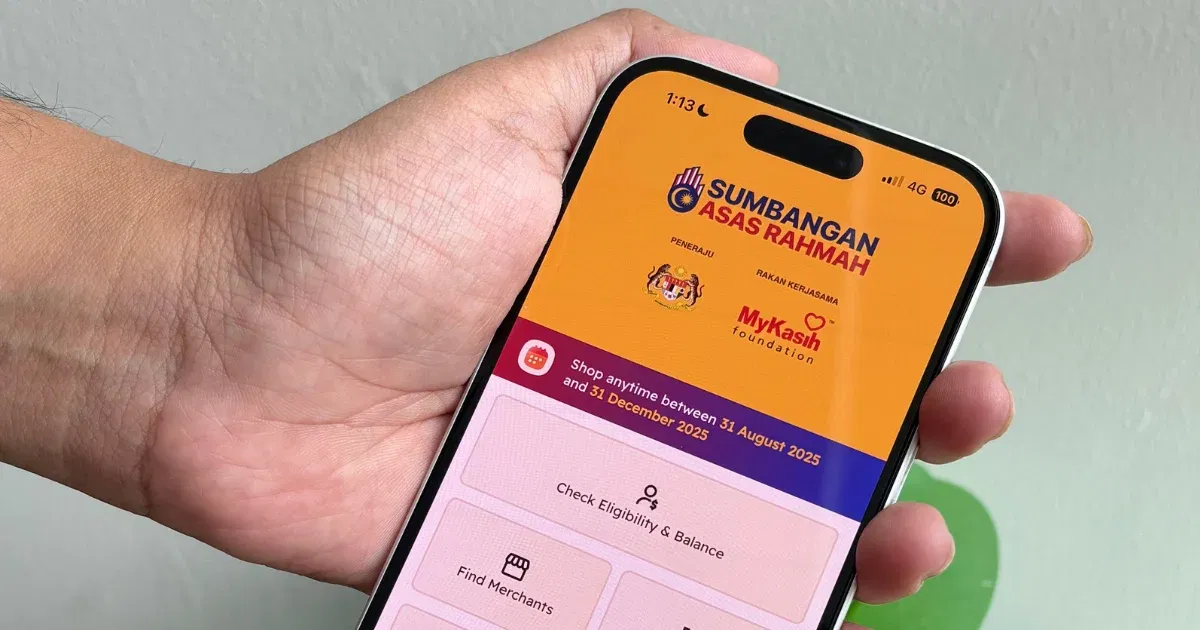
According to JPN, SARA balances and eligibility are not actually stored inside the physical MyKad.
Instead, the information is recorded in the SARA system, while the MyKad is used to verify the recipient and make eligible purchases.
This means receiving a MyKad Generasi Baharu will not wipe out the recipient’s existing SARA balance or eligibility.
The new MyKad can also continue to be used for government assistance and subsidies that use MyKad for verification or redemption, subject to the requirements of the respective programmes.
Banking and government services will continue
JPN said the new MyKad remains Malaysia’s official identification document and can continue to be used for government matters as usual.
For banks and other services that rely on MyKad, JPN said the rollout has taken their system requirements into consideration, with adjustments to be made progressively with the relevant parties.
The aim is to ensure Malaysians can continue carrying out their usual transactions during the transition.
Is replacing it free?
Not necessarily.
According to JPN’s FAQ, charges will depend on the type of application and the rates set by JPN.
So Malaysians should not assume they can simply walk into JPN and exchange a perfectly functioning MyKad for the new one free of charge.
JPN also encouraged those who wish to make a replacement to book an appointment beforehand through its appointment system to make counter transactions easier.
For everyone else, your existing MyKad can stay right where it is in your wallet.
The MyKad Generasi Baharu officially begins its gradual rollout on Sept 17, 2026.
Indonesian Woman Pays RM200 For Copy Of MyKad To Get A Job In M’sia


.jpg)