
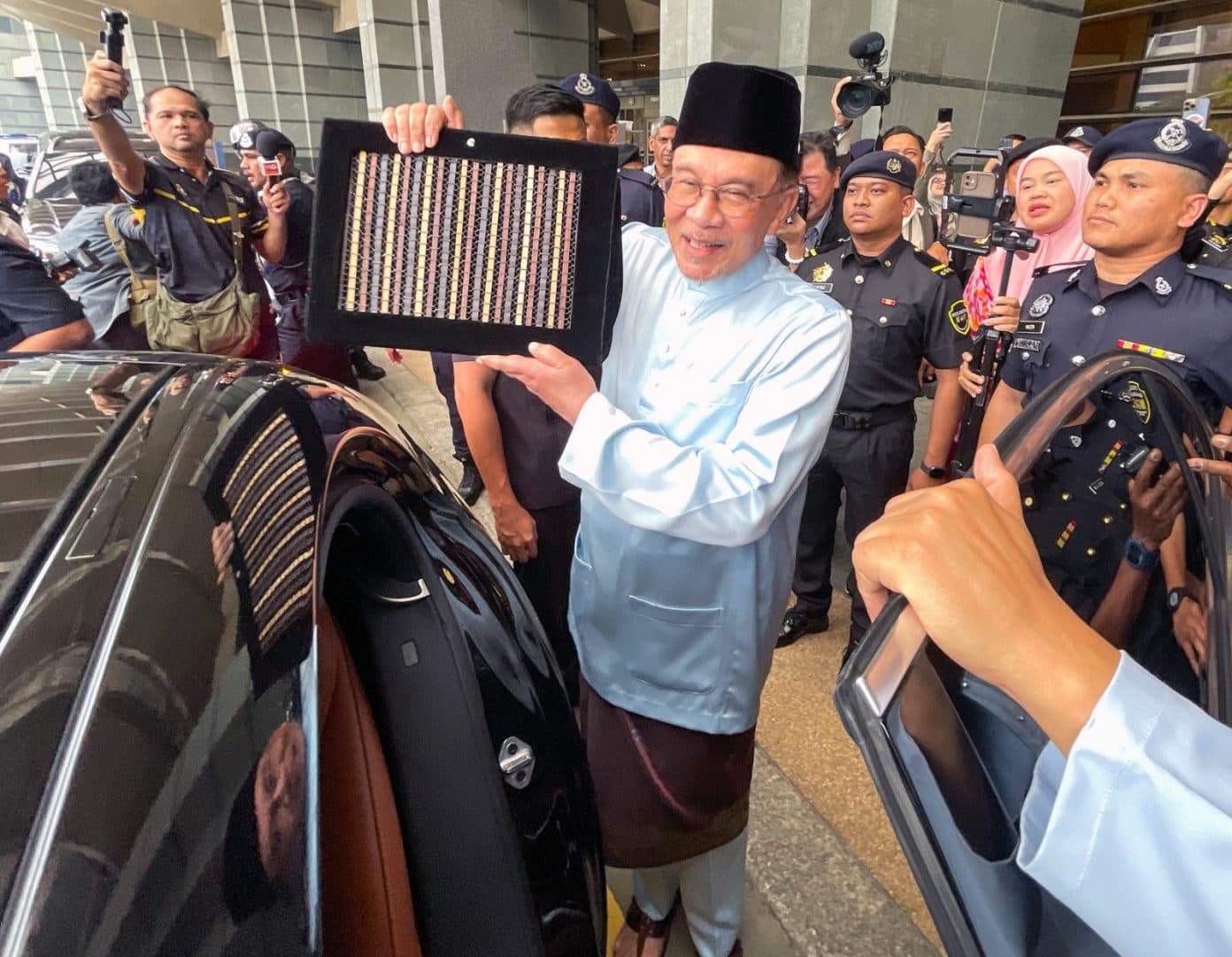
It has been more than a month now since the tabling of Budget 2027 on October 9th, 2026, by the Finance Minister, Datuk Sri Anwar Ibrahim, and after careful consideration, I am ready to give my overall assessment in what feels like an annual affair at this point, whereby the critique of the supply bill is published on this website. With the fifth MADANI budget of this term unveiled, before elections are called by next year - with automatic Parliament dissolution scheduled for the 19th of December 2027 - we can clearly see that this budget is an election-year budget. The main headline reads the following: Expenditure is at RM510 billion (up from RM470 billion), budget debt to GDP is projected to decrease to 3.3% of GDP by 2027, and federal debt to GDP is projected to fall to 63% in 2027. But behind the headline figures, those who believed in “Reformasi” have been well and truly betrayed. This is a budget that manages discontent rather than confronting inequality.
Tax Policy
The Finance Minister has started putting out some cosmetic progressivity on Personal Income Tax [PIT]. As reported by YYC Advisors, the Finance Ministry has decided that the threshold for the 30% headline PIT rate should hit those who earn RM 1 million and over, while reducing the rates of RM70,001 to RM100,000 band and creating a new tax rate band between RM100,001 and RM150,000 [breaking the existing RM100,001 to RM400,000 tax band] by 1% each - bringing the tax rates to 18% and 24% tax rates respectively. On the surface, this looks like structural reform - but in reality, this will barely scratch the structural wealth inequality in this country for two reasons: other countries' existing tax policies, and expanded tax reliefs for higher earners.
In comparison to the APAC region and even in the more confined Southeast Asian region, Malaysia lags in its headline PIT rates, with countries like Thailand, the Philippines, and Vietnam being ahead of the game here; their 35% headline PIT rates allow them to have higher tax-to-GDP ratios. Malaysia is projected to have a tax-to-GDP ratio of 12.8%, according to the Fiscal Outlook and Federal Government Revenue Estimates document on page 123, and this has stayed relatively consistent with data from 2024, as reported by the OECD, which showed that Thailand [17.1%], Vietnam [17.2%] and the Philippines [18.1%] all had higher tax-to-GDP ratios, which allowed Thailand to pay for Tax-Financed Universal Healthcare Without Private Insurance Creep, Vietnam to authorise a massive investment in infrastructure without private toll monopolies and the Phillippines to pay for Universal Free Public College Tuition while the Malaysian public is shackled with policies like MediAsas which encourages workers to buy private insurance with their Employment Provident Fund [EPF] savings, public-private partnerships in infrastructure [incentivising profit extraction over welfare of the people] and the young ones are burdened by the idea of PTPTN which I have covered the vices in my article entitled: "Socialising Higher Education: Has Sarawak Showed the Way?". In addition, the tax cuts benefit those who have more income - which, when building a solidaristic society based on social justice - is deemed counterproductive.
Next, there is the expansion of tax reliefs that functionally subsidise higher earners. While the government frames these reliefs as broad-based household support, the reality is far more regressive. By expanding deductions under Budget 2027's tax measures for AI subscriptions, sports equipment, and private medical care, the budget rewards consumption patterns exclusive to upper-middle-income earners with spare disposable income. In public finance, as tax scholar Stanley Surrey famously argued, tax expenditures in the form of deductions and exclusions which vary by the marginal income tax bracket can create a regressive "upside-down subsidy" - whereby these upside-down subsidies benefit taxpayers in the higher marginal tax brackets over lower-income taxpayers, and this concept is very much evident in the budget today. In Budget 2027, the state is not merely failing to tax the rich: it is actively discounting their lifestyles. Whether through stamp duty waivers on RM750,000 homes, tax write-offs for AI subscriptions and sports gear, or near-zero taxes on stock market windfalls, the tax code rewards private wealth accumulation while starving the public goods working Malaysians depend on.
This fiscal generosity in relation to private consumption stems from the idea that wealth is not taxed, whether earned or unearned. Tax ideas like wealth taxes and inheritance taxes are not implemented, while capital gains on publicly listed shares remain untaxed and dividend income above RM100,000 faces a small 2% levy. The message shared by the MADANI Government is loud, clear and unmistakable: labour is taxed, private capital and luxury consumption are not. This Government would rather use tax expenditures to encourage the wealthy to exit broken public systems into private markets instead of creating and using social wealth in an effort to fix a broken public healthcare system, structurally reform public education and build more social housing - which leaves the burden on the working class to shoulder and bear the cost of a hyper-individualistic society, and this is in stark contrast to the wealthier members of society who have the means to afford their exit from the public commons.
Expenditures
The largest catastrophe of the budget has to be the healthcare budget. CodeBlue's headline stated it best: "Budget 2027: Health Ministry Gets RM47.7b, Smallest Increase In Five Years". A study conducted in 2017, which was published by the National Institutes of Health (NIH), recommended that 5% of GDP is needed to start at least working towards universal health coverage - a goal that even the current Government shared, declaring that they will achieve "Public Health Spending 5% Of GDP In 5 Years" - according to CodeBlue. 5 years later, and according to an article by Aliran - the expenditure-to-GDP ratio directed to healthcare is a measly 1.95% - a farcry from the 5% threshold to fulfil Harapan's commitments and to move towards the threshold to have ideas of Universal Health Coverage in this country. In fact, this budget has done the opposite; the government has regressed and reneged on its pledges so much that they are now essentially subsidising private healthcare with MediAsas, the RakanKKM scheme and expanding the Hospital Services Outsourcing Programme [HSOP] budget to RM200 million. I am repulsed because this is revolting news coming from a government that brands itself as "caring for its citizens" - especially considering that, since the introduction of the RakanKKM scheme, which I have covered in my article entitled: "Opinion: Healthcare is a Right, Not a Commodity!" which was already a betrayal of public healthcare, this government seems to be falling even further behind. It is, for lack of a better term, disgusting, preposterous, and shameful for a Government of this calibre to brand itself as "for the people" when they shamelessly undercut public services to kowtow to private interests.
Another catastrophe would be the increase of the minimum wage to RM2,000/month - not because raising workers' wages is bad or wrong, but because of how it is implemented. Bernama reported that the new RM2,000/month minimum wage would include exemptions for MSMEs with annual sales below RM50 million, which would exempt all MSMEs in the country, as quoted by Aliran from Deputy Finance Minister Liew Chin Tong. PSM estimates that up to 2 million workers are on the current RM1,700 minimum wage, which is clearly unacceptable because what use is the minimum wage if everybody is not being paid at least the minimum wage? Instead, genuinely struggling MSMEs should get support in the form of tax breaks, more public investment in MSMEs that actively produce a social good, like what Jeremy Corbyn's 2017 manifesto, entitled "For the Many, Not the Few", suggested or other miscellaneous support.
Writer's Concluding Thoughts
This is clearly a weak budget, proposed by a weak prime minister leading a weak Government who realises his cabinet will go out in a whimper. As finance minister during the Asian Financial Crisis, Anwar embraced orthodox, IMF-style austerity, as “MALAYSIA'S PATHWAY THROUGH FINANCIAL CRISIS” detailed. The man we see in office is cautious about wealth and deferential to markets. Stop mourning the social justice warrior we invented in our heads. The real man isn’t coming to save us. I expect this government to lose the next general election, and what follows is anyone’s guess.
Timothy (timothytanyeantim@gmail.com) is a content creator under the Newswav Creator programme, where you get to express yourself, be a citizen journalist, and at the same time monetize your content & reach millions of users on Newswav. Log in to creator.newswav.com and become a Newswav Creator now!
The User Content (as defined on Newswav Terms of Use) above including the views expressed and media (pictures, videos, citations etc) were submitted & posted by the author. Newswav is solely an aggregation platform that hosts the User Content. If you have any questions about the content, copyright or other issues of the work, please contact creator@newswav.com.


