Malaysian politics has many ghosts.
Every election season, somebody takes one out of the cupboard, dusts it off, and sends it wandering through the kampung.
For decades, one of the most reliable has been DAP.
“Careful ah. DAP coming.”
“Malay rights finished.”
“Country gone.”
“Everything kena sapu.”
It sometimes feels like the old way adults frightened children.
“Finish your rice. Later hantu come.”
Or worse, that crude racial stereotype: “Later Apneh catch you.”
The child grows up and realises there was no monster.
But Malaysian politics never quite grew up.
Today it becomes:
“Vote wrongly, DAP will take over.”
After more than six decades of independence, are we still running politics on ghost stories?
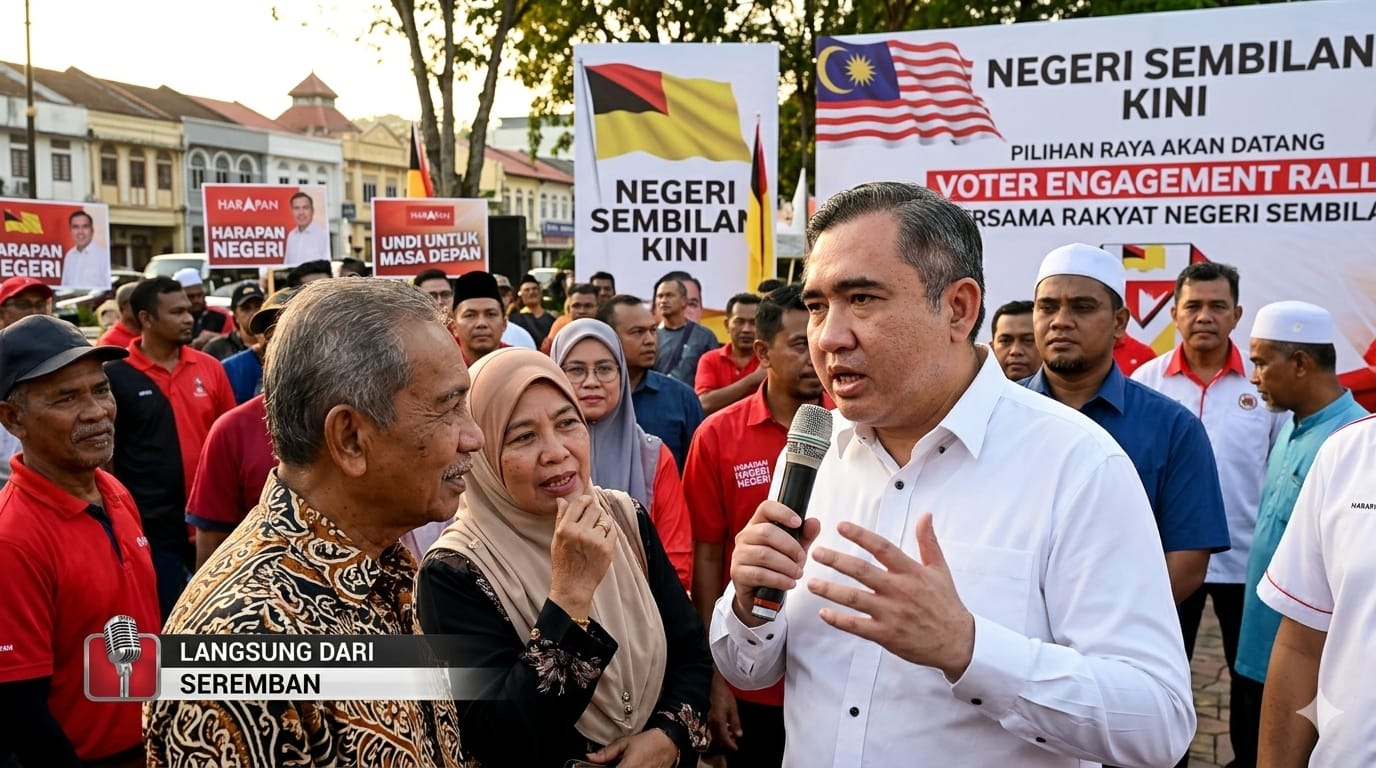
The Chennah contest involving DAP secretary-general Anthony Loke has revived this anxiety. Talk of a “Malay unity” wave, DAP struggling in Malay-majority areas, and whether performance can overcome identity politics.
But underneath them lies a deeper one Malaysia avoids.
What exactly are Malays supposed to be afraid DAP will take away?
Rocket Got No Launchpad, Boss
Look at the state structure.
So where is this supposed takeover?
Underground car park?
Komtar secret button?
DAP’s symbol is a rocket, yes.
But a rocket without a launchpad goes nowhere.
This does not mean Malays should not be politically vigilant. Every community can defend its interests.
But vigilance must be grounded in reality.
Otherwise fear becomes a business model.
And Malaysian politicians have long learned that fear sells better than policy.
Maybe the Real Hantu Is Poverty
Imagine a kampung where:
Jobs are scarce.
Wages stagnate.
Prices rise.
Young people leave.
Housing becomes unaffordable.
Graduates struggle to find work.
After decades of voting, nothing changes.
These are real problems.
So leaders should explain them, right?
Instead:
“DAP!”
Very convenient.
No need to discuss productivity, corruption, education, investment, wages, or inequality.
Just point at the rocket.
Hantu settled.
But DAP did not create rural poverty.
Nor MCA.
Nor MIC.
Nor any single community.
Poverty comes from weak opportunities, poor governance, unequal access to capital, low productivity, education gaps, geography, and decades of patronage that often creates dependency instead of mobility.
If a community remains economically stuck after generations of representation, we must ask an uncomfortable question.
Maybe the problem is not outside the house.
Maybe someone inside has not been fixing it.
Malay Unity - Unity for What?
Malay unity is not inherently wrong.
Chinese organisations do it.
Indian organisations do it.
Sabah and Sarawak do it.
Identity is natural.
Unity for what?
Better schools? Good.
Higher wages? Excellent.
Stronger entrepreneurship? Great.
Eliminating poverty? Start immediately.
But unity built mainly on fear of another community is not an economic programme.
It is political insurance.
And Malays deserve more than being told their survival depends on fearing fellow citizens.
Because political dominance without economic progress is hollow.
You can control institutions.
But if your children still struggle to afford homes or leave the kampung for work, what has dominance achieved?
You cannot makan political dominance.
Don’t Romanticise DAP Either
Rejecting fear of DAP does not mean blind support.
Anthony Loke should be judged.
If Chennah voters feel neglected, they can vote him out.
If service centres fail, question them.
If Indian voters feel ignored, DAP must respond.
If Malay voters prefer another candidate, that is democracy.
If MCA performs better, it deserves support.
Simple.
DAP is not holy water.
Criticising DAP is not racism.
But rejecting a party purely because it is framed as a racial threat is something else entirely.
We must be able to separate performance from paranoia.
How Non-Malays Learned “No Work, No Eat”
Many Indian and Chinese families built resilience not because life was easy, but because insecurity was constant.
Small shops.
Estates.
Construction.
Night markets.
Factories.
Family businesses.
Two jobs, sometimes three.
The rule was simple:
No work, no eat.
This is not a claim that all succeeded. Many struggled, especially working-class Indians and urban poor.
Hardship should not be romanticised.
But when people believe no system will protect them, they adapt differently.
They save.
They hustle.
They diversify income.
They educate children intensely.
They rebuild after failure.
This is not evidence of racial superiority.
It is evidence of different historical exposure to insecurity.
Malaysia’s challenge is to build that same agency for everyone, while still protecting those who genuinely need help.
A safety net should catch people, not become a permanent hammock.
The Progressive Side Has a Problem Too
DAP, PKR, Amanah and the broader progressive bloc also need reflection.
Mocking rural voters does not work.
Calling them ignorant worsens division.
Lecturing from urban cafés achieves little.
If identity politics beats governance politics, ask why.
Then go there.
Listen.
Not before elections.
For years.
Understand FELDA settlers, small traders, teachers, imams, rubber tappers, motorcyclists, mothers worrying about their children.
Economic insecurity strengthens identity politics because identity provides comfort when material life is uncertain.
You cannot defeat that with slogans.
You defeat it with visible governance.
Show how clean procurement improves roads.
Show how investment creates jobs.
Show how education changes mobility.
Show how corruption steals from kampung budgets.
Give people real reasons to feel secure as Malaysians.
Then ghost stories lose power.
The Hantu Doesn’t Pay Your Bills
Chennah may be decided by performance, identity, or local dynamics.
That is democracy.
But Malaysia faces a larger question heading toward GE16.
We can keep doing this:
DAP hantu.
PAS hantu.
Chinese hantu.
Or we can recognise the real problems:
Low wages.
Rising prices.
Unaffordable housing.
Weak productivity.
Corruption.
Poor education outcomes.
Youth underemployment.
These problems do not care about race.
Inflation does not check your IC.
Banks do not ask your religion before charging interest.
Supermarkets do not give discounts based on ethnicity.
And when your salary runs out, you cannot pay bills with “unity.”
So yes, criticise DAP.
Vote Loke out if he fails.
That is democracy.
But do it based on performance, not inherited fear.
Malaysia has spent decades asking which race should control the country.
Perhaps it is time to ask a better question:
Who can actually make the country work?
Because the economy does not believe in ghosts.
And neither should the next generation.
Annan Vaithegi write about Malaysian politics because sometimes the ghosts we are taught to fear are less dangerous than the problems we have been taught not to question.
Annan Vaithegi (annanvaithegi@icloud.com) is a content creator under the Newswav Creator programme, where you get to express yourself, be a citizen journalist, and at the same time monetize your content & reach millions of users on Newswav. Log in to creator.newswav.com and become a Newswav Creator now!
The User Content (as defined on Newswav Terms of Use) above including the views expressed and media (pictures, videos, citations etc) were submitted & posted by the author. Newswav is solely an aggregation platform that hosts the User Content. If you have any questions about the content, copyright or other issues of the work, please contact creator@newswav.com.