.png)
I was never Indian enough. Never Muslim enough. But apparently, always Malaysian enough - until I wasn't.
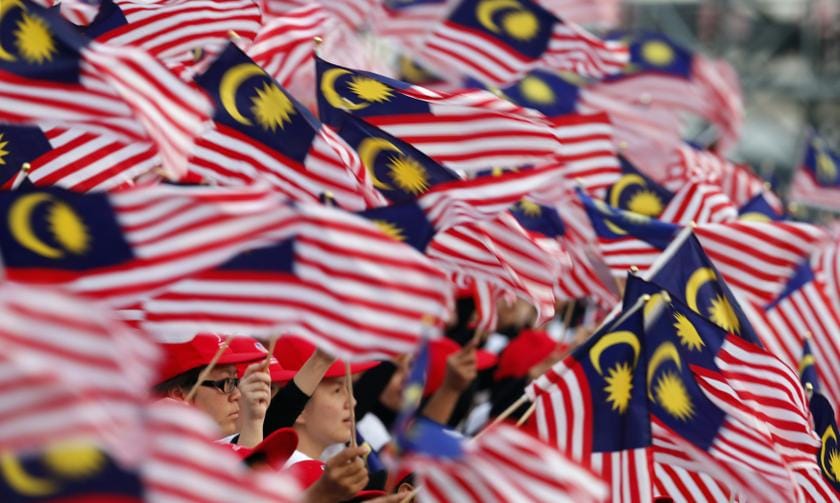
There was a time when I had a Malaysian flag hanging proudly in my home. Next to it were framed newspaper cuttings about Merdeka. I kept them because I genuinely believed in this country. I was proud to be Malaysian. Proud enough to hang my country on my wall and carry it in my heart.
I used to think I could never live anywhere else.
Fast forward to today. The flag is gone. The newspaper cuttings are packed away in some boxes in my garage.
And, if I am being completely honest, that is also where I have put my pride in Malaysia. Packed away.
You may think I am being dramatic. Maybe I am. But I am also being truthful.
The woman who once loved Malaysia so much that she could not imagine living anywhere else no longer feels that way.
I think I have, in many ways, outgrown Malaysia.
The irony is that Malaysia itself has grown. We have taller buildings, faster internet, better technology, more sophisticated infrastructure, more shopping malls and more facilities than we had when I was young.
Beneath all that shiny progress, something remains stubbornly unchanged. Our culture is still obsessed with race. Our politics is still addicted to religion. Our leaders still know exactly which racial and religious buttons to press whenever they need to frighten us.
And our mentality? Sometimes I think we are still trapped in Plato's cave, staring at shadows on the wall and congratulating ourselves for being enlightened.
For years, I held on to one belief - surely there were enough Malaysians who thought differently. Enough liberals. Enough progressives. Enough people who were tired of the old racial and religious script.
Enough people who believed that one day we would stop looking at each other first as Malay, Chinese, Indian, Muslim, Christian, Hindu or Buddhist - and simply see one another as Malaysian.
I thought these people were my people. I thought as long as there were Malaysians willing to challenge old-school thinking, there was hope.
Then came a recent controversy that shook something loose inside me.
An Indian Muslim woman was chosen to represent the Malaysian Indian Youth Council at a United Nations forum. And suddenly, there was a debate over whether an Indian Muslim could adequately represent the Malaysian Indian community - a community whose majority is non-Muslim.
I understand that communities are complicated. I understand that the experiences of Hindu Indians, Christian Indians and Indian Muslims are not identical. But something about the argument felt painfully familiar to me - because I have heard it before.
I grew up as an Indian Muslim. And belonging was never particularly straightforward.
To some Indians, I was never Indian enough because I was Muslim - and not part of the Hindu majority within the Indian community.
To some Muslims, I was never Muslim enough because I wasn't Malay - the majority Muslim community in this country.
I remember Indians calling me Tulukachi - a word that, in my childhood, was a reminder that I was the Muslim Indian girl, the wrong kind of Indian.
And Malays called me KK - Keturunan Keling.
These weren't affectionate little reminders of Malaysia's famous multiculturalism. They were ways of telling a child that ‘you are not quite one of us.’
You learn very quickly when you grow up like that. You learn which part of your identity to emphasise depending on who you are talking to. You learn that sometimes being Malaysian is supposed to be enough - until someone decides to inspect the fine print.
And perhaps that is why this recent debate has affected me so deeply, because I have spent much of my life trying to get past that question - Are you Indian enough?
Now, decades later, here it is again. Only this time, the language is more sophisticated.
Representation.
Community.
Identity.
Lived experience.
Minority rights.
All perfectly legitimate concepts, but beneath all those words, I still hear the same old question - Are you really one of us?
That hurts - because I had hoped we had moved beyond this.
Instead, I am watching people who proudly call themselves liberals having remarkably sophisticated arguments about why someone with the "wrong" religion may not be able to represent people of the "right" one.
And I find myself back there. Back to being that young Indian Muslim girl who was somehow never Indian enough and never Muslim enough. Back to being reminded that my identity came with conditions.
Only now, the conditions are being debated by people who tell us they believe in equality. How ironic.
We criticise politicians for playing the race card. Then we quietly pick up the same card when the person standing in front of us is not the right race or religion.
We say we believe in meritocracy. Then we ask whether the person's religion makes them sufficiently representative.
We say Malaysia is diverse. Then we become uncomfortable when someone actually embodies that diversity.
I am an Indian Muslim. My identity is not a mathematical equation where one part cancels out another.
Being Muslim did not erase my Indian heritage. Being Indian did not make me less Muslim. And neither identity made me less Malaysian.
In fact, living between these identities taught me something that perhaps people who have never had to question where they belong may not understand - you don't need to be identical to someone to understand their struggle.
Representation does not mean cloning. It means listening. It means understanding. It means carrying somebody else's concerns with enough empathy and integrity to speak about them honestly.
And if we demand that a representative must have exactly the same race, religion, gender, class and lived experience as every person they represent, then congratulations - we have just abolished representation because no two human beings have identical lives.
‘A sick Muslim country’
Almost ten years ago, I wrote an article responding to Zaid Ibrahim's call for young Malaysians to leave the country because Malaysia had become a sick Muslim country.
I disagreed with him.
I believed Malaysia could change. I believed our children could change it. I believed that changing a government might be difficult, but changing people's minds would be even harder - and that it was still worth trying.
Lim Kit Siang responded to that article and congratulated me. He wrote that he was moved by my piece, particularly the exchange between my children and me about never giving up. He said that despite temporary setbacks, change for the better in Malaysia could not really be stopped as long as Malaysians were prepared to stand up for their fundamental rights, and not to be disheartened by the resurgence of racial and religious issues.
Ten years ago, I believed him.
Today, something inside me has shifted - because here I am, ten years later, telling my own children something I never imagined I would say.
If you find better opportunities elsewhere, take them.
Leave if you need to.
Go somewhere you don't have to constantly explain why you belong.
Go somewhere your identity is not weighed before your abilities.
Go somewhere you can be complicated without being disqualified.
That is not what I wanted for my children. I wanted them to inherit the Malaysia I believed in. The Malaysia where being Malay, Chinese, Indian, Muslim, Christian, Buddhist, Hindu or anything else did not determine how Malaysian you were.
The Malaysia where our differences were something to understand rather than something to weaponise. The Malaysia that proudly calls itself a melting pot.
Except perhaps we need to ask what kind of melting pot we have become, because everything may be melting together, but some ingredients still insist on deciding who gets to be at the top.
We love telling the world that Malaysia is a model of multicultural harmony. We eat each other's food, attend each other's open houses, wear each other's traditional clothes. We are very good at performing diversity.
But harmony is not eating each other's food. Harmony is trusting each other. Harmony is believing that someone can represent you without first passing a racial or religious test.
Harmony is being able to see a Malaysian before seeing an Indian, Malay, Chinese, Muslim, Hindu, Christian or anything else.
And this is where I have lost faith. Not because I expect Malaysia to be perfect. I don't.
I simply expected us to become better.
Ten years ago, I was telling my children not to give up on Malaysia. Today, I am telling them to keep their options open.
That is a devastating thing for someone who once thought she could never live anywhere else.
Perhaps Zaid was right. Perhaps Malaysia is sick.
But perhaps the most worrying symptom isn't that racists still exist. We already knew that.
The more painful realisation is that even people who believe themselves to be liberal, progressive and enlightened can still carry the same old instinct. They just use nicer words.
And maybe that is what has finally exhausted me. Not the existence of racism, but the pretence that we have outgrown it.
So yes, my Malaysian flag is gone. The Merdeka newspaper cuttings are in a box in my garage.
I haven't thrown them away, because somewhere inside me, the woman who loved this country is still there. She's just tired. Very tired.
And for now, she has put her pride in a box and closed the lid. I don't know if she will ever open it again.
Fa Abdul (fa.abdul.penang@gmail.com) is a content creator under the Newswav Creator programme, where you get to express yourself, be a citizen journalist, and at the same time monetize your content & reach millions of users on Newswav. Log in to creator.newswav.com and become a Newswav Creator now!
The User Content (as defined on Newswav Terms of Use) above including the views expressed and media (pictures, videos, citations etc) were submitted & posted by the author. Newswav is solely an aggregation platform that hosts the User Content. If you have any questions about the content, copyright or other issues of the work, please contact creator@newswav.com.