By Parkaran Kutty
The political turbulence in Malaysia has reached a point where the federal government's largest coalition partner, Umno, is openly criticising the prime minister's performance while simultaneously remaining in the Cabinet, and a separate constitutional crisis in Negeri Sembilan has seen the state's ruler declared "not the ruler" by a council of traditional chiefs.
These actions, which appear to contradict constitutional norms and the principle of collective responsibility, have significant implications for Malaysian citizens, affecting political stability, institutional trust, and the rule of law.
Umno's position within the unity government is marked by a fundamental contradiction. The party, which holds seven ministerial posts including the deputy prime minister, and five deputy ministers, has publicly stated that the government has failed, yet it continues to hold those positions.
This has drawn sharp criticism from other coalition partners. Amanah secretary-general Faiz Fadzil pointed out that if the government has failed, then Umno, as a key component of it, has failed too. This criticism is an admission of the government's shortcomings, but it also raises questions about Umno's own accountability for its role in the administration.
The party's behaviour extends beyond mere rhetoric. While Umno is part of the federal government, it has "danced with the opposition" in several states, cooperating with rival parties at the state level.
This dual-track approach—supporting the government federally while aligning with the opposition locally—creates a confusing and unstable political environment. Analysts note that Umno's actions are partly driven by internal party dynamics and its desire to regain lost ground, but the strategy undermines the coherence of the unity government.
Despite this, Umno's president, Ahmad Zahid Hamidi, has pledged to keep the party in the unity government until the end of its term, ahead of the 16th General Election. Political analysts suggest that Umno lacks the numbers to destabilise the government, as Prime Minister Anwar Ibrahim retains the support of at least 120 MPs even if Umno and Barisan Nasional were to withdraw.
This leaves Umno in a position where its threats of withdrawal are seen as largely rhetorical, aimed at reassuring its own base rather than a genuine attempt to collapse the government.
The Negeri Sembilan Constitutional Crisis
A separate and more serious crisis has unfolded in Negeri Sembilan, where the state's unique elective monarchy has been thrown into turmoil. The Menteri Besar , Ismail Lasim, has claimed that he signed a proclamation to depose the state ruler, Tuanku Muhriz, under duress, and has filed a police report over the matter.
The proclamation was allegedly signed on Aug 3, but Ismail only publicly stated he had signed it under duress after copies surfaced publicly.
The crisis deepened when the council of undangs (traditional chiefs) declared that the ruler is no longer the ruler, a move that appears to conflict with the state constitution.
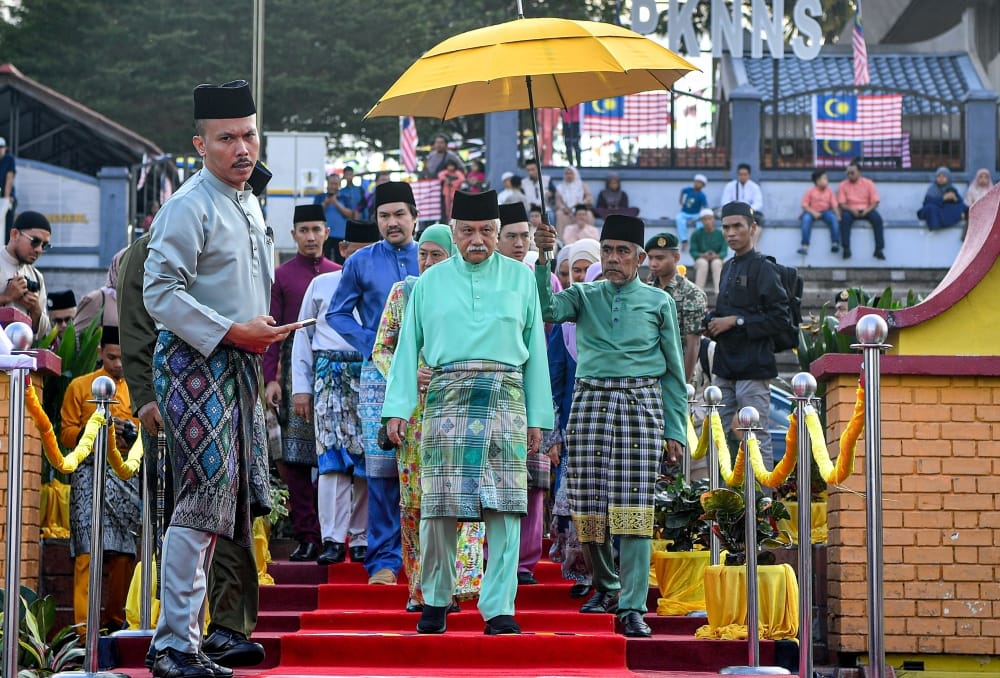
This has created a situation where there are effectively two claimants to the throne, with the incumbent ruler, Tuanku Muhriz, planning to install two loyal chieftains to counter the rival group.
The dispute has raised fundamental questions about the validity of the state government's actions, as one analyst noted: "Since the four undangs no longer recognise the state ruler, how can the state assembly be dissolved or a new menteri besar be appointed?"
The Negeri Sembilan crisis is not merely a local matter. It has exposed fragility in the Pakatan Harapan-Barisan Nasional coalition at the federal level, as the political fault lines in the state mirror those in the national government.
The dispute also threatens the stability of the state's administration, with experts urging a status quo to be maintained while the position of the ruler remains under dispute. Police are investigating the duress claim, and at least two police reports have been made concerning the proclamation document.
Erosion of institutional trust
When a major coalition partner publicly declares the government has failed while remaining in power, it undermines public confidence in the government's ability to govern effectively. Citizens are left questioning whether their leaders are prioritising party interests over national interests.
Similarly, the Negeri Sembilan royal dispute, which involves a challenge to the constitutional role of the monarchy, threatens to destabilise a key institution of the Malaysian state. The dispute has already led to legal uncertainty, with questions raised about the validity of state government actions.
The Negeri Sembilan crisis, in particular, raises serious concerns about adherence to constitutional processes. The claim that a proclamation was signed under duress, and the subsequent declaration by the undang council that the ruler is no longer the ruler, appear to be in conflict with the state constitution.
This creates a dangerous precedent where political actors may seek to bypass constitutional mechanisms to achieve their goals. Malaysia's judicial independence has already been described as "completely undermined by extensive executive influence," and such crises further weaken the perception that the law is applied impartially.
Political instability and uncertainty:
The infighting within the ruling coalition and the constitutional crisis in Negeri Sembilan create an atmosphere of political instability. This can deter investment, slow policy implementation, and distract the government from addressing pressing issues such as economic recovery and social welfare.
For ordinary citizens, the spectacle of political leaders criticising their own government while remaining in it, and of constitutional crises over the monarchy, can lead to deep disillusionment with the political process. This may manifest in lower voter turnout, increased cynicism, and a greater willingness to accept strongman politics as an alternative to messy democratic processes.
In conclusion, the political lawlessness afflicting Malaysia, as exemplified by Umno's contradictory behaviour and the Negeri Sembilan constitutional crisis, has a corrosive effect on the nation's political culture.
It undermines the rule of law, erodes public trust in institutions, and creates an environment of instability that ultimately harms citizens by distracting from good governance and weakening the democratic fabric of the country.
Parkaran Kutty (parkarank@gmail.com) is a content creator under the Newswav Creator programme, where you get to express yourself, be a citizen journalist, and at the same time monetize your content & reach millions of users on Newswav. Log in to creator.newswav.com and become a Newswav Creator now!
The User Content (as defined on Newswav Terms of Use) above including the views expressed and media (pictures, videos, citations etc) were submitted & posted by the author. Newswav is solely an aggregation platform that hosts the User Content. If you have any questions about the content, copyright or other issues of the work, please contact creator@newswav.com.