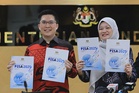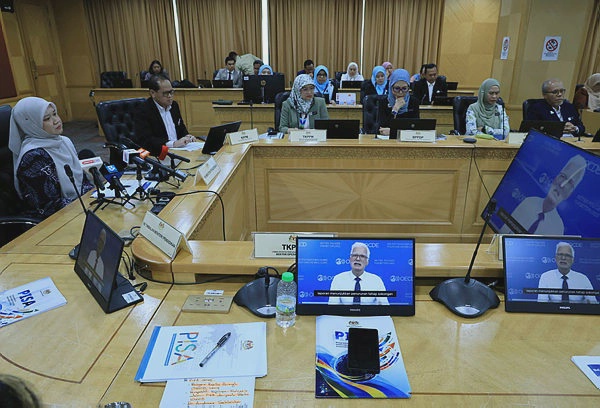
Malaysia’s PISA 2025 scores rose in science and reading but fell in maths, as Education Minister Fadhlina Sidek stresses family’s role beyond the classroom.
KUALA LUMPUR: The results of the 2025 Programme for International Student Assessment (PISA) should be viewed beyond figures and international rankings, with greater attention also given to family relationships within the national education ecosystem, said Education Minister Datuk Seri Fadhlina Sidek.
She said the hectic pace of modern life often causes parents to overlook important moments with their children, despite family support playing a crucial role in their emotional and academic development.
Fadhlina urged parents to make a conscious effort to set aside time and give attention to their children despite the demands of work and daily life.
“We are all racing through life, chasing time in the morning, working in the afternoon and collapsing from exhaustion at night. Sometimes, a child comes to share a story, but we respond while looking at our phones. Sometimes, they want to show us something, and we say, ‘Not right now.’
“Yet, the time when our children are little is fleeting. One day, they will no longer be eager to tell us about school. We might have more time then, but they will no longer need us the way they once did,” she said in a Facebook post.
She stressed that a child’s education is not limited to what happens in the classroom, as there are things only the home environment can provide, such as comfort after a difficult day, asking about their experiences and being ready to listen to their stories.
Fadhlina said the PISA results showed that Malaysian students possessed strong curiosity and resilience, but are also growing up in an increasingly complex world and facing challenges such as cyberbullying.
“As a Minister, I view this as a challenge for the education system. As a mother, I wonder, what if that were my child? What if they were hurting, but I was too busy to notice?
“I shoulder the responsibility of overseeing the education of millions of Malaysian children. Yet, when I return home, I am simply a mother with the same worries as any other,” she said.
In this regard, she said the responsibility of shaping children’s futures could not be left solely to schools, but required the continued attention, care and involvement of parents.
Malaysia’s performance in PISA 2025 showed improvement in the Science and Reading domains compared with the previous cycle.
The Science score rose by three points to 419 from 416 in PISA 2022, while the Reading score increased by five points to 393.
However, Mathematics performance declined by 11 points, falling from 409 to 397.
PISA 2025 was conducted from April 22 to May 30 last year, involving 7,624 15-year-old students from 157 schools and educational institutions nationwide.