
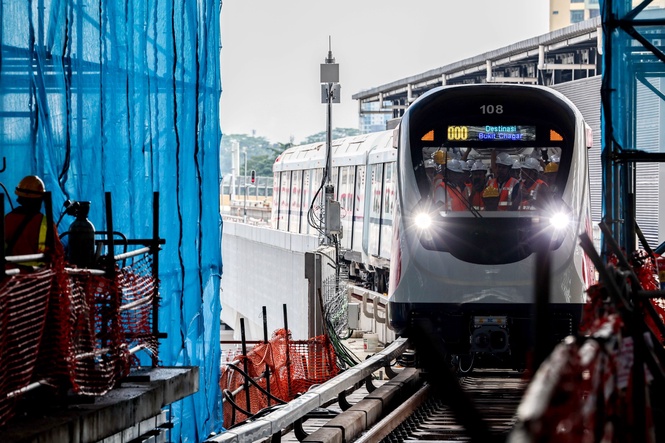
Public transport users group calls for bus operators to be present at development planning stages, saying late-arriving services push car dependence.
PETALING JAYA: Public transport must be planned as a basic utility alongside electricity, water and sewerage before new homes are built, or residents could remain locked into car dependence, said Malaysian Public Transport Users Association (4PAM) president Ajit Johl.
He said utility providers were represented at one-stop centres where local councils coordinate proposed developments, but the bus operator expected to serve the new community was frequently absent.
“Public transport must be included when a new development is first proposed. The largest operator expected to serve that area must be present.
“It can tell the developer where the bus stop should be placed and ensure the pathways leading to it are properly lit.”
He added that without such input, developers often placed bus stops wherever they considered suitable, even when the locations were inconvenient or unsafe for passengers.
He also said bus services usually arrived only after residents had moved in, by which point many households might already have bought cars because there was no practical alternative.
“If the operator was involved from the beginning and knew that 1,000 homes were coming, it could start planning the routes early.”
Ajit said the planning process should also include continuous pedestrian pathways, safe road crossings, adequate lighting and CCTV coverage to ensure residents could reach bus stops and stations safely.
He added that developers should not bear the blame alone, as transport authorities and operators had not advised them during the approval stage.
He also said while such planning gaps could contribute to car dependence, the latest increase in vehicle sales should not be treated as direct proof that inadequate public transport was driving purchases.
Malaysian Automotive Association data showed total industry volume rose 5% year-on-year to 73,615 units in July from 70,057 a year earlier.
“There could be a correlation between increasing car sales and inadequate public transport, but there also may not be one.
“Examining car sales on a month-to-month basis without considering other data may not provide a fair basis for comparison.”
Ajit said economic and income growth could increase purchasing power, while promotions, greater employment opportunities and motorists replacing petrol vehicles with electric models could also contribute to demand.
He added that the government had considerably improved bus services and urban rail, although weaknesses remained in first and-last-mile connectivity.
He also said public transport infrastructure should therefore be treated as an essential service at the development planning stage, rather than added only after a neighbourhood had taken shape.
“If a developer must pay connection charges for electricity, water and sewerage, why should it not also be required to provide proper public transport infrastructure?”
