The Range Rover Sport Electric has been revealed with a maximum claimed range of 374 miles and a starting price of £109,810. That makes it £44,260 less than the larger Range Rover Electric, despite sharing its battery capacity, power output and claimed 0–60mph time.
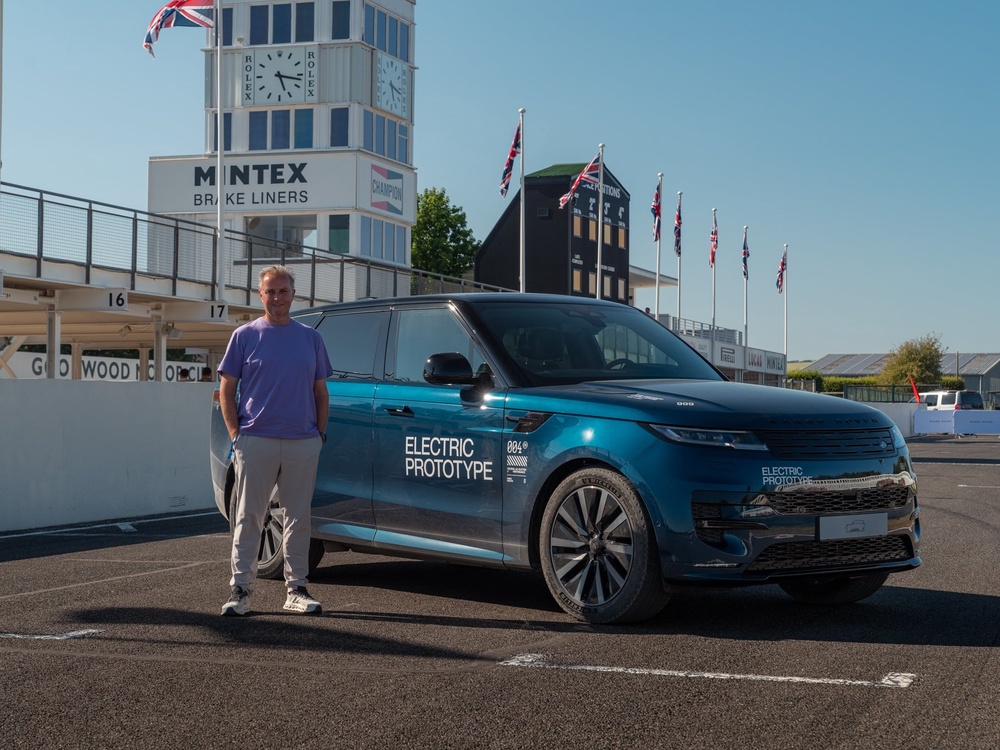
And I’ve already driven a prototype of the Range Rover Sport Electric. My introduction came at Goodwood Motor Circuit, where the route included tight turns, gravel, steps and a trip straight through the middle of an aircraft – yes, really. More on that shortly.
Order books are now open for three versions of the first-ever electric Range Rover Sport. Dynamic SE costs £109,810 – £19,750 more than the equivalent plug-in hybrid model. The Range Rover Sport Autobiography at £122,780, while a First Edition model will cost £126,290. All carry the EV550 badge and join the plug-in hybrid, petrol and diesel Sport models, rather than replacing them. First customer deliveries of both electric Range Rovers are expected in 2027.
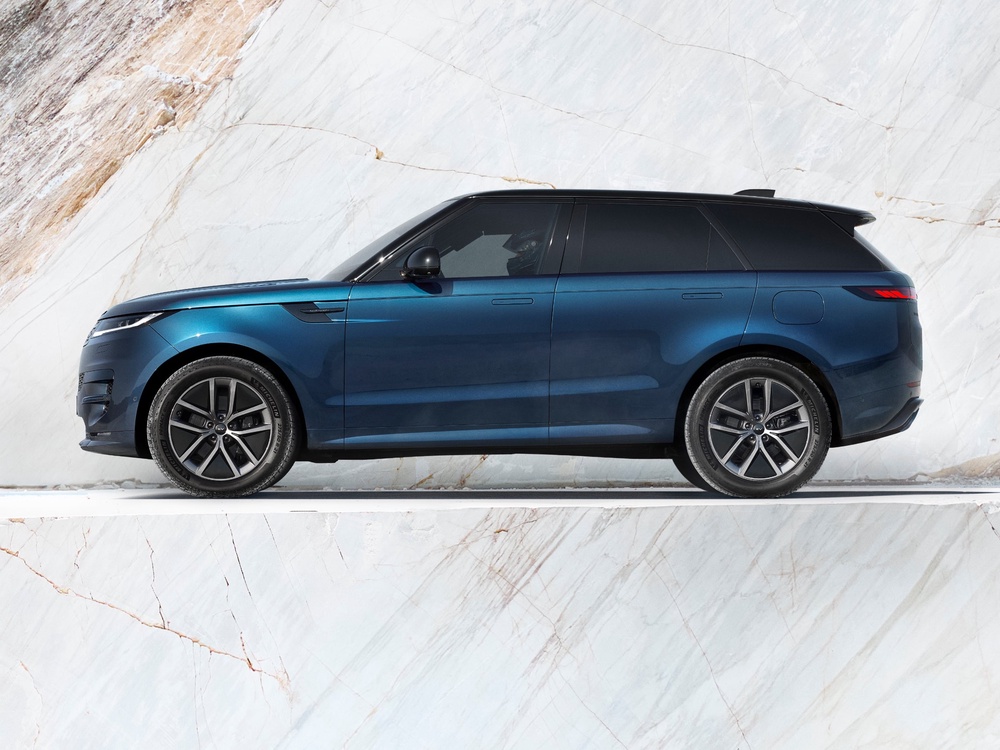
There’s an important detail behind that £44,260 difference between electric Range Rover models, though. The full-size Range Rover Electric starts at £154,070 in Autobiography trim, whereas the cheapest electric Sport is a Dynamic SE. Compare the two Autobiography models and the gap is £31,290. First Edition prices are £31,320 apart, with the larger car costing £157,610.
Underneath, both cars have a 118.5kWh battery, two electric motors and an 800-volt electrical system. Combined power is around 542bhp, with 850Nm of torque, and both can reach 60mph from rest in as little as 4.3 seconds. The Sport achieves that with its Dynamic Launch Mode engaged, matching the acceleration of the petrol V8-powered P540 Sport.
The electric Sport’s 374-mile maximum claimed range is just two miles ahead of the larger model’s 372 miles. Range Rover also quotes a separate figure of up to 333 miles for both cars from its own testing over a standardised route. That’s still a manufacturer estimate, not a promise that every journey will deliver the same result; weather, speed, load and driving style all play their part.
Charging is similarly close. Range Rover says the Sport can go from 10 to 80 per cent in around 22 minutes, matching its bigger brother, or add up to 136 miles in ten minutes. Those times depend on the car charging at its maximum rate at a suitably fast charger and in ideal conditions, rather than simply plugging into any public charger.
Both models use split-charging technology and Range Rover’s ThermAssist heat-management system, designed to help the battery work efficiently in different temperatures. Owners can find chargers and schedule charging through the new Range Rover app, while a Range Rover-branded home charger is optional. The Sport’s battery is covered for eight years or 100,000 miles.
So, where does the Sport actually do things differently? Not by chasing a bigger power figure, but by changing how it delivers that power and responds to the driver. Range Rover says torque builds 50 per cent faster than in the full-size Range Rover Electric, giving the Sport a quicker response even though the acceleration times match.
There are physical changes, too in the switch from standard Range Rover Sport to Range Rover Sport Electric. The company says the Sport Electric has a body structure that’s 61 per cent stiffer and a centre of gravity 73mm lower than any other Sport. Air suspension, four-wheel steering and a system that actively counters body lean work together, with the aim of sharpening its responses while retaining comfort.
The suspension also adjusts to changing conditions, monitoring 100 different measurements 500 times a second to help control leaning in corners and pitching under braking. Four-wheel steering and the active anti-roll system are standard on the EV550 models, helping this sizeable SUV negotiate tight turns as well as faster bends.
Matt Becker, Range Rover’s vehicle engineering director, said, “It feels smaller, more planted and more responsive than you would imagine. All without sacrificing refinement, comfort or breadth of capability.”
At Goodwood, the prototype turned promptly and kept its body more level than the familiar petrol and diesel versions. Four-wheel steering helped through the tight manoeuvres, while acceleration was strong but deliberately smooth, rather than delivering one big shove and then tailing off. The engineers were aiming for sustained pull, not a party trick.
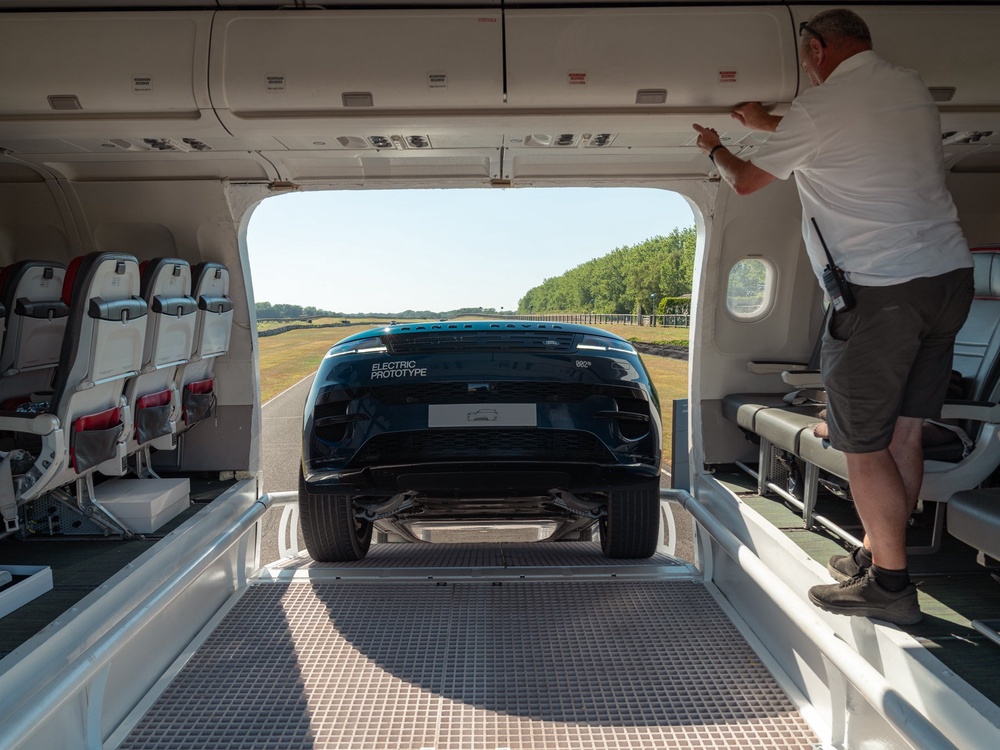
Off the tarmac, the suspension cushioned the gravel section well, and the electric motors allowed careful, steady progress up the steps. Then came the aircraft: guided by someone outside, I drove up a ramp, through the fuselage and between rows of airline seats, and then down the exit ramp that needed particular care to keep the roof aerial clear of the plane. Certainly not your usual test-drive hazard.
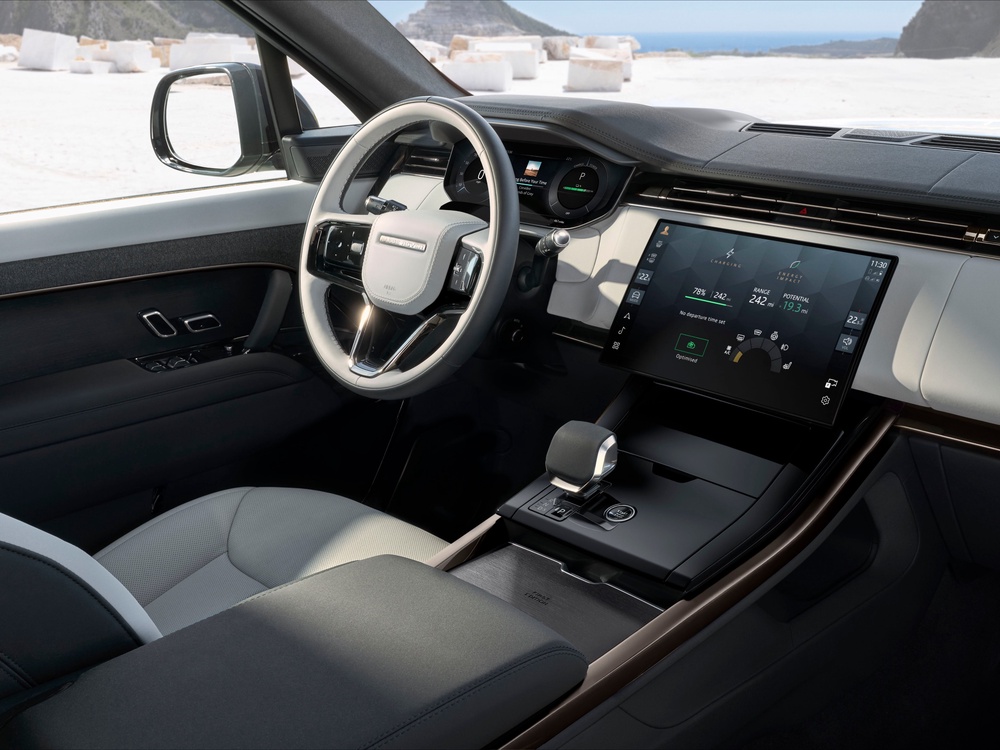
There’s one-pedal driving, too, which slows the car when you lift off the accelerator and puts energy back into the battery. Curiously, it’s selected using the gear lever’s S setting rather than the B familiar from some other EVs. Inside, the layout remains recognisably Range Rover Sport, with a central touchscreen doing much of the work and relatively few physical buttons.
The production car also gets its own sound profiles to accompany the electric drive. Range Rover’s engineers have layered tones intended to suit the Sport’s character and its different driving modes, rather than leaving its soundtrack entirely to the tyres and wind. It’s another way the company is separating the Sport from the more relaxation-focused full-size Electric.
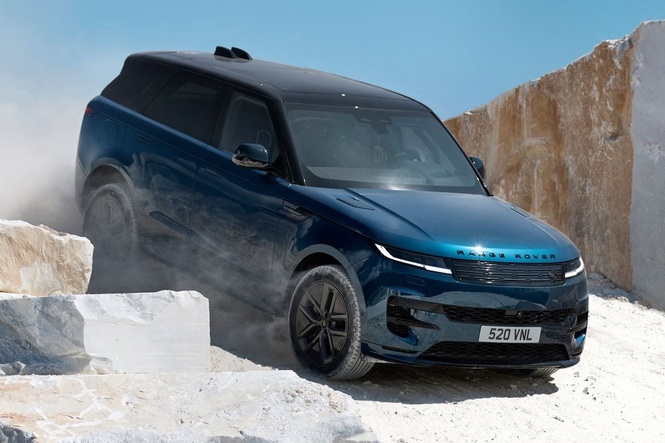
Going electric hasn’t removed the off-road brief, either. Range Rover quotes a wading depth of 900mm and the ability to climb 45-degree slopes, matching the larger Electric’s headline capabilities. The Sport’s development programme finished in Italy’s Carrara marble quarries, where testing involved steep climbs, tight hairpins and surfaces ranging from polished marble to loose marble dust.
Development also included the Magarigawa Club circuit near Tokyo. Meanwhile, battery testing subjected live packs to vibration and shocks at temperatures from minus 40C to plus 90C. The battery sits in a high-strength aluminium enclosure, while a monitoring system called Battery Digital Twin works with over-the-air software updates to support maintenance.
The electric Sport was designed and engineered in the UK and will be built at Solihull on the same production lines as the plug-in hybrid, petrol and diesel versions. Like the larger electric Range Rover, it uses Range Rovers MLA-Flex vehicle platform developed to accommodate different types of power, rather than a separate electric-only design.
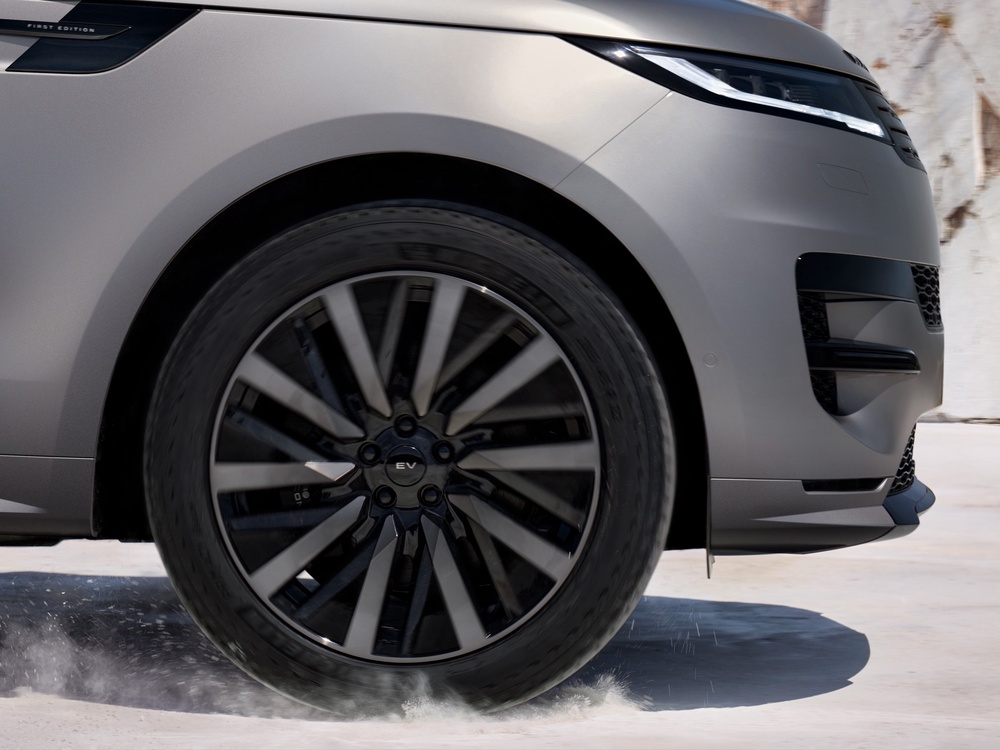
Visually, this is still very much a Range Rover Sport. The main clues are a reshaped grille and new alloy-wheel designs that help it move through the air more efficiently. Range Rover says those changes can contribute up to ten extra miles of range at motorway speeds, rather than requiring a wholesale change of shape.
The First Edition combines Zadar Grey paint with a satin wrap, black contrast roof and 22-inch wheels. Autobiography buyers can use the Bespoke service for additional paint choices, different materials and personalised embroidery, while a Black Pack and satin wrap are also available as options.
Although the Range Rover Sport Electric and Range Rover Electric models are both officially on sale, there are no firm delivery dates yet other than an expectation that it will be early in 2027.
Read MorePeugeot E-208 GTi review: small ‘i’, big fun for £33,495
Everything to know about Bentley Torcal, as full details are revealed