.png)
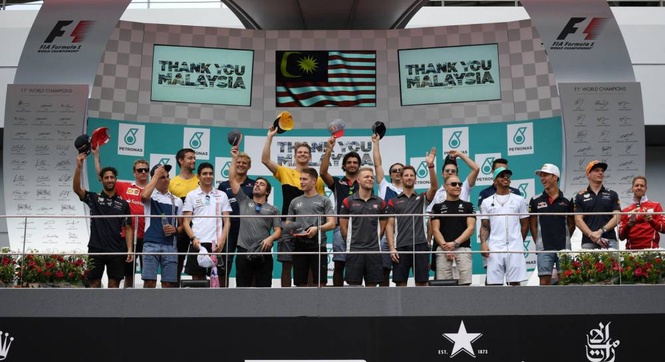
SHAH ALAM – Malaysia could face an annual RM300 million bill to bring Formula 1 (F1) back to Sepang, but the event could generate up to RM1.3 billion in economic output, according to data cited by Sepang International Circuit (SIC).
SIC chief executive officer Azhan Shafriman Hanif said the potential returns should be assessed beyond the circuit’s own balance sheet, with tourist spending, wider economic activity and intangible benefits such as Malaysia’s international branding taken into account.
“RM300 million is not much for certain countries, but for Malaysia it is huge. It’s a huge investment for Malaysia to be spending RM300 million for one-off event,” he said.
Speaking on BFM 89.9’s The Breakfast Grille with host Roshan Kunnison, Shafriman said SIC had studied economic impact data from F1 races in countries including Japan, the United States and the United Kingdom.
“We’ve seen the economic impact study from Formula 1 data. They’ve shared with us the races that they’ve done in Japan, in the US and UK. Those numbers are pretty, pretty huge, pretty big.
“Their estimate is RM1.1 to 1.3 billion in economic output based on average spending of around RM8,900 per F1 tourist, which they say reflects the fact that F1 tourists spend more... That’s how you gain one billion,” he said.
But he stressed that the value of bringing F1 back could not be measured solely through figures that could be calculated directly.
“There are things that you can calculate, those things that are intangible – for example, the reputation, the image, the branding of Malaysia,” he said.
He also pointed to the credibility that hosting F1 could bring to Sepang and Malaysia, particularly after the circuit demonstrated that it could prepare for an F1 event within just two months for this weekend’s Bahrain Grand Prix.
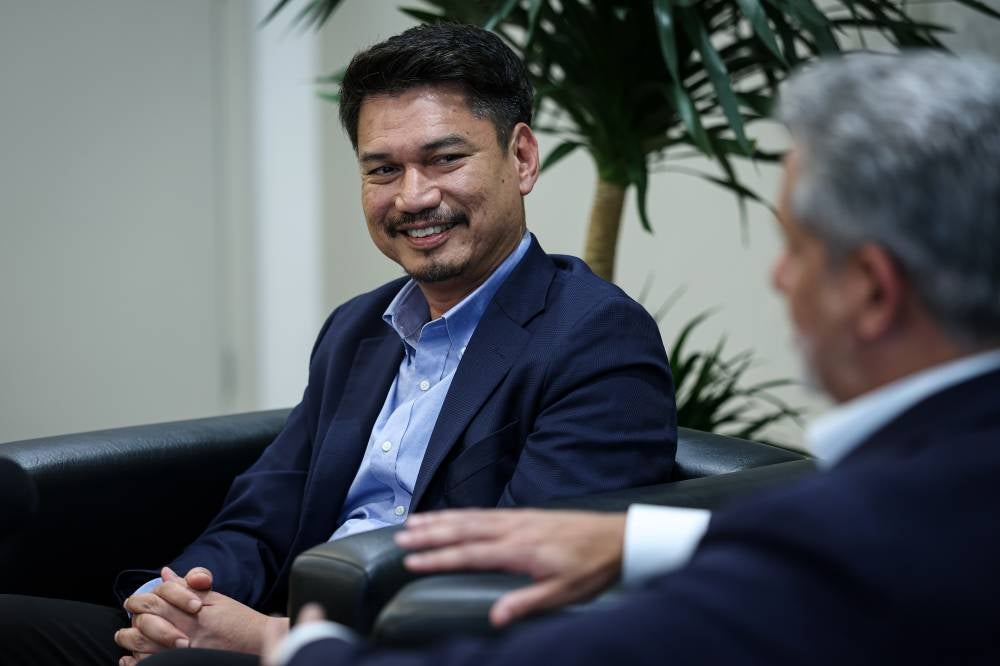
For SIC, this is why any potential return of the Malaysian Grand Prix should not be treated simply as a commercial project for the circuit.
Shafriman said Malaysia would need to approach the event as a collective national effort, which he described as “Malaysia Inc”, rather than focusing only on SIC.
“To me, we’ve been approaching this quite segmentally, very segmented, in terms of our view. The view that every country has done in Formula 1 at the moment is they look at it as a nation Inc.
“If we host Formula 1 again in the future, I really hope that we can come together as a nation and we make it a Malaysia Inc and host it together, not focusing on SIC but focusing on the things outside of SIC,” he added.
Shafriman said that meant looking beyond the circuit and examining what Malaysia could do around the event to maximise its wider economic impact.
“What else can we do outside of SIC that can bring?” he said, pointing to Singapore’s approach to F1 as an example of how a race can become a wider city and national event.
The financial structure would also need to be considered if Malaysia were to pursue a permanent return to the F1 calendar.
Shafriman acknowledged that SIC itself would not be able to recover the cost of the F1 rights fee through circuit revenue alone.
“As a circuit we can’t gain back in terms of the revenue to cover the rights fee that we’re going to pay to F1 if it happens in the future,” he said.
He said Malaysia could instead examine models used elsewhere, including Singapore’s arrangement, where the government bears a significant portion of the approved operating cost.
“60 per cent going to the government, 40 per cent going to the circuit – that could work,” he said.
However, Shafriman said the decision could not rest with SIC alone.
“There’s a few qualifier there – number one, who’s going to foot the bill; number two, whether there’s a slot in the calendar and the circus if we want to bring back F1 to Malaysia.
“The data that we'll be looking at is particularly on the revenue, in terms of the cost as well, in terms of the other intangible values that F1 brings to Malaysia.
“We will table the economic impact numbers after the event, with commission and auditor to come in to look at the numbers,” he said.
The final decision, he stressed, would have to involve more than the circuit.
“That decision, like where I said earlier, it has to be a collective decision not only from the government point of view, in terms of the people who benefit surrounding this event,” he said.
For Shafriman, the Bahrain GP therefore offers Malaysia more than a one-off race weekend.
It could provide the data needed to assess the economic, commercial and wider national value of hosting F1 – information that could help inform any future decision on whether the Malaysian Grand Prix should return to the calendar.