.png)
IT was just like any other Saturday night, only it wasn't.
I found myself sitting in an arena watching robots fight.
This is not Real Steel. It is Petaling Jaya in 2026.
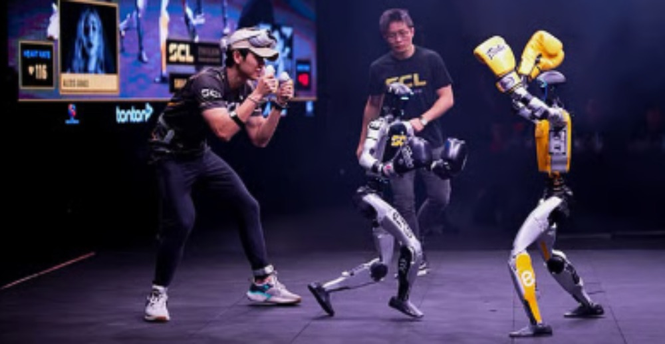
Two humanoid robots square up against each other. There are lights, commentators and human pilots at the controls. It should be extraordinary.
For the first few minutes, it is.
Then you realise they are hardly fighting.
The robots are janky.
The human "shadow pilots" controlling them struggle to get the machines close enough, coordinated enough and facing the right direction to land a convincing blow. Punches miss. Movements don't quite connect. One robot advances while the other appears to be negotiating with gravity.
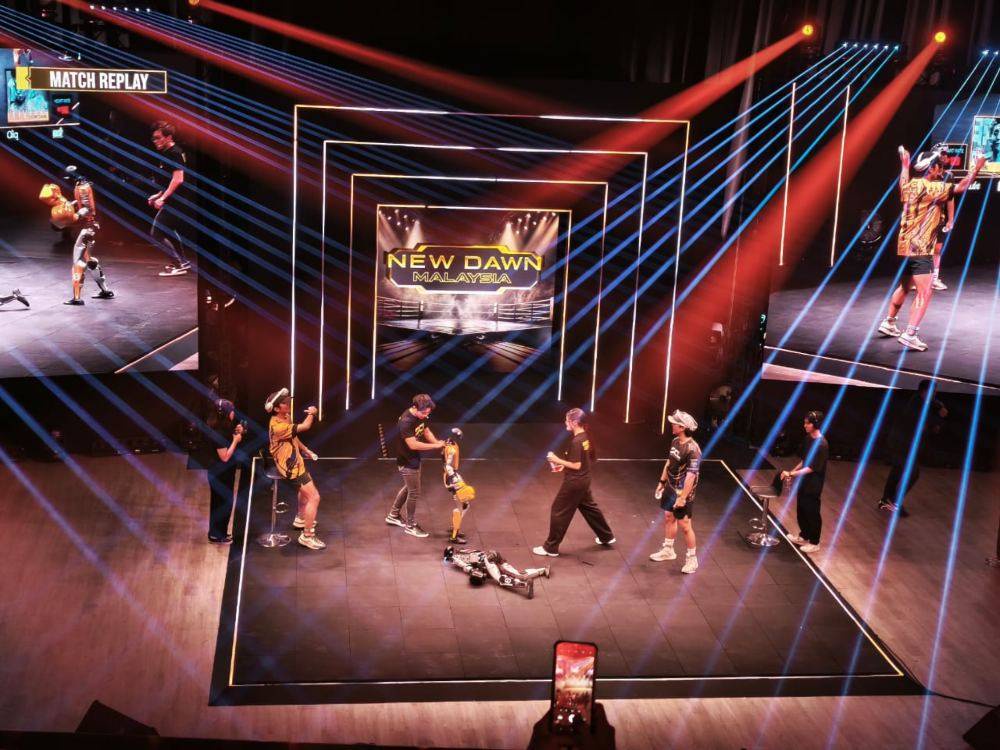
Sometimes, one simply falls over and cannot get back up.
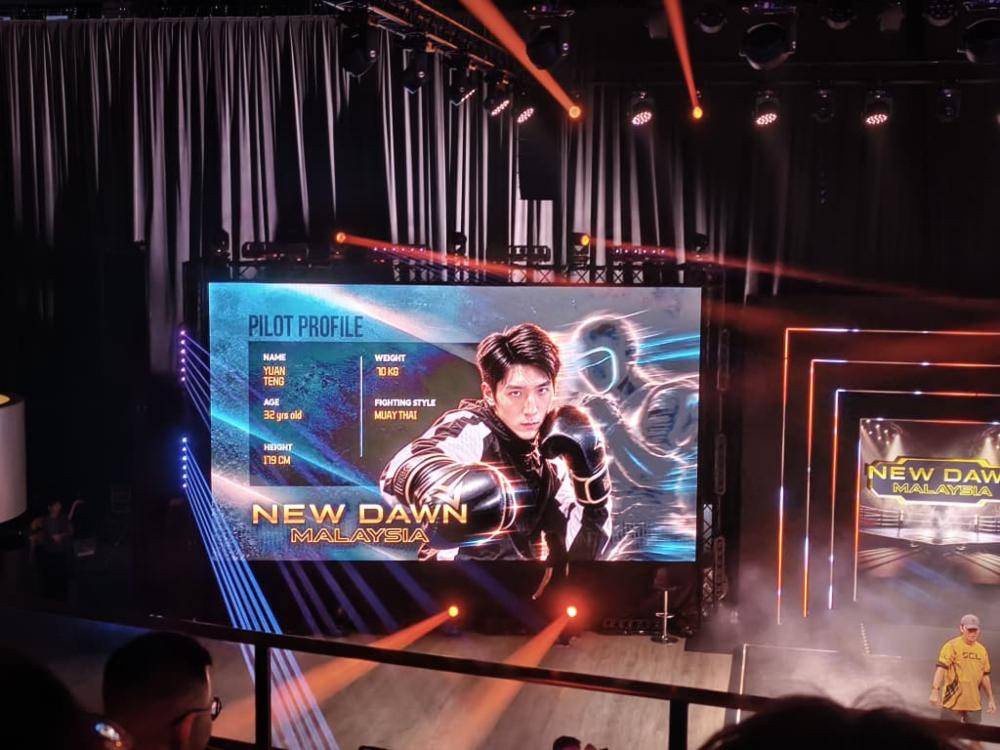
At New Dawn Malaysia on October 3, Shadow Combat League (SCL) presented what it hopes could become a new form of combat sport.
There were seven bouts — four preliminaries and three main-card bouts — featuring actors, athletes, entertainers and champions. Each lasted three minutes, with a one-minute interval.
Lineark, the company behind SCL, describes itself as a robotics and artificial intelligence infrastructure company.
But despite the futuristic framing, the fights were not autonomous. Humans piloted the robots.
That distinction is important because underneath the technological novelty lies an interesting sporting proposition: the human retains the knowledge, strategy and competitive instinct.
The machine becomes the body.
In a corporate video shown during the event, Lineark chief executive officer Dr Ian Tan Wei Lun laid out the company's vision for where the technology, and the sport, could eventually go.
The emphasis was on potential. And there is plenty of it.
The proposition is essentially combat without the physical consequences.
During the live commentary, which was also broadcast online, we were told retired fighters could potentially compete again. Weight classes could become irrelevant. Different disciplines could meet in ways that conventional combat sports make difficult: Muay Thai versus silat. Boxing versus karate. And so on.
There is potentially a sport buried in there.
At New Dawn Malaysia, however, it remained buried.
Before audiences can debate whether silat beats Muay Thai when differences in human physiology are removed, the robots first need to reliably hit each other.
Right now, they can't.
That gets to the fundamental tension of the event.
It was selling us a glimpse of the future while asking us to tolerate the limitations of the present.
For an investor, that can be exciting. You invest in what a technology might become.
A spectator has a different requirement: something worth watching now.
Ultimately, sport relies on anticipation and stakes.
Robot combat deliberately removes many of the physical consequences of conventional fighting, so the tension has to come from somewhere else. Perhaps, eventually, it will come from the pilots.
But SCL isn't there yet.
The potential, however, remains.
For that potential to materialise, the robots need to fight.
Not fall over.
Not malfunction.
Actually fight.
The future may well have arrived in Petaling Jaya.
It just hasn't quite figured out how to throw a punch yet.