.png)
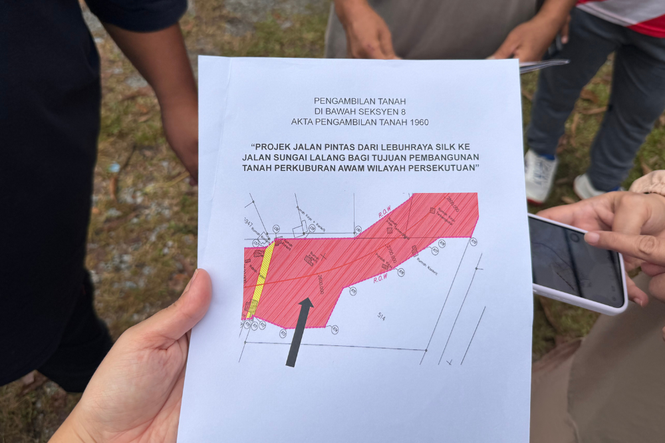
SEMENYIH — Residents affected by the proposed Semenyih Bypass Road are questioning why the land acquisition process has advanced to the Section 8 stage under the Land Acquisition Act 1960 despite what they describe as a lack of meaningful engagement on compensation, replacement land and alternative alignments.
The affected landowners were informed that parts of their properties would be acquired for the 4.3km bypass linking Jalan Sungai Lalang to the Kajang Dispersal Link Expressway (SILK).
While they acknowledge the government's legal authority to acquire land for public purposes, they argue that key issues remain unresolved, particularly the choice of alignment and the impact on their livelihoods and access to remaining land.
WORK BEGINS ON SEMENYIH BYPASS AS LANDOWNERS DEMAND ANSWERS ON COMPENSATION AND ACCESS
Kampung Sungai Pening Action Committee member Shahril Faizal Abd Samat said residents had attended only one briefing in January, which he said fell short of meaningful consultation.
"So far, there have been no negotiations or proper discussions on compensation. We only attended one briefing in January, which was not recorded and where we were not allowed to film. We were allowed to ask questions, but we did not receive proper answers," he said.
Residents estimate that the proposed alignment would affect 35 land lots covering about 47.7 acres, including agricultural land that has been owned and cultivated by families for generations.
Several landowners have also raised concerns that the bypass could divide their remaining properties, potentially affecting access to orchards, fishponds and other agricultural activities.
Under the Land Acquisition Act 1960, a Section 8 declaration formally gazettes land identified for acquisition and confirms that it is required for a stated public purpose.
Once issued, the acquisition process moves into the compensation stage, with landowners entitled to object only on matters relating to the amount of compensation rather than the need for the acquisition itself.
For residents, the progression to Section 8 raises questions about whether their concerns over the alignment were adequately considered before the process reached such an advanced stage.
They maintain that alternative routes had been proposed to the authorities, which they believe could connect the bypass to SILK while avoiding the acquisition of village land.
The issue, they argue, is no longer solely about the government's power to acquire land but whether affected owners were given sufficient opportunity to understand the project, challenge the proposed alignment and have alternative options properly evaluated before the acquisition process progressed.