PHILIPPINE stocks plunged to their lowest level in more than six years on Friday, while the peso weakened against the US dollar, as global market jitters, economic concerns and expectations of further interest rate hikes weighed on investor sentiment.
The benchmark Philippine Stock Exchange index (PSEi) tumbled 170.93 points, or 3.12 percent, to close at 5,306.98, its lowest level since March 30, 2020, during the early months of the Covid-19 pandemic. The broader All Shares index also declined 2.40 percent.
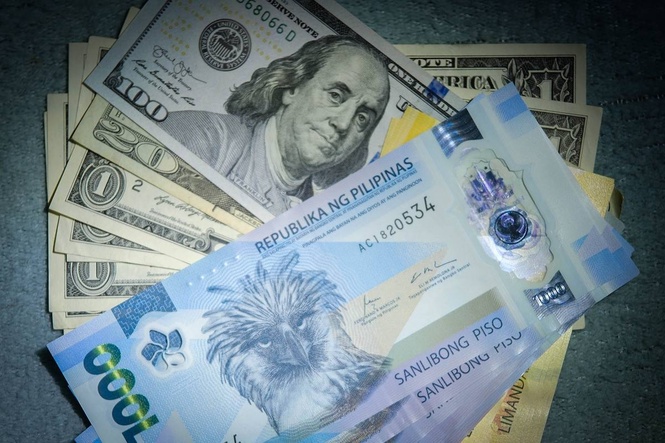
Meanwhile, the peso fell to P63.81 against the greenback from Thursday’s P63.665, its weakest closing level in three weeks. It traded between P63.745 and P63.92 during the session.
Japhet Tantiangco, research manager at Philstocks Financial Inc., said the local market was dragged down by continued profit-taking in International Container Terminal Services Inc. (ICTSI), alongside concerns over economic growth, inflation, and the absence of strong positive catalysts.
ICTSI fell 7.22 percent, making it the PSEi’s biggest decliner, while GT Capital Holdings Inc. was the index’s top gainer, rising 3.09 percent.
Manny Ocampo, president and chief operating officer of Investment and Capital Corp. of the Philippines, attributed the market’s decline to the overnight sell-off in US markets, which lost 1,110 points. He said the PSEi’s next support level was at 5,200.
Luis Limlingan, head of sales at Regina Capital Development Corp., also cited heavy selling across index heavyweights, particularly ICTSI, following reports that the South African government threatened to revoke its Durban Terminal operating license.
He added that the lack of positive catalysts and concerns over tighter monetary conditions, following UBS’ forecast that the Bangko Sentral ng Pilipinas (BSP) could continue raising interest rates into next year, further dampened investor appetite.
All sectors ended in negative territory, with services posting the steepest decline at 5.93 percent. The market recorded 137 decliners against 41 advancers, while 59 stocks were unchanged. The PSEi had only five advancing constituents.
Net value turnover reached P9.12 billion, while foreign investors recorded net selling of P853.07 million.
Strengthening dollar
Michael Ricafort, chief economist at Rizal Commercial Banking Corp., said the peso’s 0.2-percent depreciation was partly driven by wider balance of payments pressures, higher global oil prices amid the war involving the United States and Iran, and possible shifts from pesos to dollars following the government’s Retail Dollar Bond offering.
He also cited the US dollar’s recent strength against major global currencies amid expectations of further Federal Reserve rate hikes.
Despite Friday’s depreciation, Ricafort noted that the peso remained stronger than its record intraday low of P64.20 recorded on Oct. 30.
For the week, the peso weakened for the seventh time in eight weeks, although by a modest P0.09, or 0.1 percent.
Ricafort said easing global oil prices and seasonal dollar inflows from overseas Filipino workers, exporters and business process outsourcing companies could help support the peso in the coming weeks as businesses convert their dollar earnings to finance Christmas spending and 13th-month pay.
He projected the peso to trade between P63.50 and P64 against the dollar next week.