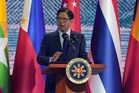
PRESIDENT Ferdinand Marcos Jr.’s recent pronouncements on a “reset” of relations with China, progress in talks on joint oil exploration and his assurance that the Philippines will not serve as a launching pad for attacks in the event of a Taiwan crisis mark a significant diplomatic turn. These signals, though late in his term, reaffirm a principle he articulated at the outset of his administration: Maritime disputes, while serious, should not define the entirety of Philippines-China relations.
This recalibration deserves support from government institutions, particularly the security sector, and from the public. It is not a retreat from sovereignty but a pragmatic recognition that de-escalation creates space for cooperation in areas vital to national development. Energy security, trade, infrastructure and cultural exchange are domains where constructive engagement with China can yield tangible benefits for Filipinos.
Marcos Jr.’s diplomatic signaling coincides with a broader global trend: the pursuit of “stable, constructive strategic relations” with China. This trend will be highlighted when President Donald Trump meets President Xi Jinping in Washington, D.C., on Sept. 24.
Even amid rivalry, the United States is recalibrating its China policy. A telling sign of this shift is Elbridge Colby’s recent speech, which notably avoided references to incidents in Panatag and Ayungin Shoals. Analysts interpreted his restraint as reflecting America’s “realist burden sharing doctrine”: Local tactical disputes are for Manila to address directly with Beijing, while Washington focuses on the macro balance of power and encourages allies to invest more in their own sovereign defense.
For Marcos Jr.’s reset to be credible, the Department of National Defense (DND) and other Filipino security officials must adopt a more conciliatory posture. The most concrete step is to reconvene the Annual Defense and Security Talks (ADST) with China.
Established under the 2004 Memorandum of Understanding on Defense Cooperation, the ADST was designed as the primary bilateral forum for defense ministries. Its early rounds produced tangible results: protocols for managing naval encounters, joint humanitarian and disaster relief exercises, and information sharing on transnational threats such as piracy and terrorism. Reviving the ADST would rebuild confidence, revive defense cooperation and promote preventive diplomacy.
More importantly, it would demonstrate that the Philippines is serious about managing disputes responsibly while defending sovereignty and maritime rights. A conciliatory posture from the defense establishment means exercising strategic wisdom, asserting rights firmly while keeping channels open for dialogue and cooperation.
Marcos Jr.’s reset reflects a sharp reading of strategic currents. By easing tensions with China, he is not weakening the Philippines-US alliance but reinforcing its dynamism. The alliance thrives when Manila exercises autonomy, addresses disputes responsibly and engages Beijing constructively. This approach strengthens national defense by reducing the risk of miscalculation, while simultaneously opening channels for cooperation. It reflects a sober understanding that geography and economics bind the Philippines and China together, and that confrontation cannot be the permanent mode of coexistence.
For the reset to succeed in advancing national interests in the remaining two years, several urgent steps are worth consideration.
First, the Philippines must return to the basics of diplomacy where the president dictates foreign policy strategy with the Department of Foreign Affairs (DFA) as his chief implementing arm. The DND, the military and all other agencies should defer to the DFA secretary as the president’s chief foreign policy spokesman and desist from actions or pronouncements that undermine her authority. This institutional discipline is essential to ensure coherence in foreign policy and credibility in negotiations.
Second, the fallacy of the thinking that diplomatic dialogue and negotiations should not be conducted with China because of “lack of trust,” recently enunciated by our defense secretary in Singapore, must be publicly rectified. Such a statement sends out an erroneous and dangerous signal, and contravenes a strategic dictum in diplomacy that President Reagan himself laid out: “Trust but verify.” Closing off the door of diplomatic dialogue and negotiation on issues involving disputes between sovereign states only increases the prospects of nonpeaceful or violent outcomes that will have catastrophic consequences for our people. Rectifying this misstep is vital to reaffirm the Philippines’ commitment to diplomacy as the first line of defense in managing disputes.
Third, the Philippines must seize the opportunity presented by the Summit of the Asia Pacific Economic Cooperation in Shenzhen, China, on Nov. 18–19, which President Trump himself will attend, with another Trump-Xi Jinping summit highly likely. This occasion should be used to arrange a Marcos-Xi Jinping meeting and revive the strategic consensus reached by the two leaders when President Marcos visited Beijing in January 2023. Such a meeting would not only signal continuity in dialogue but also provide a platform to advance cooperation in energy, trade and infrastructure while responsibly managing disputes.
In short, the Philippines should match Colby’s “flexible realism” with our own doctrine of “pragmatic nationalism,” where decisions are made based on costs and benefits to our national interests, first and foremost. Pragmatic nationalism requires firmness in defending sovereignty and maritime rights, but also openness to dialogue and cooperation where mutual benefits can be achieved.
Marcos Jr.’s reset is strategic. It positions the Philippines to manage disputes firmly yet responsibly, while pursuing cooperation that advances national development. It also aligns Manila’s diplomacy with the evolving US approach to China, which increasingly emphasizes burden sharing and strategic stability.
For the Philippines, the great lesson is that sovereignty must be asserted, but diplomacy must be sustained. Supporting Marcos Jr.’s recalibration, and ensuring that defense and other security officials adopt a conciliatory but firm posture through mechanisms like the ADST and the recommendations above, is essential to securing peace, prosperity and stability in the region.
Rommel C. Banlaoi, PhD, is director of the Philippines–China Studies Center at Diliman College and president of the Philippine Society for International Security Studies. He also served as president of the Philippine Association for Chinese Studies.