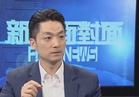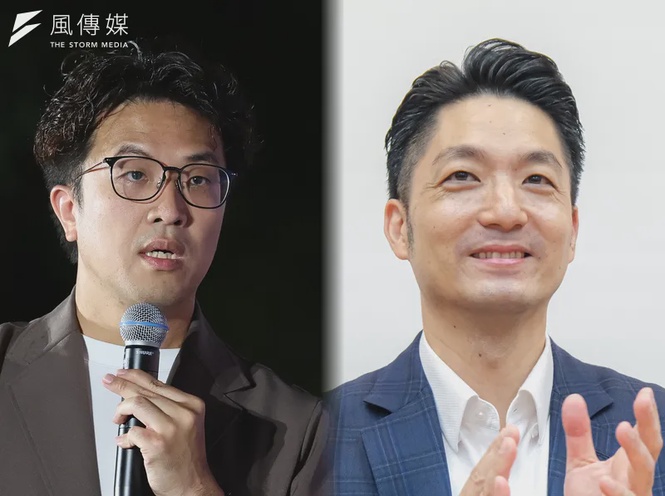
Taipei Mayor Chiang Wan-an and his Democratic Progressive Party (DPP) challenger Puma Shen offered sharply different pictures of what the Taiwanese capital should look like in 20 years, answering the same question from political commentator Shang Yi-fu as the Taipei mayoral race heats up ahead of the 2026 Taiwan local elections.
Chiang, of the opposition Kuomintang (KMT), built his answer around a redeveloped Songshan Airport site filled with parkland, driverless cars, and public housing. Shen framed his vision around his six-year-old daughter and the stages of life of Taipei residents, from first jobs to child-rearing and retirement.
Shen Maps the City Through Three Generations
Speaking on Shang's program "Henhen Dou Neimu," Shen said that when his daughter finishes university or graduate school two decades from now, he hopes Taipei will be a place where "finding a job is easy." He pointed to his campaign's proposed city fund, saying the goal is for each young person to receive at least NT$500,000 (about US$15,500), and to an abundant supply of affordable and rent-only housing.
For today's graduates, who will be raising children in 20 years, Shen said the priority is making parenthood feel less isolating. "If the government acts as their backstop and makes raising kids a happy experience, I think that atmosphere is extremely important," he said, describing a city where new parents can still "hang out" with friends and "feel that life is easy."
For people his own age, who will be nearing retirement, Shen listed accessible housing for aging residents, easier rentals for older tenants, richer social lives beyond "playing tai chi in the park," and ways to stay healthy without relying on long-term care too early. Above all, he said, residents of every age need to know "which industries this city will build around," so they can decide where to invest their money and what their children should study.
Chiang Envisions Parks and Driverless Cars at Songshan
Chiang asked listeners to picture walking through the site of Songshan Airport after its relocation, a plan he announced earlier in the campaign to free about 300 hectares for an AI-focused development. He described a large shaded park, a Songshan Airport station "that carries historical memory," and driverless cars on the streets, "with key chips inside that are Made in Taiwan."
He also pictured a smoke-free city where residents are no longer exposed to secondhand smoke, renewed older buildings, and blocks of public housing on the former airport land "for everyone, including seniors and children." Taipei, he said, should lead other cities in housing, transportation, and industrial development.
Chiang cited Taipei's recent Lee Kuan Yew World City Prize as evidence of international recognition. "I hope that 20 years from now, perhaps the mayor will be from a different party, but the city can still draw the world's attention for its public services," he said.
Rival Visions Arrive as Polls Tighten in Taipei
The contrasting answers come as the race has turned unexpectedly competitive. A poll commissioned by the Xinmin Cross-Strait Research Association and released on October 20 showed Shen leading Chiang 50.3% to 33.3%, reversing September, when Chiang held a narrow 41.7% to 40.5% edge. The survey of 1,075 Taipei residents, conducted from October 14 to 16, had a margin of error of plus or minus 3.0 percentage points, though other polls have shown a closer race.
Chiang's Songshan relocation pledge has itself become a campaign flashpoint, with critics raising concerns over emergency and rescue flights. Shen, by contrast, has focused on household-level concerns such as jobs, housing, and childcare. Voters will choose between the two visions on November 28, when the 2026 Taiwan local elections take place nationwide.