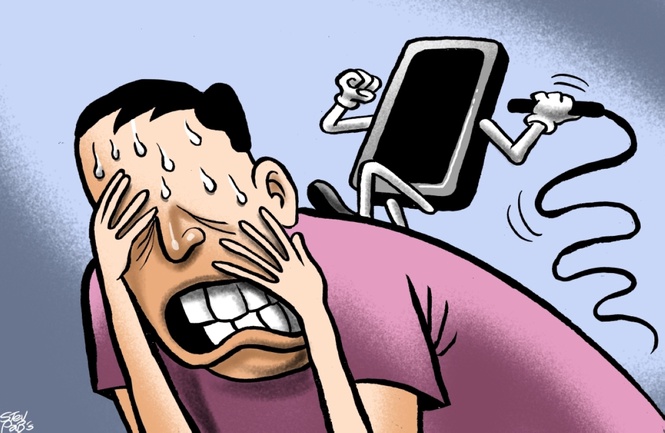
MESSAGING apps like Viber and Messenger are incredibly convenient, but they strip away many of the natural tools we rely on to understand each other. When we communicate face-to-face, the actual words we say only make up a small fraction of the total message; the rest is conveyed through how we say it and how we look while saying it.
The most significant limitation of digital messaging is the complete removal of context that usually softens or clarifies our words. Sarcasm, joking and genuine concern can all look exactly the same in pure text. A phrase like “That’s just great” can mean sincere approval or heavy sarcasm depending on vocal inflection, which text lacks.
A warm smile or a relaxed posture instantly signals friendly intent. Without these cues, neutral statements are often interpreted as cold or demanding. Psychologists often note that when humans are faced with ambiguous information, we tend to assume the worst.
If a message lacks emotional context, the receiver will naturally project their own current mood or insecurities onto the text. If they are already feeling stressed or defensive, they will likely read your message in a hostile tone.
In modern messaging, a simple period at the end of a sentence can be perceived as abrupt or angry, while a lack of emojis might be seen as emotional distance. In real life, conversations happen in real time. On Viber or Messenger, the timing of a response carries its own heavy, often misinterpreted meaning.
Leaving someone “unread” can trigger anxiety, rejection or anger. The sender might assume they are being deliberately ignored, when in reality, the receiver might just be busy, driving or formulating a thoughtful reply.
Because typing is fast, people can fire off defensive or angry replies before taking a moment to cool down or consider the other person’s perspective. The medium itself encourages quick, short interactions, which changes human behavior. It takes more time to type out a carefully worded, polite request than a quick directive. “Send me the file” is faster than “Could you please send me the file when you have a second?” but the former can easily come off as bossy.
People are bolder behind a screen. The physical distance creates a buffer that makes it easier to be confrontational, harsh or dismissive than it would be if looking someone directly in the eyes. The way we communicate has fundamentally shifted with the rise of social media and text-based messaging. While these platforms keep us connected, the structural limitations of texting frequently breed conflict, deep misunderstandings and hurt feelings.
Because text relies solely on the written word, it strips away the human elements that traditionally guide our interactions and keep our empathy intact. In face-to-face conversations, the actual words we speak only make up a fraction of our communication. The rest is conveyed through tone of voice, facial expressions, eye contact and body language. Texting removes all of these critical context clues. Without hearing a person’s voice, a harmless joke, dry humor or sarcasm can easily be read as a harsh insult.
When a message is ambiguous, human psychology often defaults to a negative interpretation. A simple “OK” might be written casually but read as passive-aggressive anger by the recipient. In the digital age, even punctuation carries weight. Using a period at the end of a short sentence (e.g., “Sounds good.”) is often perceived as abrupt, cold or hostile compared to an unpunctuated or exclamation-marked reply. Capitalizing words are interpreted to be shouting without the exclamation point. Screens act as a psychological shield. When we cannot see the immediate emotional reaction of the person we are talking to, we tend to experience the “online disinhibition effect.”
Without seeing a person wince, cry or look hurt, people are much more likely to use cruel, blunt or unforgiving language. People will routinely type things to others on social media that they would never have the courage or cruelty to say directly to someone’s face. Social media platforms are designed for instant reactions. This speed often bypasses our rational, filtering thought processes.
In a physical argument, there are natural pauses that allow tempers to cool. In text-based arguments, angry messages can be fired back and forth in seconds, escalating a minor disagreement into a major conflict before either party has time to process what is happening. Once an impulsive, angry text is sent or a comment is posted, it is out there. Even if deleted, screenshots ensure that heat-of-the-moment mistakes can cause permanent damage to relationships.
When texting happens directly on social media platforms (like in comment sections, public threads or quote-reposts), a private disagreement suddenly has an audience.
People naturally change their behavior when they are being watched. In public threads, individuals often double down on their arguments, prioritizing “winning” in front of an audience over actually resolving the issue. Being corrected, mocked or argued with in front of peers, friends and strangers magnifies hurt feelings and turns simple misunderstandings into deep-seated resentments.
The mechanics of messaging apps themselves introduce entirely new ways to accidentally hurt someone’s feelings. Seeing that someone has “read” your message but has chosen not to reply can immediately trigger anxiety, feelings of rejection and paranoia.
We often agonize over the length of a response or the choice of an emoji, reading deeply into things that the sender may have typed out carelessly while waiting in line for coffee.
While these social ill effects are woven into the fabric of social media, their impact can be minimized. The healthiest approach to digital communication is to assume positive intent when a message is ambiguous. Furthermore, if a text-based conversation begins to escalate into conflict, the most effective solution is simply to stop typing and transition the conversation to a phone call, a video chat or an in-person meeting where empathy and nuance can be restored.
Ultimately, messaging apps are excellent for exchanging quick facts or logistics, but they are incredibly poor vehicles for emotional depth, nuance or conflict resolution.