There is a cold, mechanical cowardice to the way the law speaks when it wants to avoid looking a mother in the eye. On June 12, 2026, the Kuala Lumpur High Court did not rule that unilateral child conversion is right, moral, or even constitutional. Instead, it hid behind the sterile legal fortress of locus standi ruling that because Indira Gandhi’s personal custody battle was technically "resolved" by the apex court in 2018, her attempt to protect future families was merely an "academic exercise".
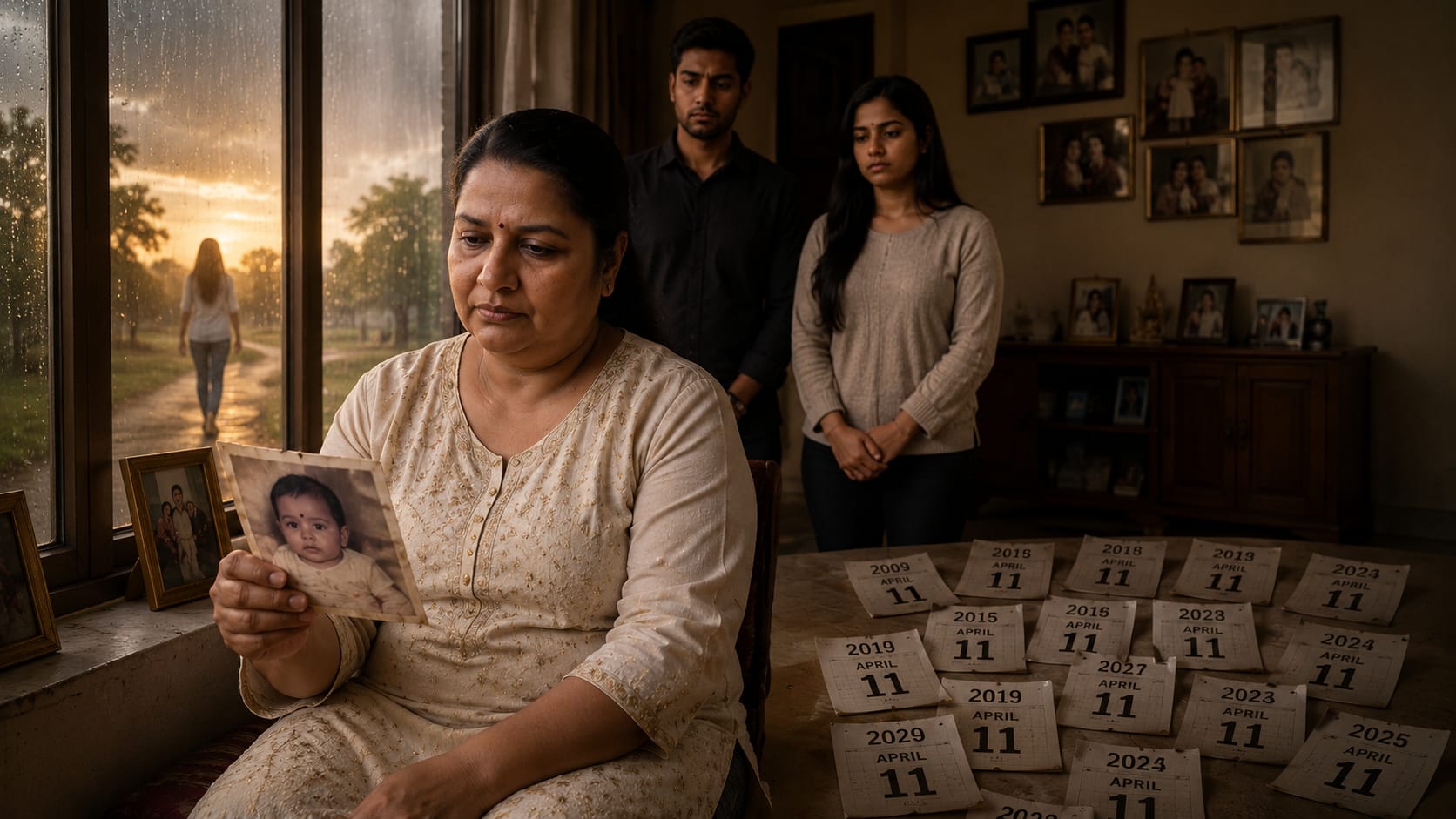
Let that phrase curdle in your mind: an academic exercise. How do you tell a mother whose youngest daughter, Prasana Diksa, crossed the threshold into adulthood on April 8, 2026 having spent 17 years completely isolated from her maternal family that her struggle lacks a "live controversy"? The judiciary looked at a mother whose arms have been empty for seventeen years of red tape and treated her quest as a classroom debate. In doing so, it has exposed a profound moral paralysis at the heart of our legal architecture.
The Borderlands of Sovereign Contradiction
By dismissing this broad constitutional challenge on a procedural technicality, the High Court has essentially permitted a dangerous, fractured legal landscape to persist. Under Article 75 of the Federal Constitution, federal law must supreme and absolute over inconsistent state laws. The Federal Court already drew that line in ink eight years ago. Yet today, a child’s fundamental right to her mother’s care is entirely dependent on geography.
The lawsuit explicitly targeted six holdout states that stubbornly preserve the mechanics of unilateral conversion on their books: Perlis, Kedah, Melaka, Negeri Sembilan, Perak, and Johor.
Look closely at the explicit wording of these state enactments:
- In Perlis (Section 117), Kedah (Section 80), and Negeri Sembilan (Section 117), the state laws deliberately read "ibu atau bapa atau penjaganya" (mother or father or guardian).
- In Melaka (Section 105), Perak (Section 106), and Johor (Section 117), the statutory definitions structurally protect the ability of a single parent to alter a minor's entire religious identity without the other’s knowledge.
The state of Pahang was originally part of this hall of shame but had the administrative decency to amend its enactments. Meanwhile, these remaining six states continue to treat the 2018 Federal Court ruling not as a binding command, but as a polite suggestion. By leaving these laws active on paper, the system demands a fresh victim. It tells us that the state will not preemptively fix its broken gears; it requires a brand-new broken family, a brand-new kidnapped child, and another lifetime of agony before a courtroom will deign to intervene on a case-by-case basis.
A State of Selective Competence
The tragedy of this latest procedural dismissal is magnified by the bitter reality of what we now know about state capabilities. Just months ago, explosive database revelations completely shattered the illusion of state helplessness in tracking Indira’s ex-husband. We discovered that while the police claimed they could not execute a mandamus order to find him, federal networks knew exactly who he was, keeping his digital footprint active within the Ministry of Finance's BUDI MADANI (BUDI95) fuel subsidy and SARA welfare assistance programs.
When the state wants to act, its efficiency is breathtaking. As our former Chief Justice Tun Tengku Maimun Tuan Mat bluntly reminded the nation, our law enforcement possesses the world-class forensic brilliance to solve gruesome murders where victims' bodies were reduced to ashes or blown to pieces. The state can block fuel hoarders from digital subsidy applications within a matter of hours. Yet, when it comes to reconciling inconsistent laws or executing an arrest warrant for a child abductor, justice arrives on crutches, paralyzed by bureaucratic silos and institutional hesitation.
The system is not incapable; it is selectively competent. It has the digital infrastructure to process a fugitive's petrol subsidy, but lacks the institutional will to erase the contradictory state laws that enabled his crime in the first place.
The True Cost of Procedural Delay
We live in a country increasingly comfortable with treating moral failures as operational costs. We issue multi-million ringgit payouts to the families of the missing and the abducted, writing off human suffering with numbers on paper while ordinary rakyat watch their living costs climb and their institutional trust erode. But Indira Gandhi’s battle has never been about money. It is about dignity. It is about the timeless bond between a mother and her child a bond older than any constitution, deeper than any regional enactment.
By allowing these unilateral conversion laws to remain alive in Perlis, Kedah, Melaka, Negeri Sembilan, Perak, and Johor through procedural technicalities, the system ensures that the machinery of family separation remains oiled and operational. It means that somewhere in Malaysia, another mother could wake up tomorrow to find her baby snatched, her rights erased by a single signature, and her life pulled into the same seventeen-year night that Indira has had to endure.
Prasana Diksa enters adulthood not as a child rescued by the law, but as a sovereign individual who grew up under the shadow of a systemic stalemate. The clock has run out on her childhood, and now, the High Court has run out of patience for the broad legal challenge meant to protect future children.
True justice cannot reside in a courtroom that prioritizes the purity of procedural standing over the protection of shared human dignity. Until the supremacy of the Federal Constitution is universally enforced across every state line from the courtrooms of Kuala Lumpur to the enactments of Johor and Perlis Malaysia’s legal victory remains a myth, and our collective conscience remains entirely compromised.
Annan Vaithegi writes to examine the intersection of law, society, and human dignity, giving voice to the questions institutions often leave unanswered.
Following my earlier article on this topic, this follow-up piece takes a closer look at the developments, perspectives, and key issues that have emerged since then. For readers who may have missed it, please refer to my previous article by clicking on its highlighted title link.
A Mother’s Endless Night: Indira Gandhi and the Anatomy of a National Wound
5,840 Days Later: Teoh Beng Hock, Indira Gandhi, and the Silence That Failed Them
Annan Vaithegi (annanvaithegi@icloud.com) is a content creator under the Newswav Creator programme, where you get to express yourself, be a citizen journalist, and at the same time monetize your content & reach millions of users on Newswav. Log in to creator.newswav.com and become a Newswav Creator now!
The User Content (as defined on Newswav Terms of Use) above including the views expressed and media (pictures, videos, citations etc) were submitted & posted by the author. Newswav is solely an aggregation platform that hosts the User Content. If you have any questions about the content, copyright or other issues of the work, please contact creator@newswav.com.