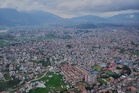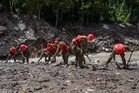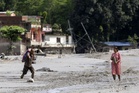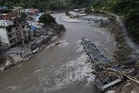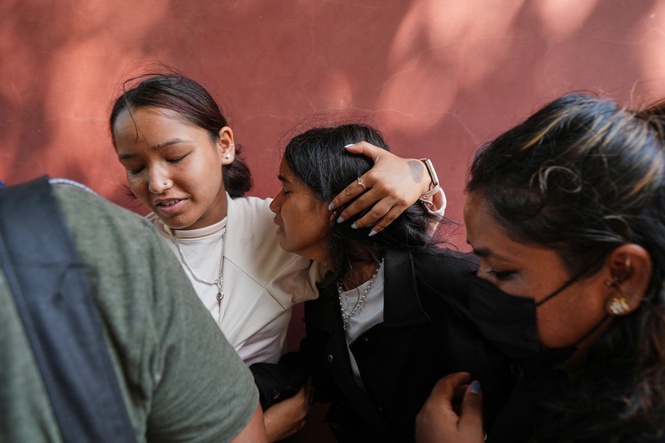
Rescuers worked through mud and debris Friday in areas devastated by a flash flood along the Himalayan border between Nepal and China.
They searched for hundreds of people still missing as the death toll rose and Nepali and Chinese authorities warned of further flooding from a lake that formed upstream after Wednesday’s disaster and was already overflowing. They urged people in potentially affected areas to move to safer ground.
Police in Nepal said Friday morning that the country’s death toll had risen to 469 from 390 a day earlier. China had not updated its report of three deaths in Tibet. Together, the two countries have said more than 1,500 people are missing.
Here is the latest:
Nepal police say water dam on the Tibet side has burst again
All security personnel, rescue workers and members of the public deployed in rescue and relief efforts were told to remain on high alert and immediately move to a safe location if necessary.
No further details were provided.
“It hasn’t stopped,” Nepal police spokesperson Abi Narayan Kafle told The Associated Press, noting that the rescue operation is continuing but with a high alert.
Floods highlight growing glacier risks in warming Himalayas
The flooding was likely caused by a huge chunk of a glacier that broke off and temporarily dammed a river, according to preliminary investigations by scientists. That may have led to the backed-up water surging downstream with enormous force a few hours later, they suggested.
Scientists are still piecing together information from satellite and ground-level data to figure out exactly what happened to cause the flood.
The U.S. Geological Survey on Wednesday reported a magnitude 5.2 glacier collapse that sent debris flowing downstream with catastrophic impact on communities. It said its determination was based on data from nearby seismic stations, long period seismic waves and satellite imagery.
Scientists said it is too early to draw a direct connection between global warming and Wednesday’s catastrophe.
However, they said that as Earth’s temperature rises because of human activities such as burning oil, gas and coal, the chances of such disasters increase, especially in the Himalayan mountains, which are warming considerably faster than many other parts of the world.
Nurse among 33 Britons missing in Nepal’s devastating flash floods
She was a pain specialist to top athletes. Her opioid prescribing alarmed the DEA
Hong Kong court hears arguments over sentencing for former Tiananmen vigil organizers
Oyo Nyimba, Ugandan 'boy king' who mesmerized world leaders, dies at 34
Burnham launches crackdown on ‘cowboy builders’ ripping off households
Fix gun licensing system to prevent further killings, inspectors say