.jpeg)
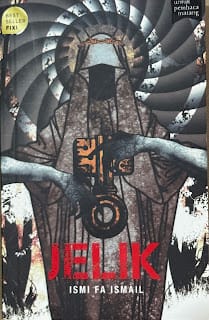
Jelik (Obnoxious, Malay, Fiction; 2023)
Author: Isma Fa Ismail
Reading fiction is a necessity. After squeezing the brain to think and solve problems every day, it is only logical that it needs a reset. A reset button to prune unnecessary neural connections and regenerate old, neglected neuronal paths that had grown overgrowths and undergrowths. Tuning out of reality and immersing oneself in a dreamy world of make-believe is one way to support neuroplasticity.
It is said that fiction is callisthenics for the mind. It provides a good workout for several cognitive systems: language, imagination, memory, and social understanding, which may contribute to the brain's ongoing adaptation and learning.
This book captured my imagination when I read that it was facing an imminent ban and that the publishers were trying to dispose of it. Lately, the moral police have been on a witch-hunt for books that do not conform to a strict code of conduct and morality set by the powers that be. The policy seems particularly strict regarding books and translated works in Malay.
Ironically, the original book would have been written and published in English for donkey's years; once it is translated into Malay, the moral police would swarm in. Their idea is that books published in Malay should not contain elements deviant from mainstream Islam practised in Malaysia, LGBT elements, left-wing politics and alternative Malaysian history. Their justification for this is to prevent confusion amongst the majority population and to avoid offending their sentiments.
Banning or burning books is not new. Even before the invention of the printing press, rulers have not been too comfortable with a thinking population. It has always been a favourite tactic among demagogues to ensure their subjects think the same way.
In 500 CE, the Byzantine Emperor Justinian I believed that heretical and pagan ideas should be eradicated by the ritual burning of books. In the 12th century, Bakhtiar Khilji, a Turkic ruler of the Delhi Sultanate, destroyed years of Buddhist knowledge by setting fire to 9 million manuscripts from Nalanda University. The fire lasted three months. During the 1258 siege of Baghdad, the Mongols effectively ended the Islamic Golden Age by burning books or dumping them into the River Tigris. It is said that the Tigris was temporarily renamed 'Black River' because the ink from the books dissolved. The land that invented paper did not escape tyranny either. Shih Huang Ti (Qin Shi Huang), who is credited with uniting China, is also notorious for the 'Fenshu Kengru' (the 'Burning Books and Burying Scholars' campaign). He wanted to control how people thought and to ensure no one criticised his government. So did Chairman Mao during the Cultural Revolution, 1966-76, and he proudly announced that he had burned more books and buried more scholars than Emperor Shih himself.
Nothing has changed over the years. Thought policing seems necessary to stay in power. Nowadays, they do not burn books; they merely ban them.
Jelik piqued the interest of the powers that be in the inclusion of LGBT elements in a Malay-language horror thriller for young adults. Hence, the ban. It tells the story of twin boys from an affluent family who have a life-changing experience after visiting a site with a mysterious past. The story is filled with local folklore and occultism, admixed with religious superstitions.
Farouk Gulsara (asokansham@gmail.com) is a content creator under the Newswav Creator programme, where you get to express yourself, be a citizen journalist, and at the same time monetize your content & reach millions of users on Newswav. Log in to creator.newswav.com and become a Newswav Creator now!
The User Content (as defined on Newswav Terms of Use) above including the views expressed and media (pictures, videos, citations etc) were submitted & posted by the author. Newswav is solely an aggregation platform that hosts the User Content. If you have any questions about the content, copyright or other issues of the work, please contact creator@newswav.com.