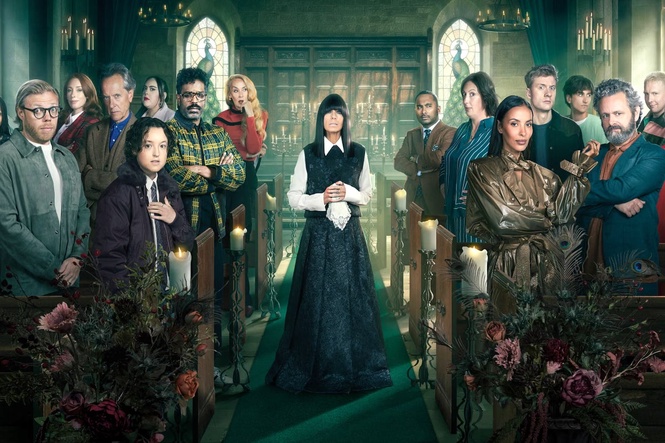
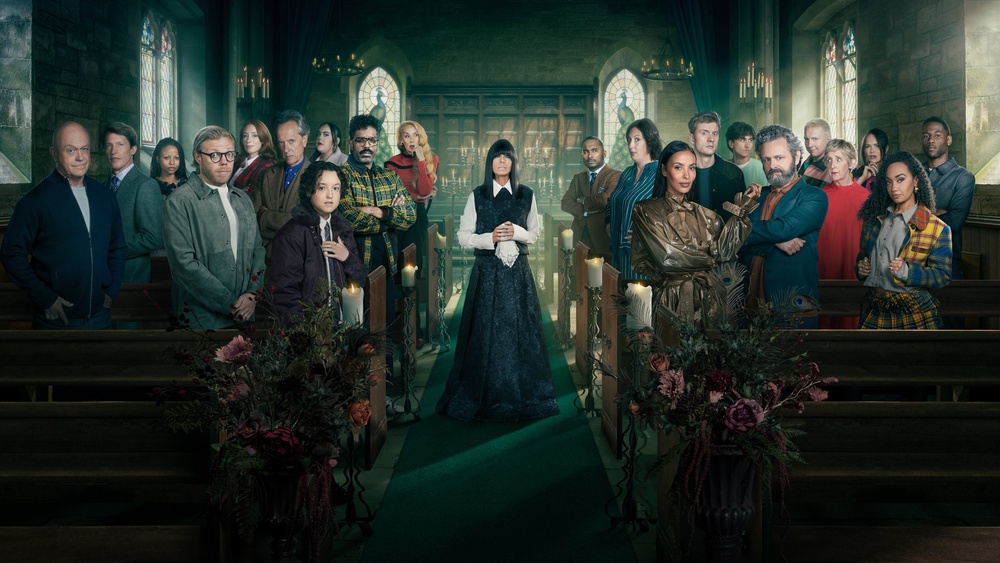
The green cloaks have been cleaned and pressed. A new set of portraits is hanging in the breakfast room. And Claudia Winkleman has a fresh spray tan to mark the occasion. It’s time for a new season of The Celebrity Traitors, with a fresh cohort of stars heading up to Scotland to engage in low-level psychological warfare with one another, in the hope of winning prize money for their charity of choice.
But if the contestants really want to go the distance at Ardross Castle, they would do well to remember that, in a competition like The Traitors, whip-smart intelligence or tactical nous can only get you so far. It’s a game of social dynamics as much as strategy – and being liked by your fellow players can end up becoming a secret superpower that will catapult you to the final.
On paper, the show’s winners “have had little in common”, notes Amanda Charles, a chartered counselling psychologist. “Some were Traitors, some were Faithfuls, some dominated every conversation, and some hardly spoke, but what everyone of them has shared is that the room warmed to them, and because the room warmed to them, the room trusted them.”
Likability, then, is far more important when it comes to making it through a particularly fraught round table than having a perfect grasp on who said what, and who looked a bit shifty over the morning croissants. It matters so much because “humans are fundamentally social”, explains registered psychologist Dr Carolyne Keenan. “We’re constantly making very quick judgments about whether someone feels safe, trustworthy and ‘on our side.’”
Think about it from an evolutionary perspective and you can see the advantage – being able to rub along well as part of the group or tribe was once vital for human survival. “We tend to like people who make us feel good in their company,” Keenan adds, noting that likeability isn’t necessarily contingent on “being the loudest, funniest or most charismatic person in the room. Often it’s much more about how other people feel when they’re around you.”
In the show, “contestants are having to make decisions with incomplete information”, says chartered counselling psychologist Dr Kirstie Fleetwood-Meade – no one can really know whether the person they’re pouring their heart out to is as faithful as they profess. For a Traitor, “being liked can provide a degree of social protection. If people feel connected to you, they may be less inclined to suspect you, challenge you or interpret your behaviour negatively”.
So when that bond is established, “liking switches off the part of us that keeps checking for safety”, Charles agrees. “Once someone has made us feel good, we’ll stop looking for evidence and take them at face value instead, explaining away anything that doesn’t quite fit – we’d rather keep the good feelings than test them. In the castle, that’s what decides the game. When a name comes up at the round table, the people who like that player don’t weigh the case against them; they instead look for reasons it can’t be true.” Remember when Mollie couldn’t bring herself to call Harry out as a Traitor in the season two finale, just because they were such good friends – only for him to steal the entire prize pot moments later?
Dr Ritz BirahA successful Traitor is not necessarily the person who lies most convincingly. They may be the person whose relationships give other people a reason to explain away their inconsistencies
Some players will reach a point where their likeability starts to “almost act as a social shield”, says Dr Ritz Birah, consultant counselling psychologist and founder of Reflect with Dr Ritz. Their fellow contestants are “often more motivated to interpret ambiguity generously”, she adds. “A strange comment from someone we distrust may become evidence against them. The same strange comment from somebody we feel close to can be explained away as tiredness, nerves or simply their personality. So a successful Traitor is not necessarily the person who lies most convincingly. They may be the person whose relationships give other people a reason to explain away their inconsistencies.”
These relationships are far more important than cleverness – “if nobody trusts you, it’s much harder to influence the group or survive a banishment”, Fleetwood-Meade says. “In fact, we’ve seen in previous series of The Traitors that being particularly clever or strategically astute can sometimes work against contestants. If someone is perceived as being one step ahead of everyone else, people may start to question their motives or interpret their behaviour more suspiciously.” You only have to look back at all the players who were unfairly eliminated early on purely by virtue of having impressive or lofty-sounding job titles to see this in action.
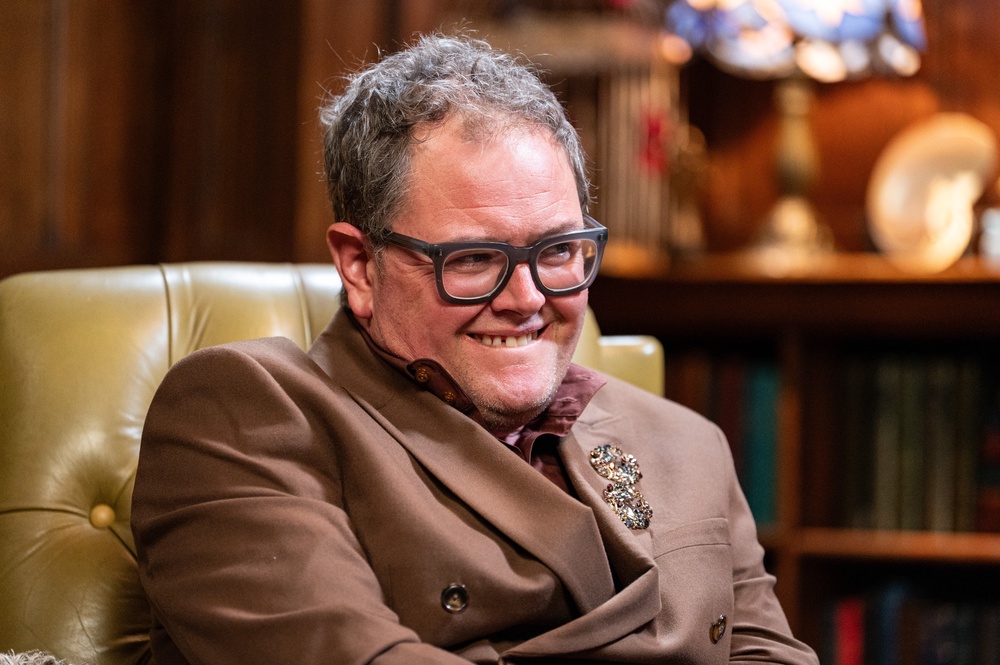
Perhaps the best case study when it comes to the power of likability in the Traitors castle is one: Mr Alan Carr. When the comedian was anointed as a Traitor at the start of the BBC’s first celebrity season, even the most seasoned of reality TV prognosticators didn’t think it’d be long before the other contestants rumbled him. The man broke out sweating whenever he was placed under the slightest pressure, and had a habit of getting the giggles at the most inopportune moments, for goodness sake.
And yet his self-deprecation, excellent comic timing and talent for easy, warm one-on-one chatter with the other players ended up serving as the perfect camouflage for his traitorous after-hours exploits. “Carefully calibrated vulnerability, being able to laugh at yourself, admitting you got something wrong or letting somebody see a little uncertainty can reduce social distance,” says Birah.
Amanda Charles, chartered counselling psychologistOnce someone has made us feel good, we’ll stop looking for evidence and take them at face value instead
By the time the grand finale rolled around, it didn’t even seem to matter that Carr literally burst out laughing when he tried telling the remaining celebs that he was a Faithful – his fellow finalists Nick Mohammed and David Olusoga were utterly convinced of his authenticity. Cue one of the most satisfying wins – and devastating reveals – in Traitors history.
Humour, explains Fleetwood-Meade, can be “a powerful shortcut to connection”, as “when someone makes us laugh, we can feel an immediate sense of familiarity and warmth towards them”. Of course, she adds, “this doesn’t necessarily mean we’ve assessed their character accurately, but it means we’ve had a positive social experience with them”.
Carr’s win, she adds, “is an interesting example of how humour, alongside warmth, can make someone seem approachable and non-threatening” – but it’s also “a reminder that being entertaining and likeable doesn’t necessarily mean someone is trustworthy”.
Similar dynamics can play out in the world of work, too. “Competence is important, but people also want to work with people they trust and enjoy interacting with,” says Keenan. “Research has even found that people may choose a more likeable colleague over a more competent but unpleasant one when deciding who to work with”.

Our ideas tend to “land according to how we feel about the person offering them far more than we’d like to admit” too, says Charles. In the castle, that might mean that a theory about who is acting particularly shifty gains traction because the person putting it forward is convincing and well-liked; in the office, “the liked colleague might get a ‘yes’ where the same proposal from someone else might instead get a maybe”, or “their mistakes get read as one-offs rather than patterns”, she adds. “Likeability is how influence travels when you don’t have the [job] title, and it’s what keeps people on your side once you do.”
There is “an important distinction to be drawn” here, though, “between being likeable and being a people pleaser”, Fleetwood-Meade cautions. “If we’re constantly trying to keep everyone happy, we might avoid difficult conversations, struggle to set boundaries or agree to things we don’t want to, which can come at a significant personal cost.” Being effective at work, she stresses, “doesn’t mean everyone has to like us”.
Whether we’re sitting at the round table or in a boardroom, likeability “should not replace competence or good judgement”, suggests Dr Sylvia Baker, consultant psychiatrist at Re:Cognition Health, “but when combined with both, it can be a powerful interpersonal skill”. Ultimately, she adds, “The Traitors highlights something we see in everyday life: being clever or strategic can only take you so far. Our relationships with other people, and how we make them feel, can be just as influential.”
‘The Celebrity Traitors’ begins tonight, Thursday 1 October at 8pm on BBC One and BBC iPlayer
Read MoreCelebrity Traitors: A psychologist reveals three ways to get away with lying
Jerry Hall’s kids are treating her like a child, parenting a parent comes to us all
We fell in love on Blind Date 34 years ago – will the show’s return ever be as good?
Meghan reminisces about Christmas planning in California after returning to UK
We’re cleaning experts. Here’s how to actually get yellow stains out of white clothes
The label ingredients that tell you a menopause supplement is worth the money