.png)
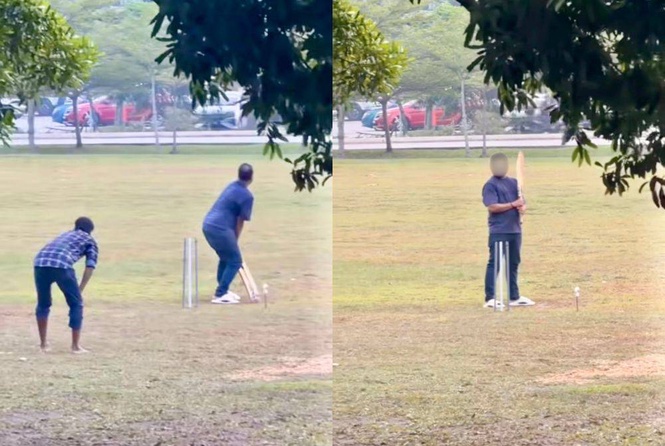
SHAH ALAM — A Threads post complaining about foreigners playing cricket at a public football field near Central i-City, here, has sparked backlash, with many Malaysians accusing the author of fuelling anti-foreigner sentiment by omitting key details from the original post.
The post by Threads user @suehamokhtaroi initially read: “I think it must be fun being a foreigner in Malaysia because the government loves foreigners. The football field next to Central i-City has even become a spot for them to play cricket and whatnot.”
The remark drew criticism from users who argued that playing cricket at a public field was not an issue and that the post appeared to target foreigners rather than address a specific problem.
After facing backlash, @suehamokhtaroi clarified that the complaint was not about foreigners using the field, but their alleged practice of cutting through a nearby residential area to reach it.
“The issue is not about the field itself, as it is not private,” she said.
“The problem is that these foreigners repeatedly take a shortcut through the neighbouring housing area, climbing over the fence and crossing the children’s playground just to get to the field more easily.
“The residents’ committee has reprimanded them and anti-climb fencing was installed, but they continue doing it. Children often play in the playground, yet they still use it as a passage to the field.”
However, many users argued that this context should have been included from the start.
Threads user @erwinkaur said the original post had framed the issue poorly and only provided the full explanation after criticism mounted.
“You were criticised because of the way the issue was narrated. The context came later,” the user said.
Another user, @rizwano, echoed the sentiment.
“You should have mentioned the fence-climbing from the beginning because that is the real issue. Playing cricket, flying kites and similar activities are not the problem. Context and narrative matter.”
Others questioned why foreigners playing cricket in a public space should be viewed negatively at all.
@haikal_9413 said there was nothing wrong with legally employed foreigners spending their free time at a public field.
“If locals are not using the field, what is the issue? There is no need to hate blindly,” the user wrote.
@ahah.ariffhakimi noted that cricket had long been played in public parks by migrant communities in Malaysia.
“Since I was 13, we have invited Indians, Nepalese and Bangladeshis to play with us because we did not have enough players. The park is a public space. How they entered the country is a separate issue,” the user said.
Others pointed to practices in neighbouring countries.
Threads user @mustaffakamalhussien said foreign workers in Singapore regularly spend weekends gathering in parks and public spaces without controversy.
“The same can be seen in parts of the Middle East, where parks, empty car parks and even stretches of desert become cricket fields on weekends,” the user said.
Meanwhile, @izzyfariz shared a personal experience of racism while living in the United Kingdom.
“When I lived in Liverpool, some locals pushed my father, kicked our football into a lake and told us to go back to Pakistan,” the user said.
“Let us Malaysians not become like that.”
The exchange highlights how incomplete social media narratives can shape public perceptions, particularly when discussions involve foreigners and the use of public spaces.
The debate comes amid wider online tensions involving migrant and refugee communities.
On Aug 27, human rights activist Adrian Pereira said public spaces should encourage interaction and understanding between Malaysians and foreigners rather than become flashpoints for hostility.
His comments followed a viral video showing more than 30 individuals believed to be Rohingya using a public park in Taman Wilayah, Selayang. The footage sparked debate over foreigners’ access to public facilities, although it did not confirm the individuals’ nationality or immigration status.
Pereira warned that misinformation and inflammatory content could expose vulnerable communities to harassment, while engagement-driven social media content risked normalising hostility towards immigrants.
He called for greater reliance on verified information, stronger community integration efforts and more proactive involvement by local authorities in resolving disputes and promoting social cohesion.