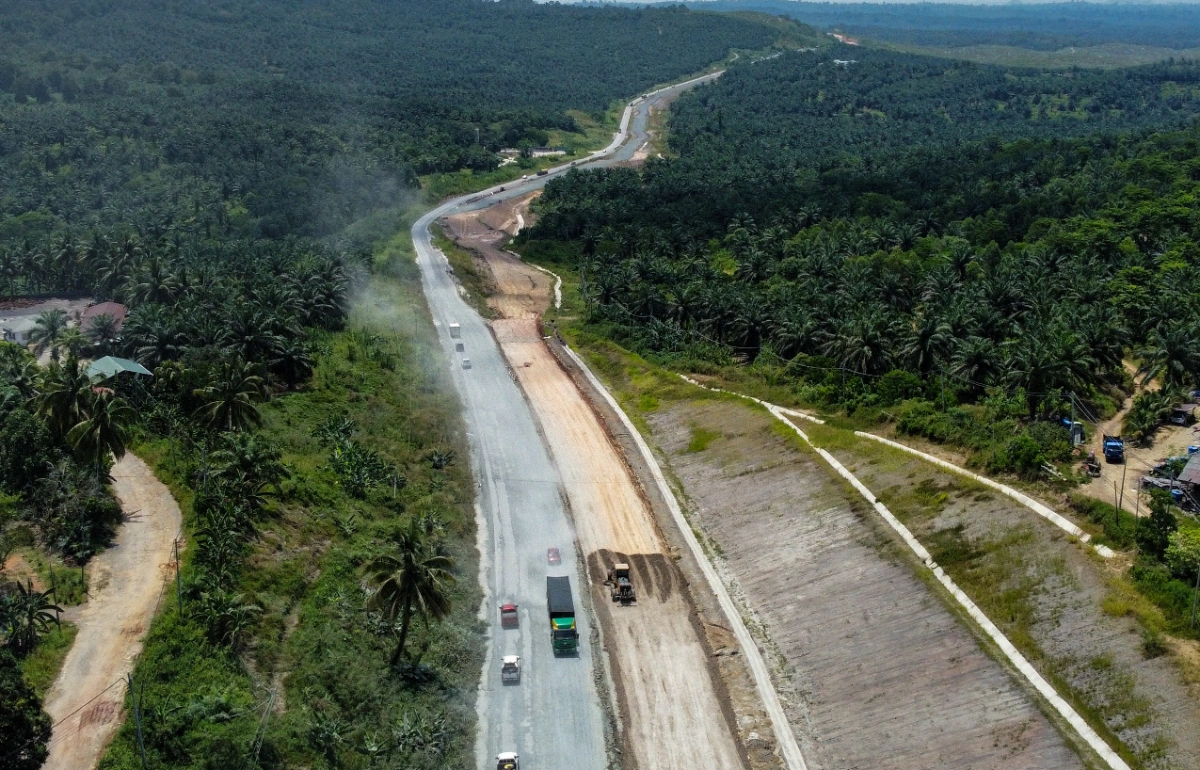
PENAMPANG: Authorities must immediately review the progress of the Pan Borneo Highway Sabah, upgrade critical flood prevention infrastructure and account for how the RM18.7 billion federal infrastructure budget is being distributed.
Parti Warisan Strategic Communication Director Christopher Masudal said both the Federal and Sabah governments must address the persistent public concerns over project delays, environmental impacts and transparency in public spending.
Highlighting findings in the Auditor-General’s Report, he pointed out that persistent delays in the project stemmed from unresolved land acquisition, compensation and utility relocation issues.
“This shows lack of strategic coordination and execution by agencies involved.
“Another issue requires attention is complaints by Sabahans that flash floods have worsened in certain areas, for instance Kampung Kolopis in Penampang, where residents have raised concerns about the impact of highway construction.
“The Federal Government should commission a technical review to establish whether the highway’s construction, drainage design, river crossings or changes to natural drainage patterns have contributed to flooding in affected communities. The assessment should examine drainage capacity, river flow, floodplain connectivity and cumulative environmental impact of development,” he said.
Should findings confirm that the highway contributes to local flooding, appropriate mitigation measures such as upgrading inadequate drainage systems, improving river crossings and restoring affected water channels must be integrated into all Pan Borneo Sabah packages, ensuring flood prevention is treated as an essential component of highway infrastructure rather than a reactive afterthought following repeated community suffering.
“Our second major concern centres on accountability for the RM18.7 billion Sabah allocation. Authorities must provide complete public disclosure by detailing specific projects, sectoral budgets, responsible agencies, project sites, implementation periods and expenditure progress.
“How much of this allocation is specifically intended for infrastructure development, including roads, bridges, drainage, flood mitigation, water supply and sewerage? Sabahans should be able to distinguish between approved allocations, actual expenditure and projects that have been completed or remain under implementation,” he added.
Warisan is calling for an open access public dashboard that details project statuses, implementation timelines, spending updates, procurement specifics and delay rationales.
“Such transparency is crucial for holding authorities accountable and ensuring that public allocations genuinely benefit the people of Sabah,” said Masudal. He stressed that environmental safeguards and strict EIAs are non-negotiable, warning that development must not sacrifice water catchments, forests, wetlands or paddy fields. Any risks of floods, mudflows or landslides must be proven through rigorous studies, not assumptions.
Warisan’s third concern is the Pan Borneo project delays, which should serve as a lesson for the Chief Minister and his Cabinet.
“Securing allocations is only one part of development. The State Government must also ensure that projects are ready for implementation and administrative bottlenecks are addressed before construction begins,” said Masudal.
To attend to this, he said the authorities must address whether the Lands and Surveys Department is properly equipped with the resources and timelines needed to handle land acquisition and compensation smoothly.
“The Cabinet must also explain how it plans to fast-track the removal and relocation of affected public utilities, including electrical grids, telecom lines and water facilities overseen by Sabah Electricity, Telekom Malaysia and JANS.
“Tight inter-agency collaboration, strict relocation timelines and transparent progress updates are imperative to stop historical project delays from repeating themselves,” he added.