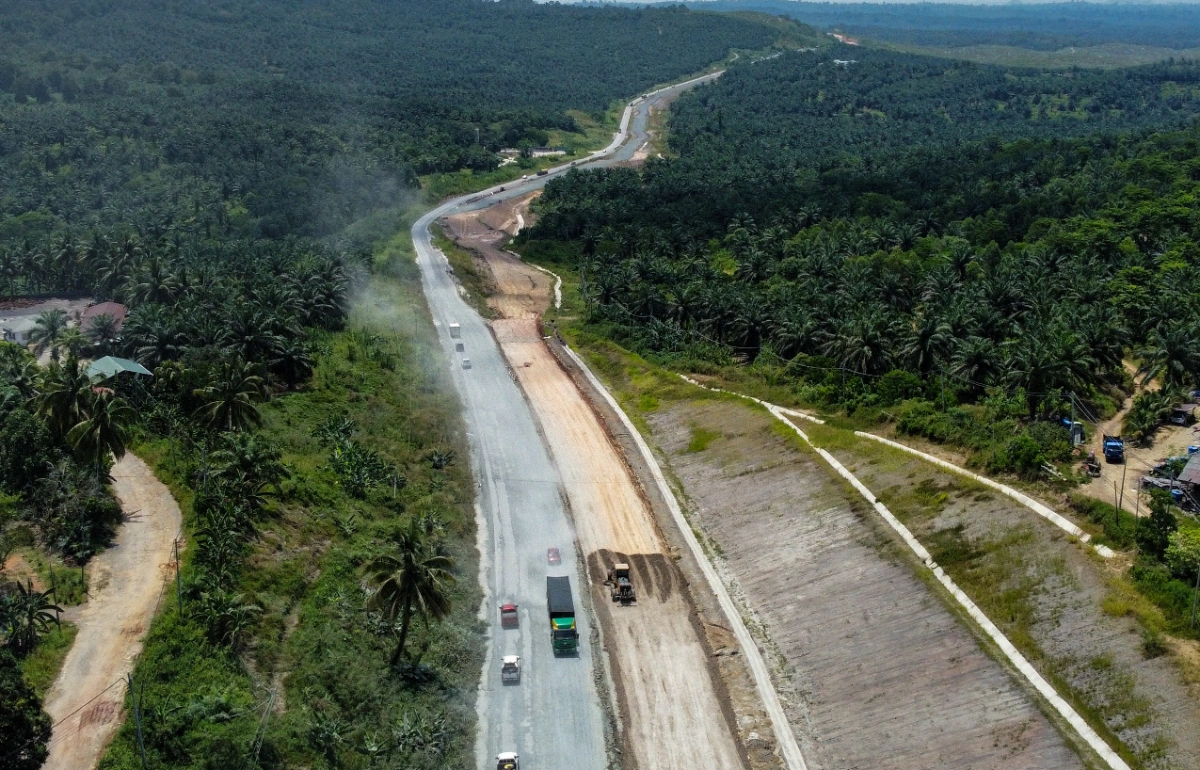
Kota Kinabalu: The abolition of the Project Delivery Partner (PDP) system in September 2019 under the then Warisan-led state administration has been blamed for contributing to delays and implementation problems in Sabah’s Pan Borneo Highway project.
Parti Gagasan Rakyat Sabah (PGRS) Kinabatangan division pro-tem information chief Aksyah Nasrah said the 11 per cent overall project progress figure highlighted in the Auditor-General’s Report dated Oct 7, 2026, should be viewed in its proper context rather than used to judge the performance of the current administration led by Chief Minister Datuk Seri Hajiji Noor.
“The 11 per cent figure represents the overall progress calculation for the project phases, rather than a reflection of performance over the past two or three years,” he said in a Facebook post today.
Aksyah said those seeking to understand the low progress figure should examine the underlying causes of the delays, including the previous administration’s decision to abolish the PDP system.
He claimed the move disrupted the procurement structure, affected the flow of Federal funding and weakened technical coordination on the ground.
“The people of Sabah will not forget that the deterioration, disorder and loss of momentum in the Pan Borneo project officially began in September 2019, during the Warisan administration. At the time, the State Government arrogantly agreed to abolish the PDP system,” he said.
According to Aksyah, the decision was made without a concrete replacement plan, leading to various implementation challenges.
He said Warisan’s two years in power were sufficient to affect the progress of the major infrastructure project.
However, Aksyah acknowledged that the first two years after Gabungan Rakyat Sabah (GRS) took over the state administration, from 2020 to 2022, were also challenging due to the Covid-19 pandemic.
He said the pandemic disrupted the global economy and construction material supply chains, affecting the implementation of infrastructure projects.
“It was a period of recovery and restoring the people’s livelihoods, rather than a time when physical projects could proceed as usual,” he said.
Aksyah also stressed that the Pan Borneo Highway was fundamentally a Federal Government project, with the Sabah Public Works Department (JKR) assisting in regulatory oversight and coordinating implementation on the ground.
He said JKR Sabah had to carry out its supervisory responsibilities amid bureaucratic constraints and land compensation issues inherited from the previous administration.
In contrast, Aksyah said the Hajiji-led government had been working to resolve longstanding implementation problems, including bureaucratic issues related to procurement.
He cited the simultaneous launch of all 19 remaining work packages under Phase 1B, worth RM13.989 billion, in October 2024 as a significant development.
“Today, under the supervision of the current government, all the project packages that were previously troubled have begun moving again and getting back on track,” he said.
Aksyah said it was unfair to place the entire blame for the project delays on Hajiji and the current state government, arguing that the causes of the problems and subsequent recovery efforts should be assessed against the project’s implementation timeline.
“In short, the Warisan era was the ‘Mother of Problems’ that gave rise to a chain of issues surrounding Pan Borneo, while the Hajiji and GRS era has emerged as the ‘Ultimate Problem Solver’, working tirelessly to rebuild the future of our homeland’s infrastructure,” he said.