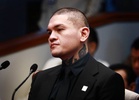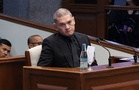
THE meeting between United States Ambassador Lee Lipton and Davao City Mayor Sebastian “Baste” Duterte on Oct. 22 may have been officially described as a courtesy call, but there is rarely such a thing as a purely ceremonial meeting in politics and diplomacy. Timing, venue, participants, and symbolism matter. In this case, the encounter carries implications that extend beyond Davao City and touch on both Philippine domestic politics and the country’s foreign relations.
Ambassador Lipton’s visit included discussions on local economic development, humanitarian initiatives in Mindanao, and opportunities for greater business engagement. The meeting was attended by Senators Robin Padilla and Christopher Lawrence “Bong” Go, both closely associated with the Duterte political camp.
On one level, the meeting reflects normal diplomatic practice. Foreign ambassadors routinely engage local government leaders, particularly in major political and economic centers outside national capitals. Davao City is the largest city in Mindanao and remains one of the country’s most politically influential localities. Any ambassador seeking a deeper understanding of Philippine politics would naturally want to engage its leadership.
However, the broader political context makes this visit noteworthy. The Duterte family continues to command substantial political influence despite no longer occupying Malacañang. Former president Rodrigo Duterte remains a powerful political figure, while Baste Duterte is increasingly viewed as a key figure in the family’s future political plans. In this environment, a meeting between the newly installed American ambassador and one of the nation’s most prominent opposition-aligned local leaders inevitably attracts attention.
The visit signals that Washington is pursuing a pragmatic approach toward Philippine politics. The US has long maintained relationships across the Philippine political spectrum rather than tying itself exclusively to any one administration. By engaging Mayor Duterte, Ambassador Lipton demonstrates that American diplomacy recognizes the importance of maintaining communication with influential political actors, regardless of their current formal position in the national government.
This is particularly significant because the Duterte family has often been associated with a foreign policy orientation perceived as more accommodating toward China than previous administrations. While such characterizations are often oversimplified, they have shaped international perceptions.
Against this backdrop, a visible and cordial engagement between the US ambassador and a leading member of the Duterte family underscores Washington’s willingness to keep political channels open with all major Philippine stakeholders.
The meeting may also have implications for the evolving political landscape ahead of future national elections. Foreign diplomats generally avoid direct involvement in domestic politics, but their interactions are closely scrutinized by political observers. The optics of the meeting suggest recognition that the Duterte political brand remains a significant force that cannot be ignored.
For Philippine domestic politics, this development reinforces the view that foreign governments often prepare for multiple political scenarios. Diplomatic strategy is built on continuity rather than personalities. By cultivating relationships across competing political camps, states seek to protect long-term interests regardless of electoral outcomes.
From a foreign policy perspective, the visit highlights the enduring depth of US-Philippine engagement. It comes at a time when Manila’s relations with major powers continue to attract regional and global attention. The US remains the Philippines’ treaty ally, while China remains an important economic partner despite persistent tensions in the West Philippine Sea. Within this complex environment, diplomatic outreach at both national and local levels becomes increasingly important.
The meeting also occurred amid heightened public discussion regarding foreign diplomatic engagement in Philippine political affairs. As Manila debates the acceptable boundaries of diplomatic commentary and influence, Ambassador Lipton’s Davao visit offers a contrasting example of traditional diplomacy: engagement through dialogue, relationship building, and consultation rather than public intervention.
Ultimately, the significance of the Lipton-Duterte meeting lies less in what was publicly discussed and more in what it symbolizes. It reflects the political relevance of regional power centers, the continuing influence of the Duterte family, and the determination of the US to maintain relationships across the Philippine political landscape.
No major agreements were announced. No dramatic policy shifts were unveiled. Yet diplomatic history often reminds us that seemingly routine meetings can carry considerable strategic weight. In the Philippines’ fluid political environment, the meeting between an American ambassador and a Duterte may be less about the present than about positioning for the future.
Rommel C. Banlaoi, PhD, is director of the Philippines-China Studies Center at Diliman College, president of the Philippine Society for International Security Studies, and former president of the Philippine Association for Chinese Studies.