_1652931074_9592.jpg)
Wonder why Chinese electric vehicle manufacturers are starting to produce hybrid and EREV vehicles in 2026
The pivot to a very different powertrain by Chinese electric vehicle (EV) manufacturers has NOT been addressed by the ‘tree huggers’! Why?
Once flying the ‘EV ONLY’ flag high, not one, not two but MOST Chinese EV manufacturers are now launching toward Plug-in Hybrids (PHEVs) and Extended-Range Electric Vehicles (EREVs) which represents a deliberate, strategic realignment driven by domestic saturation, changing global market needs and an evolving consumer demand.
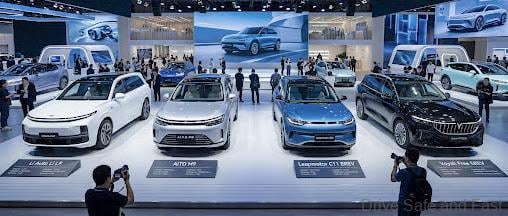
Pure Battery Electric Vehicles (BEVs) are no longer the sole focus; hybrids are powering the next wave of industry growth.
Chinese automakers have expanded heavily into markets across Southeast Asia, Latin America, the Middle East, and Europe. However, public charging infrastructure outside of tier-one global cities remains significantly behind schedule.
Meanwhile, it is well known fact that PHEVs and EREVs solve range and charging anxiety for international buyers who lack access to fast chargers or reliable home charging. (this is what we at www.dsf.my have been saying for years and having EV fans ‘trashing’ us).
In several Western markets, hybrid vehicles often face different trade restrictions and regulatory hurdles than pure BEVs, giving Chinese manufacturers a crucial entry vector to maintain export growth.
In China’s domestic market where New Energy Vehicles (NEVs) represent over half of all new car sales intense price wars have compressed profit margins for pure BEVs.
Incidentally, direct purchase subsidies and tax exemptions from various governments (including Malaysia) for pure EVs in many key markets have either expired or scaled down. Automakers must now attract buyers purely on product value rather than government discounts.
EREVs (like the Nissan ePower) use significantly smaller, less expensive battery packs than long-range BEVs, allowing manufacturers to lower retail prices while retaining healthy profit margins.
Automakers like Li Auto, Aito, and Xiaomi have proven the commercial viability of EREVs. EREVs operate purely on electric motors delivering smooth torque and quiet driving while a small combustion engine acts exclusively as a generator to charge the battery when depleted.
Modern Chinese EREVs (like the GWM Haval H7 and Jetour T2) and PHEVs regularly push total combined ranges past 1,000 km to 1,300 km on a single tank and charge.
With battery capacity improving, modern EREVs offer 200 to 300km of purely electric range enough for daily urban commutes without burning petrol while retaining petrol power for long weekend trips across the country.
Pure BEVs still suffer from noticeable range loss and slower fast-charging performance in cold winter climates. In Northern China, Northern Europe, and Central Asia, hybrids and EREVs perform far more reliably, capturing a critical demographic of buyers who are otherwise reluctant to buy a pure BEV.
The post Why Chinese EV Manufacturers Producing Hybrids In 2026 first appeared on DSF.my.